You pick up a mint candy. One label says “natural peppermint oil.” Another says “mint flavor.”
That small difference can feel bigger than it looks. You may wonder which one is better for fresh breath, digestive comfort, and daily wellness. Many clients often ask me this question. The problem is that mint sounds healthy by default. But natural mint and synthetic mint do not always offer the same health-related value, especially inside candy.
Natural mints usually offer broader health-related potential because they come from real mint plants, such as peppermint and spearmint. They may contain naturally occurring compounds like menthol and other plant compounds. Synthetic mints mainly provide flavor, cooling, and breath-freshening effects. They can still be safe and useful in candy, but they usually do not carry the same botanical profile. My expert view is simple: natural mint is stronger for wellness positioning, while synthetic mint is stronger for consistency, cost control, and intense flavor design.
I am Suifa. A mints manufacturer. So I care about two things at once.
Truth. And taste.
Let me break this down in a way that is easy for readers, buyers, and search engines to understand.
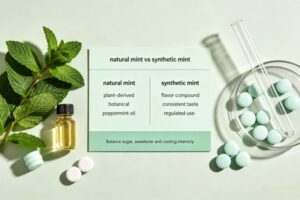
Quick answer: natural mint vs synthetic mint

What is natural mint?
When I say natural mint, I mean mint flavor that comes from real mint plants.
This may include:
- Peppermint oil
- Spearmint oil
- Field mint oil
- Mint extract
- Natural peppermint flavor
Peppermint and spearmint are the most common in candy.
Natural mint is usually extracted from leaves and stems. It contains aromatic compounds that create the cooling, fresh, green flavor we associate with mint.
The best-known compound is menthol. Menthol is responsible for much of the cooling sensation in peppermint and many mint products. For a technical reference, I often point to PubChem’s menthol profile.
Natural mint can also include other compounds. These may affect aroma, taste, and mouthfeel.
That is why natural mint often tastes more complex.
It can be:
- Cool
- Green
- Herbal
- Sweet
- Sharp
- Slightly earthy
As a mint candy expert, I like this complexity. It gives candy a more crafted identity.
But I also want to be clear.
Natural mint is not automatically healthier just because it is natural. The amount matters. The candy formula matters. The person eating it matters.

What is synthetic mint?
Synthetic mint is usually made from flavor compounds created or refined through controlled production.
In candy, this may include synthetic menthol or mint-like flavoring systems. These are designed to create a reliable mint taste.
Synthetic mint is common in:
- Breath mints
- Chewing gum
- Sugar-free mint tablets
- Hard candies
- Strong “ice” mints
Candy makers use synthetic mint because it is stable and predictable.
That matters in manufacturing.
A brand wants every tin, bag, or roll of mints to taste the same. Synthetic mint helps keep the flavor consistent.
It can also create a very strong cooling effect.
This is why many powerful breath mints use synthetic or blended mint systems.
From a health-benefit angle, synthetic mint is usually more limited. It mainly offers flavor, freshness, and cooling sensation.
It may help your mouth feel cleaner. It may help mask food odors. It may support a fresh-breath experience.
But it usually does not provide the same whole-plant character as natural mint.
How do natural and synthetic mints compare for fresh breath?
Both can help with fresh breath.
This is where the comparison becomes more balanced.
Fresh breath from mint candy often comes from three things:
- Mint aroma
- Cooling sensation
- Saliva stimulation
When you suck on a mint candy, your mouth usually produces more saliva. That can reduce the feeling of dryness. A dry mouth can make breath feel worse.
Natural mint can make breath feel fresh with a more botanical aroma. Synthetic mint can make breath feel fresh with a sharper, colder impact.
So, which one is better?
For fast breath refreshment, both can work well.
For a premium or wellness-style candy, I usually prefer natural peppermint oil or spearmint oil. It sounds more authentic. It also tastes more layered.
For an intense “icy blast” mint, synthetic mint can work better. It is easier to control and amplify.
My copywriting rule is this:
Natural mint is better for a clean, botanical freshness story. Synthetic mint is better for a powerful, instant-cooling story.

Do natural mints offer digestive benefits?
Natural mint has the stronger connection to digestive comfort.
Peppermint has a long history of use for stomach and digestive support. The U.S. National Center for Complementary and Integrative Health discusses peppermint oil and its traditional and studied uses here: NCCIH: Peppermint Oil.
But I need to be careful.
A mint candy is not the same as a peppermint oil supplement. The amount is different. The format is different. The purpose is different.
A candy made with natural peppermint oil may offer a pleasant after-meal feeling. It may make the mouth and throat feel cooler. It may help the eating experience feel lighter.
But I would not claim that mint candy treats digestive problems.
That would be too much.
As Suifa, I would write it this way:
“Made with peppermint oil for a cool, refreshing finish after meals.”
That is honest. That is useful. That is better than making a medical claim.
Synthetic mint can also feel soothing because of its cooling effect. But it does not have the same traditional herbal association as peppermint oil.
So my expert answer is:
Natural mint has a stronger digestive wellness story, but mint candy should be positioned as refreshment, not medicine.

Do natural mints contain antioxidants?
Natural mint may contain plant compounds with antioxidant activity.
Mint plants, especially peppermint and spearmint, have been studied for their phytochemical and antioxidant properties. For research browsing, PubMed has many scientific references related to Mentha antioxidant activity.
Still, I would not overstate this in candy copy.
Why?
Because a mint candy usually contains a small amount of mint oil or flavor. It is not the same as eating fresh mint leaves. It is not the same as drinking concentrated herbal tea.
So yes, natural mint may bring a more complete plant-derived profile.
But no, I would not call most mint candies “high in antioxidants” unless the brand has lab data.
That distinction matters.
Good copy builds trust.
Bad copy sounds like a health claim dressed as flavor.
For a natural mint candy, I might say:
“Flavored with natural peppermint oil for a crisp botanical taste.”
I would avoid:
“Packed with antioxidants.”
Unless there is real testing behind it.
Health-benefit comparison by candy function

Is synthetic mint safe?
Food-grade synthetic mint can be safe when used properly.
In food manufacturing, flavor ingredients must follow safety and labeling rules. For U.S. labeling definitions around natural and artificial flavors, I refer to the Electronic Code of Federal Regulations: 21 CFR 101.22.
This does not mean every synthetic ingredient is perfect for every person. It means synthetic flavoring is not automatically unsafe.
Some people are sensitive to strong mint flavors. That can happen with natural mint too.
Possible reactions may include:
- Mouth irritation
- Throat sharpness
- Burning sensation
- Headache from strong aromas
- Discomfort from intense cooling
This is important.
Natural does not always mean gentler. Peppermint oil can be very strong.
Synthetic mint can also be intense.
So I judge mint candy by balance.
A good mint should feel fresh. It should not feel painful.
Does natural mint taste better?
Sometimes. But not always.
Natural mint usually tastes more layered.
It may have a green top note. It may have a soft herbal body. It may finish with a cool, slightly bitter edge.
This can feel premium.
Synthetic mint often tastes cleaner and more direct.
It can be very icy. It can be bright. It can be long-lasting. It can be less earthy.
This can work beautifully in breath mints.
So I do not say natural mint always tastes better.
I say this instead:
Natural mint tastes more botanical. Synthetic mint tastes more controlled.
That is the real difference.
For a luxury mint candy, I prefer natural peppermint oil. For a bold breath mint, I may choose a synthetic or blended mint system. For a soft daily mint, spearmint is often my favorite.

Which mint is better for a healthy candy brand?
For a health-focused candy brand, natural mint usually has the advantage.
It supports words like:
- Plant-derived
- Botanical
- Peppermint oil
- Spearmint oil
- Naturally refreshing
- Clean finish
These words match what wellness-minded buyers often want.
But the mint source is only one part of the formula.
A candy with natural mint can still be high in sugar. A candy with synthetic mint can still be sugar-free and portion-controlled.
So I always look at the full product.
Important factors include:
- Sugar content
- Sweetener type
- Serving size
- Flavor source
- Ingredient transparency
- Cooling intensity
- Aftertaste
- Label claims
For a genuinely better mint candy experience, the formula must be balanced.
Natural mint helps the story. But the whole ingredient list carries the trust.
How should I read a mint candy label?
Label wording matters.
Here is how I usually read it:
- “Peppermint oil” usually suggests a direct natural mint ingredient.
- “Spearmint oil” suggests a softer natural mint source.
- “Natural flavor” may come from natural sources, but the exact source may not be obvious.
- “Artificial flavor” usually means synthetic flavor compounds are used.
- “Natural and artificial flavors” means the product likely uses a blend.
For official U.S. flavor labeling language, I use 21 CFR 101.22 as a reference.
My practical advice is simple:
If you want a more botanical candy, look for peppermint oil or spearmint oil. If you want stronger icy freshness, synthetic or blended mint may satisfy you more.
Neither label is automatically good or bad.
The question is what you want the mint to do.
Are natural mints always worth the higher cost?
No. Not always.
They can also vary slightly by season.
That variation can be beautiful in premium candy. But it can be difficult for large-scale production.
Synthetic mint is easier to standardize.
It helps a brand control:
- Flavor strength
- Cooling duration
- Cost
- Batch consistency
- Shelf stability
So I would not use natural mint just to sound good.
I would use it when it supports the product promise.
If the promise is premium botanical refreshment, natural mint is worth it. If the promise is maximum icy breath power, synthetic mint may be better. If the promise is balanced daily freshness, a blend may be ideal.

My expert recommendation
If you ask me, Suifa, which one I prefer, my answer is:
I prefer natural mint for premium, wellness-focused mint candy. It gives me a more authentic story. It gives the candy more flavor depth. It supports a cleaner label.
But I also respect synthetic mint.
Synthetic mint can be useful when the goal is powerful freshness, long-lasting cooling, and consistent flavor.
The best mint candy is not just natural or synthetic.
The best mint candy is:
- Honest
- Balanced
- Pleasant
- Clear in its labeling
- Matched to the consumer’s need
That is what I look for.
That is what I would write.
Is peppermint better than spearmint?
Peppermint is usually cooler and stronger. Spearmint is usually sweeter and softer.
For breath mints, peppermint often feels more powerful. For gentle daily candy, spearmint can feel smoother.
Can mint candy replace peppermint oil supplements?
No.
Mint candy is a confectionery product. Peppermint oil supplements are different in concentration and purpose. For health information about peppermint oil, I recommend reading NCCIH’s peppermint oil guide.
Is “natural flavor” the same as peppermint oil?
Not always.
“Natural flavor” can be broad. It may include mint-derived flavor, but the label may not tell you the exact source.
If you want more clarity, look for peppermint oil or spearmint oil on the ingredient list.
Can synthetic mint still be part of a good product?
Yes.
Synthetic mint can create a clean, strong, and consistent flavor. It is especially useful in sugar-free mints, gum, and intense breath products.
The key is honest labeling and balanced formulation.
Conclusion
Natural mint offers a stronger botanical profile and better wellness story. Synthetic mint offers consistency, strong cooling, and flavor control. For health-focused candy, I usually choose natural mint. For powerful breath freshness, synthetic or blended mint can still work well.