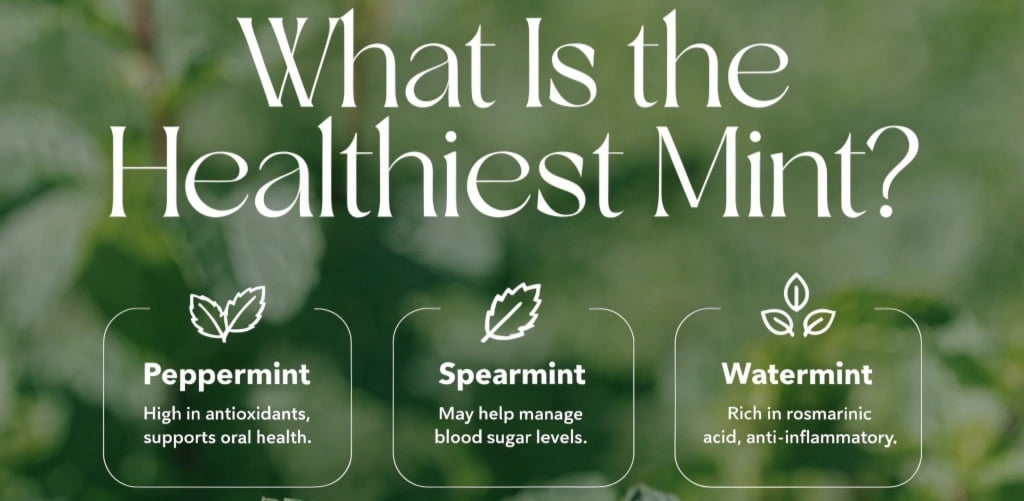
What Mints Are the Healthiest?
Bad breath can arrive at the worst time. Before a meeting. After coffee. During a date. So we reach for a mint fast. I understand that instinct. I work with candy, flavor, and product language every day. But here is the problem. Many mints are really tiny candies, not health products. They may contain added sugar, corn syrup, artificial colors, or sweeteners that bother the stomach when we eat too many.
The healthiest mints are usually sugar-free mints made with xylitol, natural peppermint or spearmint oil, and a short ingredient list. I also like low-sugar organic peppermint mints for occasional use. But if we are choosing a daily breath mint, xylitol mints are my first pick because they are sugar-free and commonly discussed in oral-health research. For more background, I often point readers to the American Dental Association’s information on xylitol and oral health.
As Suifa, my rule is simple.
A mint should freshen the mouth.
It should not secretly become a sugar habit.
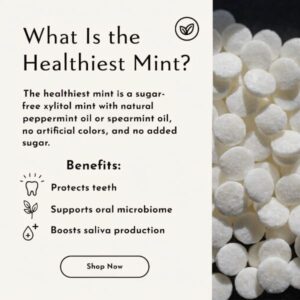
Quick Answer: What Is the Healthiest Mint?
The healthiest mint is a sugar-free xylitol mint with natural peppermint oil or spearmint oil, no artificial colors, and no added sugar.
If I had to rank my best choices, I would choose:
- Xylitol peppermint mints
- Xylitol spearmint mints
- Simple sugar-free mints
- Low-sugar organic peppermint mints
- Classic peppermint candies as occasional treats
The key is not only the word “mint.”
The key is the ingredient list.
──────────────────────────────────────────────────
Key Takeaways
- Best daily choice: sugar-free xylitol mints.
- Best flavor base: natural peppermint oil or spearmint oil.
- Best label style: short, simple, and clear.
- Ingredients to limit: added sugar, corn syrup, artificial colors, and unclear caffeine.
- Important reminder: mints freshen breath, but they do not replace brushing, flossing, or dental care.
──────────────────────────────────────────────────
Healthiest Mint Types Compared
| Mint Type | Health Score | Why I Like It | What I Watch For |
| Xylitol peppermint mints | 9/10 | Sugar-free, clean taste, strong freshness, oral-care friendly | Too many may upset digestion |
| Xylitol spearmint mints | 9/10 | Softer flavor, sugar-free, good for daily use | Check that xylitol is a main ingredient |
| General sugar-free mints | 7/10 | Better than sugary mints for teeth | Some sugar alcohols may cause bloating |
| Low-sugar organic mints | 6/10 | Simple ingredients, natural flavor | Organic sugar is still sugar |
| Classic peppermint candies | 4/10 | Enjoyable as candy | Usually high in added sugar |
| Energy mints | 3–6/10 | Can be useful for adults needing caffeine | Caffeine amount must be clear |
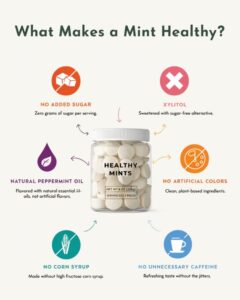
What Makes a Mint Healthy?
When I judge a mint, I turn the package around.
The back label matters more than the front.
A healthier mint usually has:
- No added sugar
- Xylitol or another sugar-free sweetener
- Natural peppermint oil or spearmint oil
- No artificial colors
- No corn syrup
- No unnecessary caffeine
- A clear serving size
I do not need a mint to look fancy.
I need it to work.
That matters because frequent sugar exposure can affect oral health. The FDA explains how to identify added sugars on labels in its guide to added sugars on the Nutrition Facts label.
So when I see sugar as the first ingredient, I do not call that a healthy mint.
I call it candy.
And candy is fine.
But we should name it honestly.
──────────────────────────────────────────────────
Are Sugar-Free Mints Always Healthier?
Sugar-free mints are usually healthier than sugary mints for daily breath freshening.
But not every sugar-free mint is perfect.
Some sugar-free mints use sugar alcohols. These can taste pleasant and reduce sugar exposure. But if we eat too many, they may cause gas, bloating, or digestive discomfort. MedlinePlus gives a helpful overview of sugar substitutes and sugar alcohols.
This is why I like balance.
I do not fear sugar-free mints.
I just do not eat them like popcorn.
My personal use is simple:
- One mint after coffee
- One mint after lunch
- One mint before close conversation
That is usually enough.
If we need mints all day, the issue may not be the mint. It may be dry mouth, dehydration, coffee, garlic, smoking, or oral hygiene.
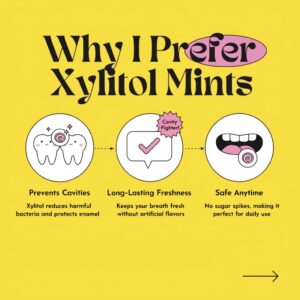
Why I Prefer Xylitol Mints
As a candy expert, I care about flavor.
As a label reader, I care about function.
Xylitol gives me both.
It has a clean sweetness. It pairs beautifully with peppermint and spearmint. It does not taste as sharp or artificial as some sweeteners can. It is also widely used in oral-care products.
That is why xylitol mints are my top recommendation for daily use.
I especially like them after:
- Coffee
- Tea
- Garlic-heavy meals
- Onion-heavy meals
- Long meetings
- Travel
But I need to be clear.
Xylitol mints are not a replacement for brushing or flossing.
They are a helper.
Not a full dental routine.
Also, if we have pets at home, especially dogs, we should store xylitol products carefully. Xylitol is dangerous to dogs. The FDA has a clear warning about xylitol and dogs.
──────────────────────────────────────────────────
Ingredient Checklist for Healthier Mints
| Ingredient or Label Claim | My Expert View | Best Choice |
| Xylitol | Excellent for sugar-free mints | Choose it near the top of the ingredient list |
| Peppermint oil | Strong, fresh, classic | Good sign when naturally sourced |
| Spearmint oil | Softer and sweeter | Great for gentle daily freshness |
| Added sugar | Not ideal for daily use | Keep low or avoid |
| Corn syrup | More candy-like | Avoid for a healthier mint |
| Artificial colors | Usually unnecessary | Choose white or naturally colored mints |
| Caffeine | Can be useful, but easy to overdo | Check the exact amount |
| Organic label | Nice, but not enough | Still check sugar content |
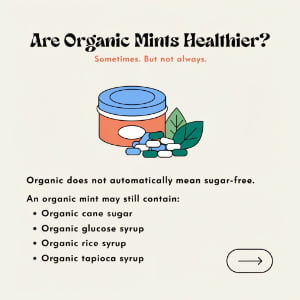
Are Organic Mints Healthier?
Sometimes.
But not always.
This is one of the biggest label traps I see.
Organic does not automatically mean sugar-free.
An organic mint may still contain:
- Organic cane sugar
- Organic glucose syrup
- Organic rice syrup
- Organic tapioca syrup
Those ingredients may sound softer.
But they are still sweeteners.
If an organic peppermint mints has a short ingredient list and low sugar, I like it as an occasional treat. If it is mostly sugar with peppermint oil, I place it in the candy category.
That does not make it bad.
It just makes it less ideal for daily breath freshening.
For peppermint itself, I prefer products that use real peppermint oil. The National Center for Complementary and Integrative Health offers a useful overview of peppermint oil.
In flavor terms, real peppermint oil gives a clean cooling effect.
It feels crisp.
It feels honest.
That is what I want in a good mint.
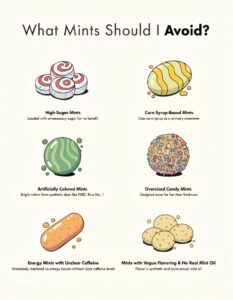
What Mints Should I Avoid?
I avoid mints that are trying too hard to look exciting.
Bright blue.
Neon green.
Heavy red.
Extra shiny.
Too sweet.
A mint does not need drama to freshen breath.
The mints I usually avoid for daily use include:
- High-sugar mints
- Corn syrup-based mints
- Artificially colored mints
- Oversized candy mints
- Energy mints with unclear caffeine
- Mints with vague flavoring and no real mint oil
Energy mints deserve special attention.
Some contain caffeine. That is not automatically bad. But we need to know how much we are taking. If we already drink coffee, tea, or energy drinks, caffeine can add up quickly. The FDA explains this clearly in its article, Spilling the Beans: How Much Caffeine is Too Much?.
My advice is this.
If a mint contains caffeine, the amount should be obvious.
No guessing.
No mystery.
──────────────────────────────────────────────────
Are Stronger Mints Healthier?
No.
A stronger mint is not always a healthier mint.
Strength only tells us how intense the flavor feels. It does not tell us whether the mint contains sugar, artificial color, or better ingredients.
Some very strong mints are still full of sugar.
Some mild mints are actually cleaner.
So I never judge by burn alone.
A powerful peppermint blast can feel impressive. But I still ask:
- Is it sugar-free?
- Does it use xylitol?
- Does it contain real mint oil?
- Are there artificial colors?
- Is the serving size reasonable?
That is how we choose smarter.
──────────────────────────────────────────────────
Are Mints Better Than Gum?
It depends on the situation.
I like mints because they are quiet and polite.
We can use them before a meeting.
Before a conversation.
Before greeting someone.
Gum lasts longer and may help stimulate saliva, especially when sugar-free. But gum is not always suitable in professional or formal spaces.
Here is my simple approach:
- For meetings: I choose mints.
- For driving: I may choose gum.
- After lunch: either can work.
- For quick freshness: mints win.
- For longer chewing: gum wins.
The same rule applies to both.
Choose sugar-free when possible.
──────────────────────────────────────────────────
How Many Mints Should We Eat Per Day?
There is no perfect number for everyone.
But I like moderation.
For most people, a few mints per day is reasonable.
I would not empty a tin in one afternoon.
If the mints contain sugar, that means more sugar exposure. If they are sugar-free, too many may cause digestive discomfort.
So I keep the habit intentional.
A mint is a tool.
Not a snack bowl.
If we constantly need breath mints, I would look deeper. We may need more water. We may need better tongue cleaning. We may need to adjust coffee intake. Or we may need a dental checkup.
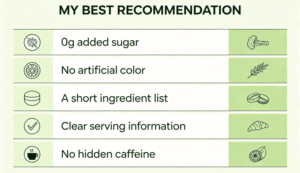
My Best Recommendation
If someone asks me what to buy, I say this:
Choose small sugar-free xylitol mints with natural peppermint oil or spearmint oil.
Then check that they have:
- 0g added sugar
- No artificial color
- A short ingredient list
- Clear serving information
- No hidden caffeine
That is the cleanest everyday mint profile.
It is fresh.
It is practical.
It is easy to carry.
And it does not pretend to be more than it is.
──────────────────────────────────────────────────
More Related Questions
Do Mints Cure Bad Breath?
No. Mints only freshen or cover breath temporarily. If bad breath continues, we should look at oral hygiene, hydration, diet, dry mouth, or dental health.
Are Cinnamon Mints Healthy?
They can be. But many cinnamon mints contain sugar and artificial colors. I treat them the same way I treat peppermint mints. Read the label first.
Are Vegan Mints Healthier?
Not automatically. Vegan mints may fit a lifestyle preference, but they can still contain sugar. Vegan does not always mean sugar-free or tooth-friendly.
Are Mints with Vitamins Better?
I am cautious. A mint is not my favorite vitamin source. If vitamins are added, I check the dose and serving size carefully.
Are Natural Mints Always Better?
Natural flavor is a good sign, but it is not enough. A natural mint can still contain a lot of sugar. The full label matters.
──────────────────────────────────────────────────
Conclusion
The healthiest mints are sugar-free xylitol mints with natural peppermint or spearmint oil. I choose simple labels, no added sugar, and no artificial colors. My final advice is simple. Use mints as freshening helpers, not health food, and enjoy them with intention.