Bad breath can show up at the worst time. So can the worry that every sweet mint is quietly feeding cavity-causing bacteria.
I see this all the time in mint candy. People want a mint that tastes clean, feels refreshing, and does more than cover odor for ten minutes. But the shelf is crowded. Sugar-free labels sound promising. Dental claims sound even better. The problem is simple. Not every “healthy mint” is actually useful.
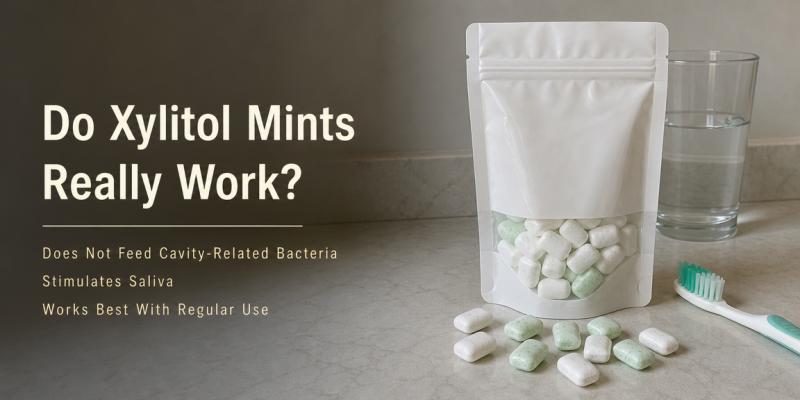
Yes, xylitol mints can work. They can help freshen breath, stimulate saliva, and support a healthier mouth environment. The best results come when xylitol is used consistently, several times per day, and in a meaningful amount. Still, xylitol mints are not a replacement for brushing, flossing, or dental care. They are a helpful add-on, not a miracle candy.
I’m Suifa, and I look at mints the way most people look at skincare or coffee. Ingredients matter. Dose matters. Daily habits matter.
Let me walk you through what xylitol mints really do, what they do not do, and how I choose them.
Quick Answer: Are Xylitol Mints Effective?
Xylitol mints are effective for three main reasons:
- They do not feed cavity-causing bacteria like regular sugar does.
- They help increase saliva flow, which supports enamel protection.
- They can reduce the ability of certain oral bacteria to thrive when used regularly.
The research around xylitol is strongest in oral care products such as gum, lozenges, and candies used repeatedly throughout the day. A Cochrane review notes that xylitol products may help prevent dental caries, though evidence quality varies by product and study design: https://pubmed.ncbi.nlm.nih.gov/25809586/
So my professional answer is balanced.
Xylitol mints really can help. But they work best as part of a complete oral routine.
What Are Xylitol Mints?
Xylitol mints are breath mints sweetened with xylitol, a sugar alcohol.
Xylitol occurs naturally in small amounts in fruits and vegetables. Commercially, it is often made from plant materials such as birch or corn fiber.
It tastes sweet. It feels cool on the tongue. It has fewer calories than sugar.
Most importantly for oral care, xylitol behaves differently from regular sugar in the mouth.
Regular sugar can be fermented by harmful oral bacteria. That process creates acids. Those acids can weaken enamel.
Xylitol does not work the same way. That is why it has become popular in sugar-free mints, gums, toothpaste, and mouth products.
The American Academy of Pediatric Dentistry has discussed xylitol as a non-cariogenic sweetener with potential dental benefits.
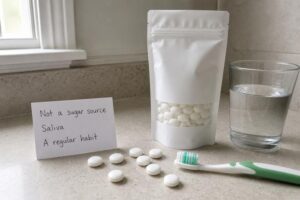
How Do Xylitol Mints Work in the Mouth?
I like to explain it simply.
Your mouth is not just teeth. It is an ecosystem.
There is saliva. There are bacteria. There is enamel. There is acid. There are food particles.
A good xylitol mint supports that ecosystem in a few ways.
1. Xylitol Does Not Feed Harmful Bacteria
One major cavity-related bacterium is Streptococcus mutans.
This bacterium loves fermentable sugar. When it gets sugar, it produces acid. Acid attacks enamel.
Xylitol is not easily used by these bacteria as fuel. So when you replace sugary mints with xylitol mints, you remove one easy food source for acid production.
This does not sterilize your mouth. That would not be healthy anyway.
But it can help shift the balance.
2. Xylitol Mints Stimulate Saliva
This part is important.
When you suck on a mint, your mouth produces more saliva. That is not just a comfort thing.
Saliva helps wash away food debris, neutralize acids, and support enamel remineralization.
This is why I often recommend xylitol mints after meals or coffee. They give your mouth a small reset.
3. Regular Exposure Matters
One xylitol mint is pleasant. But one mint will not change your dental future.
Xylitol works best with repeated exposure throughout the day.
That usually means after meals and snacks. It is the habit that matters.
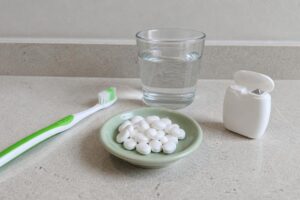
What Xylitol Mints Can and Cannot Do
| Question | Short Answer | My Expert Note |
| Do xylitol mints freshen breath? | Yes | They help quickly, especially after coffee, meals, or dry mouth moments. |
| Do they prevent cavities alone? | No | They may help reduce risk, but they do not replace brushing, flossing, or dental visits. |
| Do they feed cavity bacteria? | No | Xylitol is non-cariogenic, unlike regular sugar. |
| Do they increase saliva? | Yes | More saliva supports a healthier oral environment. |
| Are they safe for dogs? | No | Xylitol is highly toxic to dogs. Keep it away from pets. |
| Are all xylitol mints equal? | No | The ingredient list and xylitol amount matter a lot. |
Do Xylitol Mints Help Prevent Cavities?
They can help support cavity prevention, but they are not a stand-alone treatment.
This is where I want to be honest.
Some brands make xylitol sound like a magic shield. It is not.
A xylitol mint cannot undo poor brushing. It cannot remove hardened tartar. It cannot fix deep decay.
But it can be useful.
When used consistently, xylitol may help reduce the level and activity of cavity-causing bacteria. It also supports saliva flow. Both effects are good for oral health.
The Cochrane review on xylitol products found some evidence of benefit, but also noted limitations in the available studies: https://pubmed.ncbi.nlm.nih.gov/25809586/
My practical view is this:
Use xylitol mints as a daily oral-care helper, not as dental insurance.
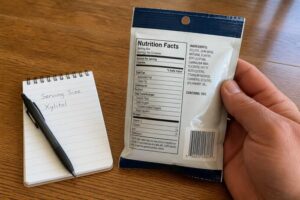
How Much Xylitol Do You Need From Mints?
This is where labels become important.
Many people buy “xylitol mints” without checking how much xylitol is actually inside.
Some products use xylitol as the main sweetener. Others sprinkle it in and rely on cheaper sugar alcohols.
For oral-care purposes, many dental discussions focus on multiple daily exposures and a total daily intake often around 5 grams or more, depending on the product and routine.
I do not suggest guessing.
Look at the label. Check serving size. Check grams of xylitol per mint if the brand provides it.
If the label does not show xylitol amount, I become cautious.
──────────────────────────────────────────────────
How I Choose a Good Xylitol Mint
| Label Feature | What I Look For | Why It Matters |
| First ingredient | Xylitol listed first | This usually means xylitol is the main sweetener. |
| Sugar content | 0g sugar | Sugar defeats the oral-care purpose. |
| Xylitol amount | Clear grams per serving | Helps estimate daily intake. |
| Acidic flavoring | Low or moderate acidity | Very sour mints may not be ideal for enamel. |
| Texture | Slow-dissolving | Longer mouth contact may be more useful. |
| Pet warning | Clear xylitol warning | Important because xylitol is dangerous for dogs. |
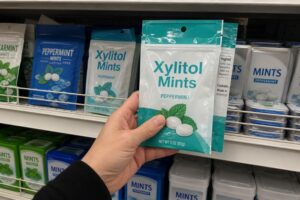
Do Xylitol Mints Help With Bad Breath?
Yes, xylitol mints can help with bad breath.
This is the benefit most people notice first.
They give an immediate fresh taste. They stimulate saliva. They do not leave sugar behind for bacteria.
That combination is useful.
But I always remind people of this:
If bad breath is constant, the cause may be deeper than your mint choice.
It could be gum disease. Dry mouth.Tonsil stones.Digestive issues.Poor tongue cleaning.A medication side effect.
A xylitol mint can help manage the moment. It may not solve the root cause.
For everyday breath support, I like xylitol mints after:
- Coffee
- Lunch
- Garlic-heavy meals
- Long meetings
- Flights
- Workouts
- Dry-mouth moments
They are clean, discreet, and easy to carry.
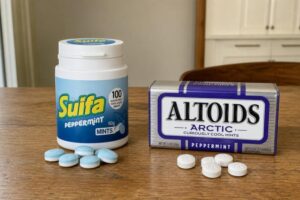
Are Xylitol Mints Better Than Regular Sugar-Free Mints?
Usually, yes.
But not always.
Some sugar-free mints use sorbitol, maltitol, aspartame, sucralose, or other sweeteners. Those can reduce sugar exposure, which is already helpful.
But xylitol has a stronger dental-care reputation than many other sweeteners because of its effect on oral bacteria and saliva.
That said, the formula matters.
A mint with a tiny amount of xylitol and lots of acidic flavoring may not be my first choice.
A mint with xylitol as the first ingredient, no sugar, and a clean flavor profile is much better.
| Factor | Xylitol | Regular Sugar |
|---|---|---|
| Sweetness | Similar to sugar | Standard sweetness |
| Calories | About 2.4 kcal/g | About 4 kcal/g |
| Tooth-friendly positioning | Stronger | Weak |
| Cooling sensation | Noticeable | Limited |
| Manufacturing cost | Higher | Lower |
| Digestive tolerance concern | Possible at high intake | Usually lower concern |
| Common use | Sugar-free mints, gum, lozenges | Standard candy and mints |
Are Xylitol Mints Safe?
For most adults, xylitol mints are generally safe when used in reasonable amounts.
But there are a few things to know.
Digestive Sensitivity
Xylitol is a sugar alcohol. Sugar alcohols can cause digestive discomfort in some people.
Possible effects include:
- Gas
- Bloating
- Loose stools
- Stomach discomfort
This usually happens when someone eats too much too quickly.
My advice is simple.
Start slowly if you are new to xylitol.
Try one or two mints in a day. See how your body reacts. Then increase gradually if needed.
Xylitol Is Dangerous for Dogs
This is the most serious safety point.
Xylitol is highly toxic to dogs, even in small amounts.
It can cause a rapid insulin release, leading to dangerous low blood sugar and possible liver injury.
The U.S. Food and Drug Administration warns pet owners clearly about xylitol danger: https://www.fda.gov/animal-veterinary/animal-health-literacy/paws-xylitol-its-dangerous-dogs
If you have dogs, keep xylitol mints in a sealed container and out of reach.
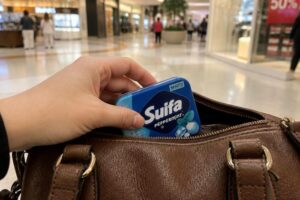
I never leave them in a handbag on the floor. I never leave them on a nightstand. I never leave them in a car console if a dog can access it.
──────────────────────────────────────────────────
When Should You Use Xylitol Mints?
Timing matters.
I like xylitol mints most after eating or drinking.
Good times include:
- After breakfast
- After lunch
- After dinner
- After snacks
- After coffee or tea
- When your mouth feels dry
Do not chew or suck on mints all day without thinking. Even helpful products need balance.
I prefer a simple routine.
Use one serving after meals. Check your total xylitol intake. Keep brushing and flossing.
That is realistic. That is sustainable.
Who Should Consider Xylitol Mints?
Xylitol mints may be a good fit if you:
- Want fresher breath without sugar
- Snack often
- Drink coffee often
- Experience mild dry mouth
- Want a more tooth-friendly mint
- Prefer mints over gum
- Need a pocket-friendly oral-care helper
They may be especially convenient for office workers, travelers, teachers, salespeople, healthcare workers, and anyone who talks closely with people.
I like them because they are small but useful.
A good mint should not only taste good. It should earn its space in your pocket.
──────────────────────────────────────────────────
Who Should Be Careful With Xylitol Mints?
You should be cautious if you:
- Have a sensitive stomach
- Already react poorly to sugar alcohols
- Have young children who may choke on hard mints
- Have dogs at home
- Need strict dietary control for medical reasons
If you are unsure, ask your dentist or physician.
I am a mint candy expert. I can guide product choice and practical use. But your clinician knows your personal health history.
──────────────────────────────────────────────────
My Expert Verdict: Do Xylitol Mints Really Work?
Yes, xylitol mints really work when used correctly.
They work best for:
- Fresh breath
- Saliva stimulation
- Reducing sugar exposure
- Supporting a healthier oral environment
- Helping with cavity-risk management as part of a full routine
They do not work as:
- A replacement for brushing
- A replacement for flossing
- A cure for cavities
- A treatment for gum disease
- A guaranteed dental shield
My favorite kind of xylitol mint is simple.
Xylitol first. No sugar. Clear dosage. Pleasant flavor. Not too acidic. Slow dissolving.
That is the mint I trust most.
──────────────────────────────────────────────────
More Related Questions
Can I Use Xylitol Mints Instead of Brushing?
No.
Xylitol mints support oral care, but they do not replace brushing.
Brush twice daily with fluoride toothpaste. Floss or clean between teeth daily. Use mints as an extra step.
How Many Xylitol Mints Should I Take Per Day?
It depends on the xylitol amount per mint.
Many oral-health routines aim for repeated xylitol exposure throughout the day. Some discussions use around 5 grams per day as a practical target.
Check the label. Do not guess.
Are Xylitol Mints Good After Coffee?
Yes.
I like them after coffee because they help with breath and dryness.
Coffee can leave a strong odor. A xylitol mint gives a cleaner finish without adding sugar.
Do Xylitol Mints Whiten Teeth?
Not directly.
Xylitol does not bleach teeth.
But it may help reduce plaque activity and support cleaner-feeling teeth. That can make your smile look fresher over time.
Are Xylitol Mints Better Than Xylitol Gum?
Both can be useful.
Gum may stimulate more saliva because chewing lasts longer. Mints are quieter, neater, and easier to use in formal settings.
I keep both around. But for meetings, I choose mints.
──────────────────────────────────────────────────
Conclusion
Xylitol mints really can work. They freshen breath, support saliva, and help reduce sugar exposure. Choose mints with xylitol as the main ingredient, use them consistently, and keep them away from dogs. For best results, pair them with brushing, flossing, and regular dental care.