Have you ever popped a mint candy into your mouth and wondered, “What am I actually eating?” I have. As Suifa, a mint candy expert, I look at every mint like a tiny formula. The problem is that many ingredient labels feel simple at first, but the words can become confusing fast. Sugar, corn syrup, natural flavor, artificial color, sugar alcohols — they all matter.
Mint candy is usually made with sugar or sugar-free sweeteners, corn syrup, mint flavoring such as peppermint oil, stabilizers, coloring agents, and sometimes acids, chocolate, or preservatives. The exact ingredient list depends on whether the candy is hard, chewy, coated, sugar-free, vegan, or breath-focused.
I want to make this easy. So I’ll break the ingredients down clearly. No fluff. Just the mint candy facts we need.
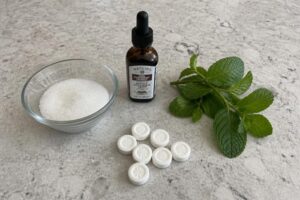
Quick Answer: What Is Usually Inside Mint Candy?
Most mint candies include a few core parts:
- Sweetener: sugar, corn syrup, xylitol, sorbitol, or another sugar substitute.
- Mint flavor: peppermint oil, spearmint oil, natural flavor, or artificial flavor.
- Texture helpers: stabilizers, emulsifiers, or anti-caking agents.
- Coloring: natural or artificial colors.
- Optional extras: citric acid, chocolate, preservatives, or coating agents.
Mint Candy Ingredient Overview
| Ingredient Type | Common Examples | Main Purpose in Mint Candy |
|---|---|---|
| Sweeteners | Sugar, corn syrup, xylitol, sorbitol | Adds sweetness and body |
| Mint flavoring | Peppermint oil, spearmint oil, natural flavor | Creates the cooling mint taste |
| Coloring agents | Titanium dioxide alternatives, FD&C colors, natural colors | Improves appearance |
| Stabilizers | Gum arabic, modified starch, gelatin in some candies | Helps texture and shape |
| Acids | Citric acid, malic acid | Adds brightness or tang |
| Coatings | Chocolate, shellac, carnauba wax | Adds shine, texture, or flavor |
| Preservatives | Depends on product formula | Extends shelf life |

What Sweeteners Are Used in Mint Candy?
The first ingredient in many classic mint candies is sugar.
Sugar gives mint candy its sweetness. It also creates structure.
In hard mints, sugar helps form that firm, glassy bite. In softer mints, sugar works with other ingredients to create a smoother texture.
Another common ingredient is corn syrup.
Corn syrup helps control crystallization. That means it can keep the candy from becoming grainy. It also adds body and smoothness.
For a basic reference on food composition and sweetener data, I like using USDA FoodData Central: USDA FoodData Central.
Are Sugar-Free Mint Candies Different?
Yes. Sugar-free mint candies use sugar substitutes instead of regular sugar.
The most common sugar-free ingredients include:
- Xylitol
- Sorbitol
- Maltitol
- Isomalt
- Aspartame
- Sucralose
In my experience, sugar-free mints often taste cooler because the sweeteners can create a slightly different mouthfeel.
Xylitol is especially common in breath mints and dental-focused products. It tastes sweet, but it is not regular sugar.
One important note: xylitol is dangerous for dogs. If you keep sugar-free mints at home, store them away from pets.

What Gives Mint Candy Its Mint Flavor?
The most important flavor ingredient is usually peppermint oil or spearmint oil.
Peppermint oil gives a stronger, sharper cooling effect. Spearmint oil tastes softer and sweeter.
Some products use natural flavor. Some use artificial flavor. Some use a blend of both.
The National Center for Complementary and Integrative Health has a helpful overview of peppermint oil here: NCCIH Peppermint Oil.
In candy, mint flavoring does more than taste fresh. It also creates a clean finish.
That finish is why many people eat mint candy after coffee, garlic, onions, or a heavy meal.
Natural Mint Flavor vs Artificial Mint Flavor
I get this question often.
Is natural mint flavor better? Not always. But it is different.
| Flavor Type | What It Usually Means | Taste Profile | Common Use |
|---|---|---|---|
| Peppermint oil | Oil from peppermint leaves | Strong, cool, sharp | Premium mints, classic hard mints |
| Spearmint oil | Oil from spearmint leaves | Sweeter, softer, herbal | Gentle breath mints |
| Natural flavor | Flavor derived from natural sources | Varies by formula | Clean-label candies |
| Artificial flavor | Lab-created flavor compounds | Consistent and stable | Mass-market candies |
| Blended flavor | Natural and artificial combined | Balanced and cost-efficient | Many commercial mints |
Natural peppermint oil can taste more complex. It may feel brighter and more botanical.
Artificial mint flavor can be more consistent. It also helps brands keep the same flavor from batch to batch.
The right choice depends on the candy style.

Why Do Some Mint Candies Contain Coloring Agents?
Color matters in candy.
Even white mints often use ingredients to improve appearance. Some mints are bright white. Some are pastel green. Some are red and white. Some are coated in chocolate.
Coloring agents help create visual identity.
Color does not usually create the mint taste. It mostly affects appearance.
Still, I always suggest checking the label if you avoid certain dyes or prefer natural colors.

What Stabilizers and Texture Ingredients Are Used?
Mint candy texture is not accidental.
That is where stabilizers and texture ingredients come in.
Common examples may include:
- Gum arabic
- Modified food starch
- Gelatin
- Magnesium stearate
- Carnauba wax
- Shellac
- Lecithin
Not every mint candy uses these. But many commercial formulas rely on them.
For example, pressed breath mints may include ingredients that help the powder bind together. Chocolate-coated mints may include emulsifiers to keep the chocolate smooth.
Why Is Citric Acid Sometimes Added?
Some mint candies include citric acid.
Citric acid adds brightness. It can make the flavor feel sharper. It is especially useful in fruit-mint combinations.
Think lemon mint. Think berry mint. Think sour mint.
Classic peppermint candies may not need citric acid. But modern mint candy flavors often use it to create contrast.
When used carefully, citric acid balances sweetness and mint coolness.
Do Mint Candies Contain Preservatives?
Some do. Some do not.
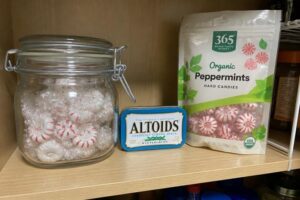
Hard candies are naturally shelf-stable because they contain low moisture. That means they may not need many preservatives.
Soft mints, filled mints, or chocolate-coated mints may need more formula support. This helps preserve texture, freshness, and appearance.
Preservatives are more common when the candy includes:
- Creamy fillings
- Chocolate coatings
- Higher moisture
- Fruit flavors
- Soft textures
I always tell people to read the label. That is the best source for the exact product.
Are Mint Candies Gluten-Free?
Many mint candies are naturally gluten-free, but not all.
The basic ingredients — sugar, corn syrup, and mint flavor — usually do not contain gluten. But risk can come from added ingredients or shared production lines.
If you have celiac disease or serious gluten sensitivity, look for a certified gluten-free claim.
The FDA explains gluten-free labeling here: FDA Gluten-Free Labeling.
My advice is simple: never assume. Always check the package.
Are Mint Candies Vegan?
Some mint candies are vegan. Some are not.
Basic hard mints may be vegan if they use plant-based ingredients. But certain ingredients can be animal-derived.
Watch for:
- Gelatin
- Dairy in chocolate coatings
- Confectioner’s glaze
- Some color additives
- Milk powder
- Butterfat
If a mint candy is labeled vegan, that makes the choice easier.
If not, I recommend checking the full ingredient list and allergen statement.

What Allergens Should I Watch For?
Plain mint candies are often simple. But specialty mints can include allergens.
Chocolate mint candies may contain milk and soy lecithin. Filled mints may contain dairy. Some factories also process tree nuts, peanuts, or wheat.
The FDA provides a helpful food allergy overview here: FDA Food Allergies.
Here is how I usually evaluate risk:
| Dietary Concern | What to Check on the Label | Why It Matters |
|---|---|---|
| Gluten-free | Gluten-free claim, wheat warning | Shared equipment may matter |
| Vegan | Gelatin, dairy, confectioner’s glaze | Some texture/coating ingredients may be animal-based |
| Nut allergy | “May contain” or facility statement | Cross-contact can happen |
| Dairy allergy | Milk, cream, butterfat, whey | Common in chocolate mints |
| Sugar-free diet | Xylitol, sorbitol, maltitol | May affect digestion in large amounts |
| Pet safety | Xylitol warning | Xylitol is dangerous for dogs |
How Do Ingredients Change by Mint Candy Type?
Different mint candies need different formulas.
A hard peppermint candy often uses sugar, corn syrup, peppermint oil, and color. A pressed breath mint may use sweeteners, binders, flavoring, and anti-caking ingredients. A chewy mint may need more texture support. A chocolate mint may include cocoa, milk, soy lecithin, and added fats.
Here is a simple breakdown:
| Mint Candy Type | Typical Ingredients | Texture Goal |
|---|---|---|
| Hard mint candy | Sugar, corn syrup, peppermint oil, color | Crisp and long-lasting |
| Pressed breath mint | Sorbitol or sugar, binders, mint flavor | Dry and quick-dissolving |
| Chewy mint | Sugar, syrup, stabilizers, flavor | Soft and flexible |
| Chocolate mint | Sugar, cocoa, dairy, mint oil, emulsifier | Creamy and rich |
| Sugar-free mint | Xylitol, sorbitol, mint flavor | Sweet without regular sugar |
Are Mint Candies Good for Fresh Breath?
Yes, but with a small warning.
Mint candies can temporarily freshen breath. They mask odors and leave a cool sensation.
But they do not always solve the cause of bad breath.
If a mint contains sugar, it may not be ideal for constant use. Sugar can feed oral bacteria.
Sugar-free mints may be a better option for frequent use, especially when made with non-sugar sweeteners.
Still, fresh breath starts with brushing, flossing, hydration, and dental care.

What Should I Look For When Buying Mint Candy?
When I choose mint candy, I look at five things:
- Sweetener type: I check whether it uses sugar or sugar-free alternatives.
- Mint source: I prefer candies that mention peppermint oil or spearmint oil.
- Allergen statement: I check for milk, soy, nuts, wheat, and shared equipment warnings.
- Texture ingredients: I look for stabilizers if the candy is chewy, coated, or pressed.
- Dietary claims: I look for gluten-free, vegan, kosher, organic, or sugar-free labels when needed.
A good mint candy label should be easy to understand. If it feels too vague, I pause.
More Related Questions
What is the main ingredient in mint candy?
The main ingredient is usually sugar. In sugar-free mints, the main ingredient may be sorbitol, xylitol, isomalt, or another sugar substitute.
Is peppermint oil used in all mint candies?
No. Some candies use peppermint oil, while others use spearmint oil, natural flavor, artificial flavor, or a blend.
Why do mint candies feel cold?
Mint flavor compounds create a cooling sensation in the mouth. That cool feeling is part of what makes mint candy so refreshing.
Are sugar-free mints healthier?
They may be useful for people reducing sugar. But some sugar alcohols can cause digestive discomfort if eaten in large amounts.
Can children eat mint candy?
Usually, yes. But hard candies can be choking hazards for young children. Always follow age-appropriate safety guidance.
Conclusion
Mint candy is simple on the surface but carefully built inside. Most formulas include sweeteners, mint flavoring, texture helpers, and sometimes colors, acids, coatings, or preservatives. I always recommend reading the label first. That is where the real mint candy story begins.