How Are Mints Made in the Factory?
Many buyers think mints are simple candies. But in factory production, small mistakes can create serious business problems. Poor mixing can cause uneven flavor. Weak packaging can reduce freshness. Unstable quality control can lead to customer complaints. For B2B buyers, hotels, distributors, retailers, and private-label brands, these issues can damage brand trust and repeat orders.
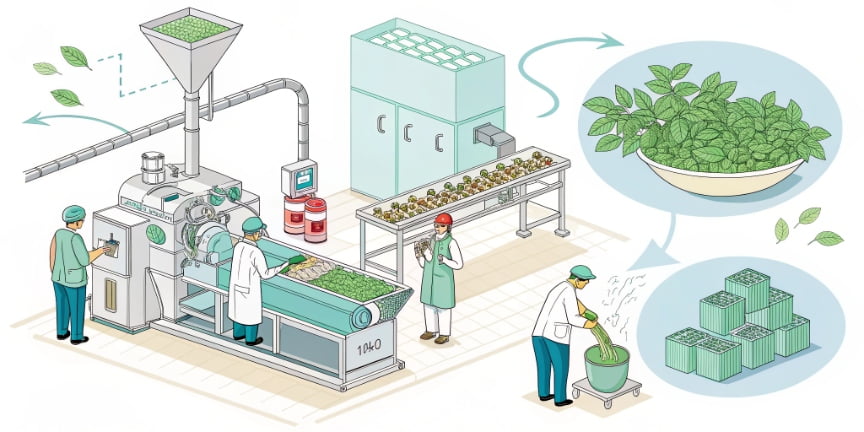
Mints are made in factories through a controlled process that includes ingredient selection, weighing, mixing, flavoring, shaping, cooling or drying, polishing, packaging, and quality inspection. Each step affects the mint’s taste, texture, appearance, shelf life, safety, and branding value. A professional mint factory should use stable formulas, food-grade equipment, documented quality control, and suitable packaging for bulk or private-label supply.
This article explains how mints are made in a factory and what B2B buyers should check before choosing a mint supplier.
Quick Answer: How Are Mints Made?
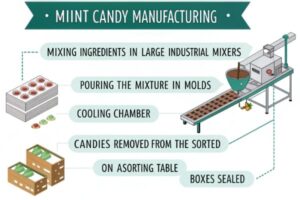
Mints are usually made by following these main factory steps:
- Select and inspect ingredients
- Weigh ingredients according to the formula
- Mix the sweetener base, flavor, and functional ingredients
- Shape the mints by pressing, molding, depositing, or cutting
- Cool, dry, or stabilize the mints
- Polish the surface if needed
- Inspect quality, weight, shape, taste, and packaging
- Pack mints into wrappers, tins, bottles, bags, or cartons
- Prepare finished goods for storage and shipping
For B2B buyers, the most important points are formula consistency, food safety, packaging quality, and batch-to-batch stability.
Why Mint Production Matters for B2B Buyers
A mint is small, but it can carry a large brand impression.
Mints are used in many business situations. Hotels place them in rooms. Restaurants serve them after meals. Airlines include them in service kits. Retail brands sell them in tins, bottles, or boxes. Corporate buyers use them as promotional gifts.
That means the mint is not only a candy. It is also a customer touchpoint.
If the mint tastes fresh, looks clean, and has professional packaging, it supports the buyer’s brand image. If the mint is dusty, broken, sticky, poorly wrapped, or inconsistent in flavor, it can weaken the buyer’s brand.
For B2B buyers, understanding how mints are made helps with:
- Supplier evaluation
- Product development
- Quality control
- Private-label customization
- Food safety compliance
- Packaging selection
- Long-term cost control
Before placing a bulk order, buyers should understand the factory’s process, quality standards, and packaging capability.

Main Ingredients Used to Make Mints
Most mints are made from a sweet base, mint flavor, and functional ingredients. The exact formula depends on the product type and target market.
Common mint ingredients include:
- Sugar
- Glucose syrup
- Sorbitol
- Xylitol
- Peppermint oil
- Spearmint flavor
- Wintergreen flavor
- Binding agents
- Anti-caking agents
- Colorants, if required
- Coating or polishing agents, if required
Sugar-based mints are common in traditional candy markets. Sugar-free mints often use sweeteners such as sorbitol or xylitol. Premium mints may use natural peppermint oil or custom flavor blends.
For B2B buyers, the key point is formula stability. A good mint should taste the same in every batch.
For ingredient and additive compliance, buyers can review official references such as the FDA’s information on food ingredients and packaging and EFSA’s overview of food additives.
Common Types of Factory-Made Mints
Different mint types require different production methods, equipment, packaging, and quality checks.
| Mint Type | Common Factory Method | Typical B2B Use | Key Buyer Concern |
|---|---|---|---|
| Compressed mints | Powder blending and tablet pressing | Retail tins, promotional packs, private label | Hardness, dust level, flavor consistency |
| Hard mints | Cooking, forming, cooling | Wrapped candy, bulk candy, display packs | Moisture control, cracking risk, clarity |
| Soft mints | Mixing, forming, drying or setting | Hotels, gifting, premium candy lines | Texture, shelf life, packaging barrier |
| Sugar-free mints | Sweetener blending and pressing or forming | Pharmacy, wellness, travel retail | Sweetener compliance, aftertaste |
| Logo mints | Mold pressing or embossing | Corporate gifts, events, hospitality | Logo clarity, breakage rate, mold precision |
This table helps buyers define the right mint type before contacting a factory.
Step-by-Step Mint Manufacturing Process
1. Ingredient Selection and Inspection
The factory first selects and checks the raw materials. This step may include checking supplier documents, ingredient appearance, smell, batch number, expiration date, and storage condition.
For export or private-label orders, ingredient traceability is important. A reliable factory should be able to provide batch records and ingredient documentation.
2. Weighing According to the Formula
After inspection, ingredients are weighed according to the approved formula. This step must be accurate because even small changes can affect taste, hardness, sweetness, and cooling strength.
For B2B production, the factory should control:
- Ingredient ratio
- Batch size
- Weighing accuracy
- Formula version
- Operator records
This helps ensure that every batch matches the approved sample.
3. Mixing the Mint Base
Next, the ingredients are mixed.
For compressed mints, dry powders must be blended evenly. The powder must have good flowability so it can enter the tablet press smoothly.
For hard mints, the sweet base may be cooked before forming. Temperature and timing are important because they affect texture and moisture.
For soft mints, the mixture must reach the correct texture before forming.
Mixing is one of the most important steps because it determines flavor consistency. If the mint flavor is not evenly distributed, some pieces may taste too strong while others taste weak.
4. Adding and Controlling Mint Flavor
Mint flavor may be added during mixing or after cooking, depending on the product type.
Common flavor options include:
- Peppermint
- Spearmint
- Wintergreen
- Menthol-style cooling
- Custom mint blends
Flavor level must be controlled carefully. Too little flavor makes the mint forgettable. Too much flavor can feel harsh.
For B2B buyers, the goal is not only a strong taste. The goal is repeatable flavor performance.
Buyers should approve samples before mass production. Once approved, the factory should lock the formula.
5. Shaping the Mints
After mixing and flavoring, the factory shapes the mints.
The shaping method depends on the product type:
- Compressed mints are pressed into tablets.
- Hard mints may be deposited, molded, or cut.
- Soft mints may be extruded, molded, or cut.
- Logo mints may be embossed during pressing or molding.
Shape is important because it affects both appearance and packaging.
A round mint may feel classic. A small tablet may fit a retail tin. A pillow mint may look elegant for hospitality. A logo mint can support corporate branding.
For private-label buyers, shape is part of brand identity.
6. Cooling, Drying, or Stabilizing
After shaping, many mints need cooling, drying, or setting.
This step stabilizes the mint structure and helps control shelf life.
Moisture control is especially important. If the mint contains too much moisture, it may become sticky. If it becomes too dry, it may crack or break.
This is important for export orders because products may travel through hot or humid climates.
Buyers should discuss storage and shipping conditions with the factory before production.
For general food hygiene principles, buyers can review Codex Alimentarius food hygiene resources from FAO and WHO: Codex Food Hygiene.
7. Polishing the Mint Surface
Some mints are polished after forming.
Polishing can:
- Improve surface smoothness
- Reduce powder dust
- Improve visual appearance
- Support cleaner packaging
- Increase perceived product value
Not every mint needs polishing. However, for hotels, airlines, gift suppliers, and premium retail brands, polishing can improve the final presentation.
Surface quality affects perceived value.
8. Packaging the Finished Mints
Packaging protects the mint and turns it into a sellable product.
Common B2B packaging formats include:
- Bulk bags
- Individual wrappers
- Pillow packs
- Roll packs
- Plastic bottles
- Metal tins
- Paper boxes
- Display cartons
- Private-label retail packs
Packaging must protect freshness, aroma, texture, and appearance.
Mint flavor can fade if the packaging barrier is weak. Moisture can enter if the seal is poor. Heat can also affect texture.
That is why packaging should be selected according to the formula, shelf life, shipping route, and sales channel.
Quality Control in Mint Production
Quality control should happen throughout the whole process, not only before shipment.
A responsible factory checks ingredients, mixing, forming, flavor, weight, packaging, and final cartons.
| Quality Control Point | What the Factory Checks | Why It Matters |
|---|---|---|
| Ingredient inspection | Supplier documents, appearance, batch number | Supports traceability and compliance |
| Mixing control | Mixing time, uniformity, moisture | Keeps taste and texture consistent |
| Piece weight check | Weight range per mint | Controls cost and product consistency |
| Shape inspection | Size, cracks, chips, logo clarity | Protects appearance and branding |
| Flavor test | Cooling level, sweetness, aftertaste | Ensures repeatable customer experience |
| Packaging seal test | Seal strength and leakage risk | Protects freshness during storage and shipping |
| Final carton check | Label, count, weight, shipping marks | Reduces logistics and customs problems |
B2B buyers should ask suppliers about their inspection process before placing large orders.
For U.S. food manufacturing references, buyers can review FDA Current Good Manufacturing Practice requirements in 21 CFR Part 117.
Mint Packaging Options for B2B Orders
Different channels need different packaging.
Hotels usually prefer individually wrapped mints because they are clean and easy to distribute. Retail brands often choose tins, bottles, or boxes because these formats look professional and protect the product. Distributors may prefer bulk cartons to reduce cost.
| Sales Channel | Recommended Packaging | Main Advantage |
|---|---|---|
| Hotels | Individually wrapped mints, pillow packs | Clean, hygienic, brandable |
| Restaurants | Wrapped mints, counter display packs | Easy after-meal service |
| Retail stores | Tins, bottles, paper boxes | Strong shelf presentation |
| Distributors | Bulk bags, cartons | Lower cost and easier repacking |
| Corporate gifts | Logo mints, custom tins, gift boxes | Strong branding value |
| Airlines and travel | Small wrapped packs, compact tins | Portable and hygienic |
The best packaging depends on the buyer’s budget, sales channel, shelf-life needs, and brand positioning.
Customization Options for Private-Label Mints
Factory-made mints are highly suitable for private-label business.
B2B buyers can customize:
- Mint flavor
- Sweetness level
- Sugar-free formula
- Mint size
- Mint shape
- Mint color
- Logo embossing
- Wrapper design
- Tin design
- Box design
- Carton specification
- Private-label branding
Before contacting a factory, buyers should prepare clear product requirements. This should include target market, packaging type, flavor preference, order quantity, certification needs, and price range.
Clear requirements help the factory quote faster and reduce sample development time.
For barcode and retail identification standards, buyers can refer to GS1 Standards.

Food Safety Standards for Mint Factories
Food safety is critical in mint production.
A mint may be small, but it is still a food product. The factory should manage clean workshops, trained workers, safe equipment, documented procedures, and traceable ingredients.
B2B buyers should ask about:
- Food production license
- GMP practices
- HACCP-based controls
- Ingredient traceability
- Allergen control
- Batch records
- Metal detection
- Packaging hygiene
- Export documentation
Different markets may require different standards. The U.S. market may require specific food safety documentation. The EU market may have strict labeling and additive rules. Some buyers may also require halal, kosher, or other certifications.
For broader food safety information, buyers can review the FDA’s Food Safety Modernization Act resources: FDA FSMA.
For food safety management systems, buyers can also review the ISO overview of ISO 22000.
How Factories Prepare Mints for Bulk Shipping
After packaging, finished mints are packed into cartons. The cartons may be sealed, labeled, and palletized.
For export orders, factories may also prepare shipping marks and documents.
Buyers should confirm:
- Carton size
- Gross weight
- Net weight
- Pieces per carton
- Shelf life
- Storage conditions
- Shipping marks
- Pallet requirements
- Lead time
- Delivery terms
This information helps buyers calculate freight costs, plan warehouse space, and avoid logistics problems.
How to Choose a Reliable Mint Factory
I always advise buyers not to choose a mint factory by price alone.
Low price may look attractive, but unstable quality can become expensive later.
A reliable mint factory should offer:
- Stable production
- Clear communication
- Sample development
- Private-label support
- Food safety control
- Packaging capability
- Export experience
- Quality inspection reports
Before placing an order, buyers should ask:
- Can you provide samples?
- Can you customize flavor and packaging?
- What certifications do you have?
- What is your MOQ?
- What is your lead time?
- How do you control quality?
- Can you support private-label packaging?
- Can you provide export documents?
- What packaging formats do you offer?
- Can you provide inspection reports?
A sample order or trial order is a smart way to reduce risk before mass production.
More Related Questions
Are Factory-Made Mints Suitable for Private-Label Brands?
Yes. Factory-made mints are very suitable for a private-label business. Buyers can customize flavor, shape, color, packaging, and branding. This works well for retailers, distributors, hotel suppliers, corporate gift companies, and promotional product businesses.
Can Mints Be Made Sugar-Free?
Yes. Many factories can produce sugar-free mints using approved sweeteners such as sorbitol, xylitol, or other alternatives. The final formula should match local regulations and buyer requirements.
What Is the Usual Shelf Life of Mints?
Shelf life depends on the formula, moisture level, packaging material, and storage conditions. Many mints can have a long shelf life when produced and packed correctly. Buyers should confirm the exact shelf life with the supplier.
What Packaging Is Best for B2B Mint Orders?
The best packaging depends on the sales channel. Hotels often choose individually wrapped mints. Retail brands often choose tins, bottles, or boxes. Distributors may prefer bulk bags or cartons.
Can a Factory Emboss a Logo on Mints?
Yes. Some factories can emboss logos on pressed or molded mints. This depends on mint size, shape, machine capability, and logo complexity. Logo mints are popular for hospitality, corporate gifts, and promotional campaigns.
What Should Buyers Check Before Ordering Mints in Bulk?
Buyers should check the formula, samples, packaging, MOQ, lead time, certifications, quality control process, carton details, and export documents. Sample approval before mass production is very important.
Conclusion
Mints are made through controlled ingredient selection, mixing, flavoring, shaping, cooling or drying, polishing, packaging, and inspection. For B2B buyers, understanding this process helps protect product quality, brand image, compliance, cost control, and long-term customer trust.