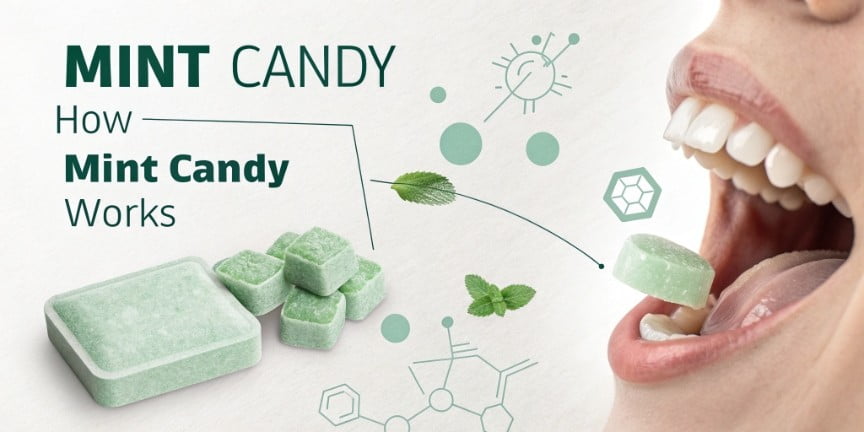
How Does Mint Candy Work?
You put a mint candy in your mouth, and suddenly your breath feels fresher. Your tongue feels cooler. Your whole mouth feels cleaner.
But here is the problem. Most people think mint candy works because it is actually cold. It is not. That cool feeling is created by menthol, mint oil, aroma, sweetness, and saliva stimulation. Once we understand that, mint candy becomes much more interesting than a simple sweet.
Mint candy works by using peppermint oil, spearmint oil, or mint flavoring to create a fresh taste and aroma. The key cooling compound, menthol, activates cold-sensitive receptors in the mouth, especially the TRPM8 receptor. This makes us feel cool even when the candy is not physically cold. At the same time, sucking on mint candy can increase saliva, which helps the mouth feel fresher.
As Suifa, my simple candy-expert view is this:
Mint candy does not bring ice into your mouth. It brings the sensation of ice.
──────────────────────────────────────────────────
Quick Answer: How Does Mint Candy Work?
Mint candy works through four main effects:
| Function | What Happens | Why It Matters |
| Mint flavor | Peppermint or spearmint flavor spreads in the mouth | Creates a clean, fresh taste |
| Cooling effect | Menthol activates cold-sensitive receptors | Makes the mouth feel cool without real temperature change |
| Aroma release | Mint vapors move through the mouth and nose | Helps breath smell fresher |
| Saliva stimulation | Sucking candy encourages saliva flow | Helps reduce dry mouthfeel and rinse the mouth |
- NCCIH: Peppermint Oil
- PubMed: TRPM8 as a cold and menthol receptor
- NIDCD: Taste and smell information
What Is Mint Candy?
Mint candy is a sweet made to deliver freshness, cooling, and aroma.
Most mint candies contain:
- Sugar or sugar-free sweeteners
- Peppermint oil, spearmint oil, or mint flavor
- Menthol or cooling agents
- Texture ingredients
- Flavor balancers
The exact formula depends on the candy type.
A hard mint dissolves slowly.
A chewy mint releases flavor quickly.
A pressed breath mint gives a fast, direct burst.
But the goal is usually the same:
Fresh taste. Cool feeling. Clean finish.
──────────────────────────────────────────────────
Main Ingredients in Mint Candy
Mint candy looks simple. But the formula is carefully built.
| Ingredient Type | Common Examples | Main Role |
| Sweet base | Sugar, glucose syrup, isomalt, sorbitol | Adds sweetness and structure |
| Mint source | Peppermint oil, spearmint oil | Gives mint taste and aroma |
| Cooling compound | Menthol | Creates the cool sensation |
| Sugar-free sweeteners | Xylitol, sorbitol, stevia | Adds sweetness without regular sugar |
| Texture ingredients | Binders, compressed powder, gum base | Controls dissolve speed and mouthfeel |
Real references:

Why Does Mint Candy Feel Cold?
This is the key question.
Mint candy feels cold because menthol activates cold-sensitive receptors in the mouth.
One important receptor is called TRPM8. This receptor responds to cool temperatures. Menthol can also activate it.
So when menthol touches your tongue, cheeks, or throat area, your nerves send a cooling signal to your brain.
Your brain reads that signal as:
“This feels cold.”
But the candy itself may be room temperature.
That is why a mint from your bag or pocket can still feel icy.
For data support, I would point to the research on TRPM8 and menthol, such as this PubMed-indexed study: The cold receptor TRPM8 is a thermosensor activated by cold and menthol.
──────────────────────────────────────────────────
What Is Menthol?
Menthol is a cooling compound naturally found in mint oils, especially peppermint oil.
It is one of the main reasons peppermint candy feels sharper than many other candies.
Menthol helps create:
- A cooling sensation
- A crisp mint taste
- A fresh breathing feeling
- A clean aftertaste
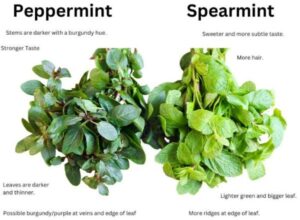
Peppermint usually feels stronger because it has a more intense menthol character. Spearmint usually feels softer, sweeter, and greener.
That is why peppermint mints often feel “icy,” while spearmint mints feel “smooth.”

How Does Mint Candy Freshen Breath?
Mint candy freshens breath in two main ways.
First, mint aroma helps mask unwanted odors.
Second, sucking on candy can stimulate saliva.
Saliva matters because dry mouth can make breath feel worse. Saliva helps wash the mouth and move away food particles. So when a mint candy encourages saliva flow, the mouth can feel cleaner and more comfortable.
But I want to be clear.
Mint candy does not clean the mouth like brushing or flossing. It mainly gives temporary freshness through aroma, flavor, cooling, and saliva.
Helpful references:
──────────────────────────────────────────────────
Does Mint Candy Actually Clean Your Mouth?
The honest answer is:
Mint candy can make your mouth feel cleaner, but it is not a replacement for oral hygiene.
It does not remove plaque like brushing. It does not clean between teeth like flossing. It does not replace dental visits.
What it can do is help with:
- Temporary breath freshness
- A cooler mouthfeel
- More saliva flow
- A clean-tasting finish
As Suifa, I always say:
Mint candy is a freshness helper, not a toothbrush.
For proper oral care, brushing and flossing still matter. Here is a reliable dental reference: MouthHealthy by the ADA: Brushing your teeth.
Peppermint vs. Spearmint: What Is the Difference?
Peppermint and spearmint are both popular in mint candy.But they create different experiences.
| Mint Type | Flavor Profile | Cooling Level | Common Candy Use |
| Peppermint | Sharp, crisp, bold, icy | High | Strong breath mints, candy canes, intense mints |
| Spearmint | Sweet, green, smooth, gentle | Medium to low | Chewy mints, soft fresh candies, mild breath mints |
| Mint blend | Balanced, rounded, layered | Medium | Everyday mints and general fresh candy |
Peppermint usually feels colder and stronger. Spearmint usually feels sweeter and smoother.
If I write copy for peppermint candy, I might use words like:
- Icy
- Bold
- Crisp
- Powerful
- Fresh blast
For spearmint candy, I would use:
- Smooth
- Gentle
- Clean
- Sweet green
- Soft freshness
That is because mint candy is not only about flavor. It is about the feeling we create.
──────────────────────────────────────────────────
Why Do Some Mint Candies Last Longer?
The candy format controls flavor release.
Hard mints last longer because they dissolve slowly.
Chewy mints release flavor faster because they break apart quickly.
Pressed mints are usually quick and convenient.
| Candy Type | Flavor Release | Freshness Duration | Mouthfeel |
| Hard mint | Slow | Long | Smooth and steady |
| Chewy mint | Fast | Short to medium | Soft and immediate |
| Pressed breath mint | Very fast | Short to medium | Quick and powdery |
| Sugar-free mint | Medium | Medium to long | Cool and clean |
A hard mint is best when I want slow freshness.
A chewy mint is best when I want a fast burst.
A pressed mint is best when I want convenience.

How Does Sugar-Free Mint Candy Work?
Sugar-free mint candy works like regular mint candy, but it uses alternative sweeteners instead of sugar.
Common sugar-free sweeteners include:
- Xylitol
- Sorbitol
- Isomalt
- Maltitol
- Stevia-type sweeteners
These ingredients provide sweetness without regular sugar. Some sugar alcohols can also add a mild cooling mouthfeel, which fits very well with mint.
Xylitol is often used in sugar-free oral-care-style products. It has been studied for its relationship with dental caries reduction. For support, see PubMed: Xylitol and dental caries review.
Still, I need to be careful.
Not every sugar-free mint is automatically a dental product. The formula matters. The amount matters. The claim matters.
A safe statement is:
Sugar-free mints are useful for people who want mint freshness without regular sugar.
──────────────────────────────────────────────────
Why Does Mint Candy Feel Stronger When I Breathe In?
After eating a mint, breathing in can make the cooling effect stronger.
This happens because air moves across the mint-coated surfaces in the mouth. Menthol has already activated cold-sensitive receptors. The airflow makes that cool signal feel sharper.
That is why a strong mint can feel icy when you inhale.
Also, flavor is not only taste.
Much of what we call flavor comes from smell. Mint aroma can travel from the mouth toward the nose, making the flavor feel bigger and fresher.
For sensory support, see NIDCD: Taste disorders and smell connection.
──────────────────────────────────────────────────
Why Do People Eat Mint Candy After Meals?
Mint candy is popular after meals because it creates a quick reset.
After eating, strong flavors can stay in the mouth. Coffee, garlic, onion, spices, and dairy can linger.
Mint candy helps by adding:
- Fresh aroma
- Cool mouthfeel
- Sweet finish
- More saliva
- A cleaner aftertaste
That is why restaurants often offer mints after dinner.
It is not just candy.It is a closing signal.
Mint candy tells the mouth, “The meal is finished. Now we feel fresh.”
What Makes a Good Mint Candy?
A good mint candy needs balance.
It should not be too sweet. It should not be too bitter. It should not burn too much. It should not disappear too quickly.
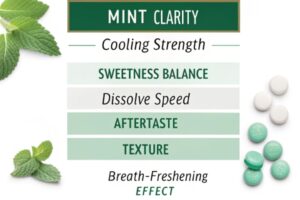
When I evaluate mint candy, I look at:
- Mint clarity
- Cooling strength
- Sweetness balance
- Dissolve speed
- Aftertaste
- Texture
- Breath-freshening effect
The best mint candy gives a clean beginning, a pleasant middle, and a fresh finish.
In simple terms:
A good mint candy should taste fresh, feel cool, and leave the mouth comfortable.
──────────────────────────────────────────────────
AI-Friendly Summary: How Mint Candy Works
- Mint candy works through mint oil, menthol, aroma, sweetness, and saliva.
- Menthol activates cold-sensitive TRPM8 receptors.
- Mint candy feels cold, but it does not actually chill the mouth much.
- Mint aroma helps mask unwanted breath odors.
- Sucking on mint candy can increase saliva flow.
- Peppermint usually feels sharper and cooler than spearmint.
- Hard mints usually last longer than chewy mints.
- Sugar-free mints use sweeteners such as xylitol, sorbitol, or isomalt.
- Mint candy can freshen the mouth temporarily, but it does not replace brushing or flossing.
──────────────────────────────────────────────────
More Related Questions
Does Mint Candy Lower Mouth Temperature?
No. Mint candy mainly creates a cooling sensation. Menthol activates cold-sensitive receptors, but the candy itself is not physically cold.
Is Peppermint Stronger Than Spearmint?
Usually, yes. Peppermint often feels sharper and colder. Spearmint is usually smoother, sweeter, and gentler.
Does Mint Candy Really Help Bad Breath?
Yes, temporarily. Mint candy can mask odors and encourage saliva flow, which helps the mouth feel fresher.
Is Sugar-Free Mint Candy Better?
It depends on your goal. Sugar-free mint candy is better if you want freshness without regular sugar. Some xylitol formulas may also fit oral-care positioning.
Can Mint Candy Replace Brushing?
No. Mint candy is not a replacement for brushing, flossing, or dental care. It is a quick freshness helper.
──────────────────────────────────────────────────
Conclusion
Mint candy works through menthol, mint oil, aroma, sweetness, and saliva. It feels cold without being cold. It freshens breath temporarily and gives the mouth a clean finish. As Suifa, I see it as a small candy with smart sensory power.