A vegan, gluten-free, or keto-friendly mint sounds simple until you read the ingredient list. Many buyers assume “mint” means clean, plant-based, and low-carb. That assumption can create dietary, ethical, or health risks. The safer approach is to review ingredients, label claims, and certifications together before buying.
A mint is vegan when it contains no animal-derived ingredients, gluten-free when it avoids wheat, barley, rye, and contamination risks, and keto-friendly when it is very low in net carbs and avoids sugar-heavy sweeteners. Packaging claims help, but buyers should verify the ingredient list, allergen statement, and credible certifications before trusting the product.
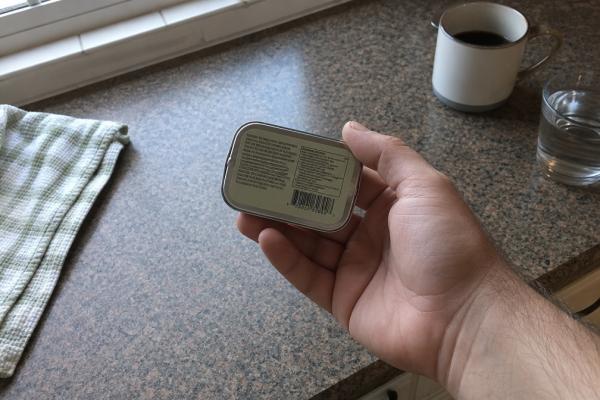
I learned this the practical way. I have handled customer questions about “vegan,” “gluten-free,” and “keto-friendly” claims, then compared product labels against ingredient lists. The biggest lesson was clear: the front of the pack often tells a shorter story than the back.
Why Can’t I Trust a Vegan, Gluten-Free, or Keto-Friendly Mint Label Alone?
A vegan, gluten-free, or keto-friendly mint label can feel reassuring, but it can also hide complexity. The problem starts when buyers treat the claim as proof. The risk grows when the product has blended flavors, coatings, binders, sweeteners, or anti-caking agents that do not match the dietary claim.
A mint label alone is not enough because “vegan,” “gluten-free,” and “keto-friendly” are not always verified in the same way1. Some claims are self-declared, while others are backed by third-party certification. Buyers should compare the marketing claim with the ingredient list, allergen statement, and certification details.
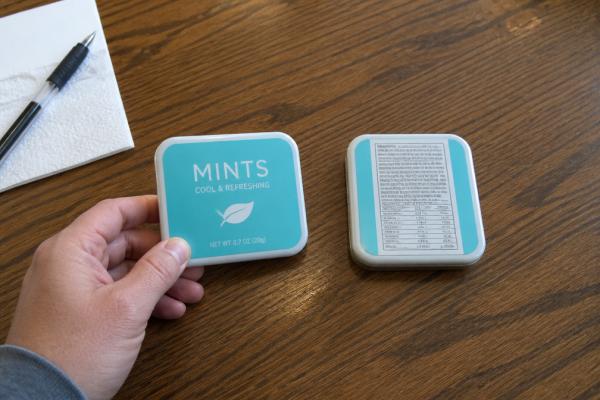
The front label is marketing. The back label is evidence.2
I have seen customers focus on the large front label first. That is normal. Product packaging is designed to make decisions easy. A mint may say:
- Sugar-free
- Plant-based
- Natural flavor
- Keto-friendly
- Gluten-free
- Vegan
- No artificial colors
Those phrases can be useful. However, they are not all equal. Some have clearer regulatory or certification frameworks depending on the market. Others are broad marketing terms.
For example, “sugar-free” does not automatically mean keto-friendly3. A product may contain sugar alcohols that affect some people differently. A “natural flavor” may still require deeper review if the buyer follows a strict vegan diet4. A “gluten-free” claim may not answer whether the mint is made in a shared facility with wheat-based products.
Common reasons mint labels mislead buyers
The issue is not always bad intent. Sometimes the problem comes from complex supply chains and unclear definitions.
| Label Claim | What Buyers Often Assume | What Still Needs Checking |
|---|---|---|
| Vegan | No animal ingredients anywhere | Gelatin, shellac, dairy derivatives, honey, animal-derived colors |
| Gluten-free | Safe for everyone avoiding gluten | Cross-contact risk, malt ingredients, wheat starch, facility controls |
| Keto-friendly | Very low-carb and sugar-free | Net carbs, serving size, sweetener type, hidden starches |
| Natural | Healthier or cleaner | Source of flavors, carriers, processing aids |
| Sugar-free | Keto-approved | Maltitol, total carbs, digestive tolerance |
The “label versus formula” gap
In one product review process, I remember seeing a mint that looked suitable at first glance because the front label emphasized “sugar-free.” A customer then asked whether it was vegan and keto-friendly. The ingredient list raised more questions than the front label answered. The sweetener system looked low-sugar, but the coating and flavor system needed confirmation.
That experience changed how I review these products. I now separate claims into three levels:
-
Marketing claim
The front-pack message, such as “keto” or “plant-based.” -
Ingredient evidence
The actual ingredient list and allergen declaration. -
Verification layer
Third-party certification, supplier documents, or manufacturer clarification.
My practical rule is simple: I never treat the front label as the final answer.
For everyday consumers, this may feel like extra work. For buyers sourcing products for retail, wellness stores, offices, hotels, or foodservice, it is essential. A mislabeled or misunderstood mint can create consumer complaints, ethical concerns, or avoidable dietary risks.
Which Ingredients Make a Mint Vegan?
A vegan mint avoids animal-derived ingredients, but the challenge is that animal ingredients are not always obvious. Buyers often check for milk or gelatin, then stop. That can be risky because coatings, colors, flavors, and polishing agents may also come from animal-related sources.
A mint is vegan when every ingredient, processing aid, flavor carrier, color, coating, and sweetener source is free from animal-derived material. Buyers should review obvious ingredients like gelatin and dairy, but they should also question shellac, beeswax, carmine, honey, and unclear natural flavors.
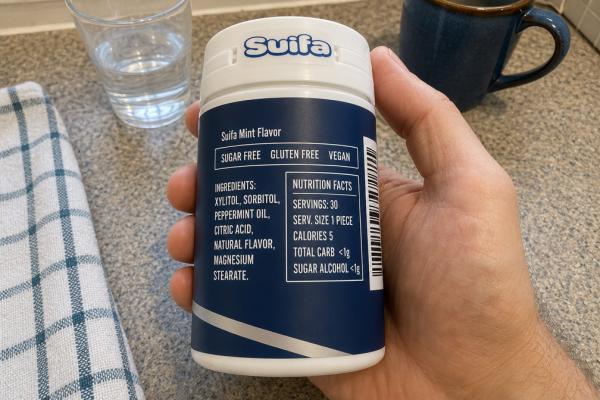
The obvious non-vegan ingredients
Some ingredients are easy to identify. If a mint contains these, it is usually not suitable for vegan buyers:
- Gelatin: often used in chewy products or soft textures
- Milk powder or cream powder: sometimes used in creamy mint flavors
- Butter oil or dairy flavor compounds
- Honey: used as a sweetener or flavor note
- Carmine: a red color derived from insects
Hard pressed mints may not use gelatin, but chewy mints, breath strips, coated candies, and specialty mints may have more complex formulas.
The less obvious vegan concerns
The harder part is reviewing ingredients that sound neutral. In my experience, these create the most buyer confusion.
| Ingredient or Term | Why It Matters for Vegan Buyers | What to Ask |
|---|---|---|
| Shellac5 | Often insect-derived and used for shine | Is the coating vegan-certified? |
| Beeswax | Animal-derived polishing or coating agent | Is a plant-based wax used instead? |
| Natural flavor | Source may be plant, animal, or mixed | Can the supplier confirm vegan status? |
| Magnesium stearate | Can be plant or animal derived | What is the source? |
| Glycerin6 | Can be plant or animal derived | Is it vegetable glycerin? |
| Color additives | Some may not meet strict vegan standards | Are all colors vegan-compliant? |
Vegan does not mean “simple”
Many consumers imagine a mint as peppermint oil plus sweetener. Some mints are close to that. Others are not. A typical mint can include:
- Sweetener base
- Binding agent
- Flavoring oil or flavor compound
- Anti-caking agent
- Coating or polishing agent
- Color
- Acidity regulator
- Tablet lubricant
Every one of those components may need review.
What I look for first
When I review a mint for vegan suitability, I usually start with three areas:
- Texture: Chewy and gummy products are higher risk because gelatin may be involved.
- Shine: Glossy coated mints may use shellac or beeswax.
- Flavor complexity: Cream, butter, vanilla, dessert, or chocolate-mint flavors may include dairy-derived components.
Plain peppermint or spearmint tablets are often easier to assess, but they are not automatically vegan. The safest approach is to look for a clear vegan statement supported by ingredient transparency or certification.
Certification helps, but it is not magic
A vegan certification can reduce uncertainty. adapting to many markets, however, I have learned not to treat any mark as a substitute for document review. Buyers should check:
- The certification body
- The product name and SKU covered
- The valid date
- Whether the certification applies to the finished product or only an ingredient
- Whether packaging or processing aids are included in the scope
This matters for ethical consumers and commercial buyers. A product can look vegan on the shelf and still require further confirmation before it belongs in a vegan product range.
What Makes a Vegan, Gluten-Free, or Keto-Friendly Mint Safe for Gluten-Sensitive Buyers?
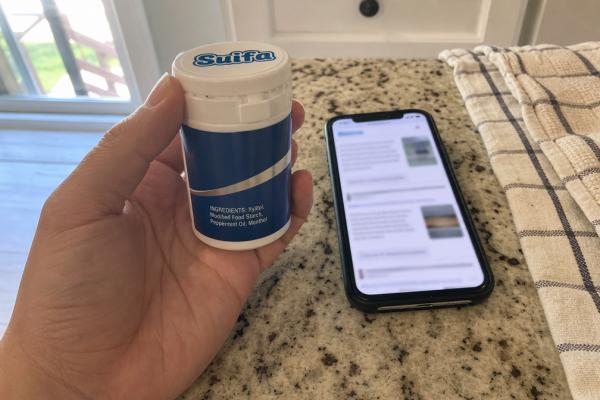
A vegan, gluten-free, or keto-friendly mint can still raise gluten questions because gluten risk is not limited to bread-like products. The problem can come from flavor carriers, starches, facility cross-contact, or vague ingredient terms. For people with celiac disease, small details matter.7
A mint is gluten-free when it contains no wheat, barley, rye, or gluten-containing derivatives and is made with controls that reduce cross-contact risk. Buyers should check the allergen statement, gluten-free certification, facility information, and ingredients such as malt, wheat starch, modified starch, and flavor carriers.
Why gluten can appear in mints
Mint products are usually small, but their formulas can be more technical than buyers expect. Gluten risk may come from:
- Wheat starch
- Malt extract
- Barley malt flavor
- Cookie, cake, or dessert flavor inclusions
- Modified food starch from unclear sources
- Shared production equipment
- Dusting powders or anti-caking systems
In many markets, gluten-free labeling has clearer rules than keto labeling. For example, in the United States, the FDA allows foods labeled gluten-free to contain less than 20 parts per million (ppm) gluten8. Other markets may use similar or different thresholds. Buyers should check the rule that applies to their selling region.
Ingredient list review for gluten
Here is a simple review table I use as a starting point.
| Ingredient Term | Gluten Risk Level | Buyer Action |
|---|---|---|
| Peppermint oil | Low | Confirm carrier if used in a flavor blend |
| Sorbitol or xylitol | Usually low | Check supplier documentation |
| Malt extract | High | Avoid unless certified gluten-free and verified |
| Wheat starch | High | Avoid unless specially processed and allowed by local standards |
| Modified food starch | Medium | Confirm source |
| Natural flavors | Medium | Ask about carrier and source |
| Anti-caking agents | Low to medium | Confirm no wheat-based carrier |
| Shared facility statement | Depends | Evaluate risk tolerance and certification |
Gluten-free and vegan are separate questions
A mint can be vegan but not gluten-free. A mint can be gluten-free but not vegan. A mint can be both, but still not keto-friendly. This is where many buyers make mistakes.
For example:
- A mint with gelatin may be gluten-free but not vegan.
- A mint with malt flavor may be vegan but not gluten-free.
- A mint with sugar may be vegan and gluten-free but not keto-friendly.
- A mint with maltitol may be sugar-free but not ideal for strict keto buyers.
This is why I prefer a three-column review instead of a single “approved” or “not approved” decision.
A practical gluten-free review process
For personal purchase, I suggest a simple sequence:
-
Read the allergen statement first.
Look for wheat, barley, rye, and shared facility statements. -
Scan the full ingredient list.
Do not stop at “gluten-free” on the front. -
Check for certification.
A recognized gluten-free certification adds confidence. -
Consider the user’s sensitivity.
Someone avoiding gluten by preference may use a different risk threshold than someone with celiac disease. -
Contact the brand if needed.
Ask whether the finished product is tested and whether the claim applies to the exact SKU.
For commercial buyers, the process should be more formal. I would ask for current product specifications, allergen control documents, and certification copies where available. I would also make sure the product name, flavor, and formula version match the documents.
A gluten-free claim is strongest when the ingredient list, allergen statement, production controls, and certification all point in the same direction.
How Can a Mint Be Keto-Friendly If It Tastes Sweet?
A keto-friendly mint can taste sweet because it usually relies on low-carb sweeteners instead of regular sugar. The problem is that not every sugar-free mint fits every keto diet. Some sweeteners and serving sizes can still create carb concerns for strict keto buyers.
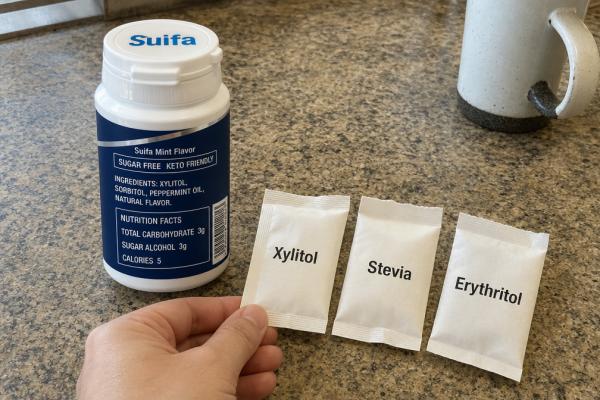
A mint is keto-friendly when it is low in net carbs per serving and uses sweeteners that fit the buyer’s keto approach. Common options include stevia, erythritol, monk fruit, xylitol, and sometimes sorbitol. Buyers should review total carbs, sugar alcohols, serving size, and sweetener type.
Sugar-free is not always keto-friendly
This is one of the most common misunderstandings I see. Many buyers equate “sugar-free” with “keto.” That is not always accurate.
A sugar-free mint may use sweeteners such as:
- Sorbitol
- Maltitol
- Xylitol
- Erythritol
- Stevia
- Sucralose
- Aspartame
- Monk fruit extract
Some keto consumers prefer erythritol, stevia, or monk fruit. Others accept xylitol or sorbitol in small quantities. Maltitol is more controversial in keto communities because it can have a higher glycemic impact than some other sugar alcohols.9 Individual responses vary, so buyers should avoid broad guarantees.
Net carbs matter
Keto diets usually focus on net carbs, although the exact calculation and acceptable daily limit vary. Many keto eaters target around 20–50 grams of net carbs per day10, depending on their plan, activity level, and health goals.
A basic net carb formula is often:
Net carbs = Total carbohydrates − fiber − some or all sugar alcohols11
However, not every buyer subtracts all sugar alcohols the same way. Some subtract erythritol fully. Some treat maltitol more cautiously. This is why a keto-friendly mint should show clear nutrition information rather than relying only on a front-pack claim.
Sweetener comparison for keto buyers
| Sweetener | Common in Mints? | Keto Consideration | Notes |
|---|---|---|---|
| Sugar | Yes | Not keto-friendly in normal amounts | Raises carb count quickly |
| Erythritol | Yes | Often keto-preferred | Usually low net carb impact |
| Stevia | Sometimes | Often keto-preferred | Usually used with bulking agents |
| Monk fruit | Sometimes | Often keto-preferred | Often blended with erythritol |
| Xylitol | Yes | Accepted by some keto buyers | Toxic to dogs; requires careful household storage |
| Sorbitol | Yes | Depends on buyer tolerance | Can cause digestive discomfort in some people |
| Maltitol | Yes | More controversial | May affect blood sugar more than erythritol |
| Isomalt | Sometimes | Depends on serving size | Common in sugar-free candies |
Serving size can change the answer
A mint may appear keto-friendly because one serving is tiny. That does not mean unlimited use fits a keto plan. If one mint has 0.5 grams of net carbs, one or two pieces may be fine for many people. Ten pieces may be a different story.
This is important in offices, hotels, restaurants, and retail counters where people may eat multiple mints without thinking. The label should make serving size clear.
What I check on keto mint labels
When I compare keto mint products, I review:
- Total carbohydrates per serving
- Sugar grams
- Sugar alcohol grams
- Fiber grams
- Sweetener type
- Serving size
- Hidden starches or fillers
- Claims like “zero sugar” versus “zero net carbs”
I also watch for starch-based tablet binders. A small amount may not matter for everyone, but it can affect a strict keto interpretation. The key is not fear. The key is clarity.
How Should Buyers Verify Vegan, Gluten-Free, or Keto-Friendly Mints Before Purchase?
A vegan, gluten-free, or keto-friendly mint should be verified through more than one signal. The mistake is trusting taste, package design, or a single claim. A better process combines ingredient review, allergen review, nutrition review, certification checks, and direct brand questions when the risk level is high.
Buyers should verify mints by checking the full ingredient list, allergen statement, nutrition facts, certification marks, and manufacturer documentation. For stricter dietary needs, buyers should confirm the exact product SKU, formula version, production facility controls, and whether third-party certification applies to the finished mint.
A practical buying checklist
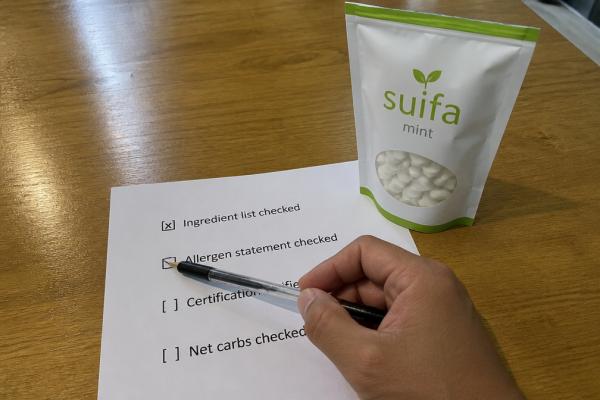
I like using a checklist because it reduces emotional decisions. A mint may look premium, natural, or healthy. That does not answer whether it fits a dietary requirement.
Use this checklist before purchase:
- Does the front claim match the ingredient list?
- Are animal-derived ingredients absent?
- Are gluten sources absent?
- Is there a gluten-free allergen statement or certification?
- Are total carbs and sugar alcohols listed clearly?
- Is the sweetener acceptable for the intended keto buyer?
- Are vague ingredients explained, such as “natural flavors”?
- Does the certification apply to the finished product?
- Is the product made in a shared facility?
- Can the brand provide documentation if asked?
Consumer versus procurement review
A consumer buying one pack can make a practical risk decision. A procurement buyer needs a more structured process because the product may be distributed to many people.
| Buyer Type | Main Risk | Recommended Review Level |
|---|---|---|
| Individual consumer | Personal dietary mismatch | Ingredient and nutrition label check |
| Parent or caregiver | Family allergy or ethical concern | Label check plus brand clarification |
| Retail buyer | Customer complaints and returns | Specification sheet and certification review |
| Office or hotel buyer | Mixed dietary needs | Choose clearly labeled, lower-risk products |
| Wellness brand buyer | Reputation and compliance | Full documentation and supplier review |
Questions to ask the brand or supplier
If the label is unclear, I suggest asking direct questions. Good suppliers usually respond with specific answers rather than vague promises.
Useful questions include:
- Is this exact mint SKU certified vegan, gluten-free, or keto-friendly?
- Does the certification apply to the finished product or only certain ingredients?
- Are natural flavors plant-derived?
- Are processing aids, coatings, and polishing agents vegan?
- Is the product made on shared equipment with wheat-containing products?
- Is the finished product tested for gluten?
- What sweeteners are used, and what are the net carbs per serving?
- Has the formula changed recently?
The last question is important. Formulas change. Suppliers change. Packaging sometimes changes later than the formula. A product that worked last year may not be identical this year.
How I compare similar mint products
When I compare two mints with similar claims, I do not choose only by flavor or price. I score them across several criteria.
| Evaluation Point | Stronger Product | Weaker Product |
|---|---|---|
| Ingredient transparency | Clear, specific ingredients | Vague flavor and coating terms |
| Vegan confidence | Certified or fully documented | Self-claimed with unclear additives |
| Gluten-free confidence | Certified or tested | No allergen detail |
| Keto suitability | Low net carbs with clear sweetener info | “Sugar-free” only |
| Supplier response | Provides documents | Gives generic marketing answers |
| Formula stability | Version-controlled specs | No formula change history |
This approach is especially useful for buyers selecting products for resale or hospitality use. A slightly cheaper mint can become expensive if it creates customer complaints or requires removal from shelves.
My simple rule before buying
If a product claims all three—vegan, gluten-free, and keto-friendly—I expect the documentation to be stronger, not weaker. Multiple claims create multiple verification points.
A good product does not need to be perfect for every person. It does need to be honest and clear about what it contains. That is the standard I use when reviewing mint labels and comparing market options.
Frequently Asked Questions
Are all mints naturally vegan?
No. Some mints contain animal-derived ingredients such as gelatin, shellac, beeswax, dairy derivatives, honey, or carmine. Even if the main flavor is peppermint or spearmint, buyers should check coatings, colors, natural flavors, and processing aids before assuming the mint is vegan.
Does gluten-free mean a mint is safe for people with celiac disease?
Not always. A gluten-free claim is helpful, but people with celiac disease may need stronger assurance, such as credible certification, gluten testing, and clear cross-contact controls. Buyers should review allergen statements and contact the manufacturer if the label does not provide enough detail.
Can a sugar-free mint still be bad for keto?
Yes. Sugar-free does not automatically mean keto-friendly. Some sugar-free mints use sweeteners like maltitol or include fillers that may affect net carbs. Keto buyers should check total carbohydrates, sugar alcohols, sweetener type, and serving size before relying on the claim.
What certification should I look for on vegan, gluten-free, or keto-friendly mints?
Look for credible third-party certifications that apply to the finished product and exact SKU. Vegan and gluten-free certifications are often more established than keto claims. Buyers should verify the certifier, validity date, product scope, and whether the formula has changed.
What is the fastest way to screen a mint before buying?
Read the front claim, then immediately check the ingredient list, allergen statement, and nutrition facts. Look for animal-derived additives, gluten sources, and carb-heavy sweeteners. If the product is for strict dietary use, verify certifications or contact the brand directly.
Conclusion
A vegan, gluten-free, or keto-friendly mint is defined by its full formula, not just its flavor or front label. Buyers should review animal-derived additives, gluten risks, sweetener systems, net carbs, allergen statements, and certification scope before making a decision. My advice is simple: trust clear evidence more than attractive packaging. If you are comparing mint products for personal use, retail, hospitality, or wellness purchasing, build a short checklist and ask suppliers for documentation before you buy.
"Gluten-Free Labeling of Foods", https://www.fda.gov/food/nutrition-food-labeling-and-critical-foods/gluten-free-labeling-foods. U.S. food-labeling regulations define conditions for gluten-free claims, whereas terms such as vegan and keto-friendly are generally handled through voluntary claims, private standards, or broader truth-in-labeling principles. Evidence role: general_support; source type: government. Supports: Gluten-free labeling has a formal regulatory threshold in the United States, while vegan and keto-friendly claims are not verified through the same uniform federal standard.. Scope note: This support is strongest for the United States; other jurisdictions may regulate vegan, gluten-free, or carbohydrate-related claims differently. ↩
"Food Allergies", https://www.fda.gov/food/nutrition-food-labeling-and-critical-foods/food-allergies. Food-labeling guidance from U.S. regulators identifies the ingredient list, allergen labeling, and Nutrition Facts panel as required sources of product information, supporting the use of back-label details to evaluate dietary claims. Evidence role: general_support; source type: government. Supports: Mandatory label elements such as ingredients, allergen declarations, and nutrition information provide evidence consumers can use to evaluate packaged foods.. Scope note: This does not prove that all front-label claims are misleading; it supports the narrower point that required label panels contain more verifiable detail. ↩
"Dear Manufacturer Letter Regarding Sugar Free Claims", https://www.fda.gov/regulatory-information/search-fda-guidance-documents/guidance-industry-and-fda-dear-manufacturer-letter-regarding-sugar-free-claims. FDA nutrient-content regulations define sugar-free by reference to sugar content per serving, not by whether a food meets ketogenic macronutrient targets or contains negligible total carbohydrate. Evidence role: definition; source type: government. Supports: Sugar-free labeling refers to sugar content and does not by itself establish low net carbohydrate content or ketogenic suitability.. Scope note: This supports the distinction between sugar-free and keto-friendly labeling; it does not define a universal ketogenic threshold. ↩
"21 CFR 101.22 -- Foods; labeling of spices, flavorings ...", https://www.ecfr.gov/current/title-21/chapter-I/subchapter-B/part-101/subpart-B/section-101.22. The U.S. regulatory definition of natural flavor includes flavoring constituents derived from spices, fruits, vegetables, herbs, meat, seafood, poultry, eggs, dairy products, and fermentation products, supporting the need to verify source for vegan use. Evidence role: definition; source type: government. Supports: The regulatory definition of natural flavor permits flavoring constituents derived from plant or animal materials.. Scope note: This establishes possible sources of natural flavors; it does not show that any particular mint flavor contains animal-derived material. ↩
"Shellac", https://en.wikipedia.org/wiki/Shellac. Reference sources describe shellac as a resin secreted by lac insects and used in coatings, including confectionery glazes, supporting its relevance as an insect-derived polishing ingredient. Evidence role: definition; source type: encyclopedia. Supports: Shellac comes from lac insect secretions and is used as a glaze or coating.. Scope note: This supports the general origin and function of shellac; a product-specific label would still be needed to confirm whether a given mint uses it. ↩
"Glycerol", https://en.wikipedia.org/wiki/Glycerol. Chemical reference information describes glycerin, or glycerol, as obtainable from the hydrolysis or processing of fats and oils, which may be vegetable or animal in origin. Evidence role: definition; source type: government. Supports: Glycerin can be produced from fats and oils, including vegetable and animal sources.. Scope note: This supports possible sources of glycerin; it does not determine the source used in any specific mint without supplier documentation. ↩
"Eating, Diet, & Nutrition for Celiac Disease - NIDDK", https://www.niddk.nih.gov/health-information/digestive-diseases/celiac-disease/eating-diet-nutrition. Medical and celiac-disease authorities state that treatment for celiac disease requires a strict gluten-free diet and attention to gluten cross-contact, supporting careful review of processed food ingredients and production controls. Evidence role: expert_consensus; source type: institution. Supports: Celiac disease management requires strict avoidance of gluten and attention to cross-contact or hidden gluten in processed foods.. Scope note: This supports the general health rationale; it does not assess the gluten risk of any particular mint product. ↩
"Gluten and Food Labeling", https://www.fda.gov/food/nutrition-education-resources-materials/gluten-and-food-labeling. The U.S. Food and Drug Administration’s gluten-free labeling rule permits the claim only for foods that meet specified criteria, including containing less than 20 parts per million gluten. Evidence role: definition; source type: government. Supports: The U.S. gluten-free labeling rule uses a threshold of less than 20 ppm gluten.. ↩
"Suitability of sugar alcohols as antidiabetic supplements - PMC", https://pmc.ncbi.nlm.nih.gov/articles/PMC9261844/. Human glycemic-index and polyol metabolism studies report that maltitol produces a measurable postprandial glycemic response, whereas erythritol has little or no glycemic effect, supporting a physiological basis for treating maltitol more cautiously in ketogenic diets. Evidence role: mechanism; source type: paper. Supports: Maltitol has a higher glycemic effect than certain other polyols, particularly erythritol, in human nutrition studies or glycemic-index reviews.. Scope note: This supports the glycemic-impact comparison; it does not directly document attitudes within keto communities. ↩
"The Ketogenic Diet: Clinical Applications, Evidence-based ...", https://www.ncbi.nlm.nih.gov/books/NBK499830/. Clinical nutrition references commonly characterize ketogenic diets as very-low-carbohydrate diets, often limiting daily carbohydrate intake to approximately 20–50 grams to promote ketosis. Evidence role: statistic; source type: research. Supports: Clinical and nutrition references commonly describe ketogenic diets as restricting carbohydrates to about 20 to 50 grams per day.. Scope note: The range varies by protocol, individual energy intake, and clinical purpose; it is not a universal rule for all ketogenic diets. ↩
"Counting Sugar Alcohols | Diabetes Teaching Center - UCSF", https://diabetesteachingcenter.ucsf.edu/living-diabetes/diet-nutrition/understanding-carbohydrates/counting-sugar-alcohols. Food-labeling authorities distinguish total carbohydrate from voluntary net-carbohydrate claims, and consumer nutrition guidance commonly calculates net carbohydrates by subtracting fiber and, depending on the method, some sugar alcohols from total carbohydrate. Evidence role: definition; source type: government. Supports: Net carbohydrate is a commonly used calculation based on total carbohydrates minus fiber and selected sugar alcohols, but it is not uniformly defined on food labels.. Scope note: This supports the formula as a common convention rather than a universally regulated definition. ↩