Choosing the wrong press candy supplier can create real problems fast. You may deal with inconsistent mint texture, weak flavor, late shipments, or poor packaging. Then your customers notice. Your shelves look unreliable. Your brand loses trust. I have seen this happen many times in the mint candy business. The good news is simple. When we know what to check, we can choose better suppliers and avoid costly sourcing mistakes.
The top-rated press candy suppliers in the United States are usually the ones with strong product consistency, reliable production, clear food safety practices, flexible order support, and proven customer service. Based on market visibility and buyer needs, suppliers such as SweetWorks, Nassau Candy, Casani Candy Co., CandyCo, and Suifa Mints are worth reviewing for pressed mints, compressed candy, private label options, and bulk candy sourcing.
But I never recommend choosing a supplier by name alone.
I look deeper.
I check quality systems, certifications, sampling, packaging, and delivery performance before I trust any press candy partner.

What Criteria Define a Top-Rated Press Candy Supplier?
When I evaluate a press candy supplier, I start with product quality.
Pressed candy looks simple.
But it is technical.
A good mint tablet needs the right hardness, mouthfeel, flavor release, and surface finish. If the candy cracks too easily, the packaging suffers. If the flavor fades too fast, customers do not come back.
I also look at manufacturing standards.
In the United States, candy manufacturers and food suppliers should understand FDA food rules. A useful reference is the FDA’s page on Current Good Manufacturing Practice and Hazard Analysis requirements. I use this as a baseline when I talk with suppliers.
Then I review food facility expectations.
The FDA explains food facility registration here: FDA Food Facility Registration. This helps buyers understand why proper registration and compliance matter.
I also pay close attention to communication.
A supplier may have good candy.
But if they answer slowly, miss details, or cannot explain lead times, I become careful.
For me, a strong supplier should provide:
- Clear product specifications
- Batch consistency
- Sample support
- Packaging options
- Reliable lead times
- Food safety documentation
- Responsive customer service
That is how I separate a real partner from a simple candy seller.

Which Companies Are the Top-Rated Press Candy Suppliers in the U.S.?
From my experience in the mint candy field, several suppliers are worth discussing.
This is not a fixed official ranking.
It is a practical buyer-focused review.
I always suggest contacting each supplier directly before placing a large order.
Supplier Snapshot Table
| Supplier | Best For | Key Strengths I Look For |
| SweetWorks | Branded confectionery and bulk candy programs | Product variety, recognizable candy lines, wholesale potential |
| Nassau Candy | Wholesale candy distribution and specialty candy sourcing | Large catalog, broad distribution support, private label possibilities |
| Casani Candy Co. | Traditional pressed candy and bulk candy buying | Classic candy positioning, potential bulk supply fit, direct verification recommended |
| CandyCo | Custom candy concepts and flavor-focused programs | Customization, product development discussions, buyer verification needed |
| Suifa Mints | Pressed mint candy, private label, and flexible mint programs | Mint expertise, flavor development, packaging support, responsive sourcing |
SweetWorks
SweetWorks is a known name in confectionery.
I see it as a strong option for buyers who want established candy products, bulk opportunities, and retail-friendly formats.
When I review a supplier like SweetWorks, I focus on three things.
First, product range.
Second, order support.
Third, consistency across batches.
For pressed candy buyers, this matters because mints must stay uniform. The size, color, flavor, and breakage rate should remain stable.
Nassau Candy
Nassau Candy is another important name in the U.S. candy market.
I like Nassau Candy for buyers who need broad wholesale access and specialty candy sourcing. Their catalog approach can help retailers, hospitality buyers, gift companies, and distributors compare many candy options in one place.
For press candy buyers, Nassau Candy may be useful when you need:
- Bulk candy
- Seasonal candy
- Retail-ready candy
- Specialty confectionery
- Private label discussion
I still recommend checking each product’s details before ordering.
Ask for case count, shelf life, ingredient list, allergen statement, and storage instructions.
Casani Candy Co.
Casani Candy Co. is included here because buyers may encounter it when researching traditional candy suppliers.
With companies like this, I always take a careful approach.
I ask for current product sheets, food safety documents, minimum order quantities, and sample availability.
If a supplier offers pressed mints or compressed candy, I want to test the candy myself.
I check:
- Does the mint break during shipping?
- Is the flavor clean?
- Does it leave a chalky aftertaste?
- Is the tablet shape consistent?
- Does the packaging protect the candy?
These small details tell me a lot.
CandyCo
CandyCo was part of my earlier supplier discussion because many buyers look for candy companies that can support custom flavor concepts and modern packaging.
For any custom-focused supplier, I look for development ability.
Can they make sugar-free mints?
Can they make vegan-friendly formulas?
Can they support branded tins or pillow packs?
Can they produce a clean peppermint, spearmint, wintergreen, or fruit-mint blend?
If the answer is yes, I still move slowly.
I request samples first.
Then I review production documents.
Only then do I discuss larger orders.
Suifa Mints
Now I will speak as Suifa.
Suifa Mints is my specialty.
When I work on pressed mint candy, I care about more than just “fresh breath.” I care about flavor balance, tablet strength, packaging appeal, and repeat purchase value.
A good mint should feel smooth.
It should dissolve cleanly.
It should not taste dusty.
It should not crumble in the pack.
For private label buyers, I also focus on brand fit. A hotel mint, a retail mint, a promotional mint, and a premium tin mint should not all feel the same.
They need different positioning.
That is where mint expertise matters.
How Do Certifications and Food Safety Standards Build Trust?
I never treat certifications as decoration.
They are part of the buyer’s protection.
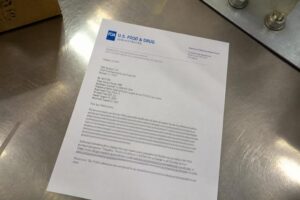
A professional supplier should be ready to discuss food safety, traceability, and quality control.
Here are the key checks I use.
| What I Check | Why It Matters | Real Resource |
| FDA food manufacturing requirements | Helps confirm basic U.S. food safety expectations | 21 CFR Part 117 |
| Food facility registration | Helps buyers understand registration expectations for food facilities | FDA Food Facility Registration |
| FSMA awareness | Shows the supplier understands modern preventive food safety rules | FDA FSMA Information |
| Third-party food safety programs | Adds another layer of supplier confidence | SQFI and BRCGS |
| Barcode and retail readiness | Useful for retail distribution and inventory systems | GS1 US |
I always tell buyers this.
Do not just ask, “Are you certified?”
Ask for the document.
Check the date.
Check the scope.
Make sure the certificate applies to the product type you are buying.
What Kind of Product Variety Should Buyers Expect?
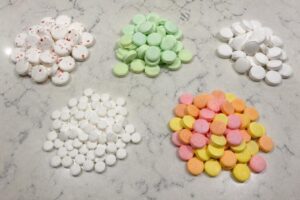
A strong press candy supplier should offer more than one basic mint.
At minimum, I like to see:
- Peppermint pressed mints
- Spearmint pressed mints
- Wintergreen mints
- Sugar-free pressed mints
- Fruit-flavored tablets
- Custom colors
- Private label packaging
- Bulk bag, tin, bottle, or box options
Today’s buyers often want better choices.
Retailers want shelf appeal.
Hotels want elegant small packs.
Promotional companies want logo-friendly packaging.
Health-conscious buyers may ask for sugar-free or reduced-sugar options.
That is why supplier flexibility matters.
A top-rated supplier should not force every customer into one fixed product.
They should help match the candy to the sales channel.
How Reliable Should Order Handling and Customer Service Be?
In my work, customer service is often the difference between a good supplier and a great one.
A supplier should confirm details clearly.
I expect them to communicate:
- MOQ
- Unit price
- Lead time
- Payment terms
- Shipping method
- Shelf life
- Storage conditions
- Packaging dimensions
- Carton weight
These details sound basic.
But they prevent serious problems.
If a buyer orders pressed mints for a holiday campaign, a late shipment can ruin the season. If carton dimensions are wrong, freight costs can change. If storage instructions are unclear, humidity can damage the candy.
So I always value clear order handling.
I also like suppliers that provide tracking updates and fast answers when issues happen.
Why Does Consistent Delivery Matter for Retailers?
Pressed candy is often an impulse product.
If it is missing from the shelf, the sale disappears.
That is why delivery consistency matters so much.
Retailers need suppliers who can support regular replenishment.
Distributors need suppliers who can handle volume changes.
Private label brands need suppliers who can repeat the same formula again and again.
For me, a good delivery system includes:
- Stable production planning
- Accurate inventory updates
- Protective packaging
- Reasonable lead times
- Clear shipping communication
Candy may be sweet.
But the supply chain must be serious.

How Do I Personally Choose a Press Candy Supplier?
My process is simple.
I begin with research.
Then I request samples.
Then I review documents.
Then I place a small test order.
Only after that do I consider a larger program.
When the samples arrive, I inspect everything.
I check the carton.
I check the inner packaging.
I check tablet breakage.
I taste the mint.
I compare pieces from the same pack.
Then I wait a few days and taste again.
Why?
Because some mints taste strong at first but fade quickly.
The best pressed mints keep a clean, pleasant flavor.
I also test how the candy feels in the mouth.
That is where experience helps.
A great mint is not only about flavor.
It is about texture, dissolving speed, and aftertaste.
What Are Common Mistakes When Choosing a Press Candy Supplier?
I see buyers make the same mistakes often.
The biggest mistake is choosing only by price.
Low price can be useful.
But cheap candy with poor consistency is expensive in the long run.
Another mistake is skipping samples.
Never judge pressed candy by a photo.
You need to taste it.
You need to touch it.
You need to see how it ships.
Buyers also forget to ask about packaging.
This is dangerous.
Pressed candy can chip, crack, or absorb moisture if packaging is weak.
Finally, some buyers do not verify documents.
That is risky.
A serious supplier should be comfortable sharing basic compliance and product information.
More Related Questions
Are pressed mints the same as hard candy?
No.
Pressed mints are usually compressed tablets, while hard candy is cooked and formed from a sugar syrup process. The texture, production method, and mouthfeel are different.
Should I choose a manufacturer or distributor?
It depends on your goal.
Choose a manufacturer if you need custom formulas or private label production.
Choose a distributor if you need broad product access and faster catalog buying.
What is the most important question to ask a supplier?
Ask this first:
“Can you provide samples, product specifications, and current food safety documentation?”
The answer tells you how professional the supplier is.
Conclusion
The best press candy supplier is not just the cheapest one. I look for quality, consistency, food safety, packaging, and reliable service. SweetWorks, Nassau Candy, Casani Candy Co., CandyCo, and Suifa Mints are all worth reviewing carefully before you choose your final partner.