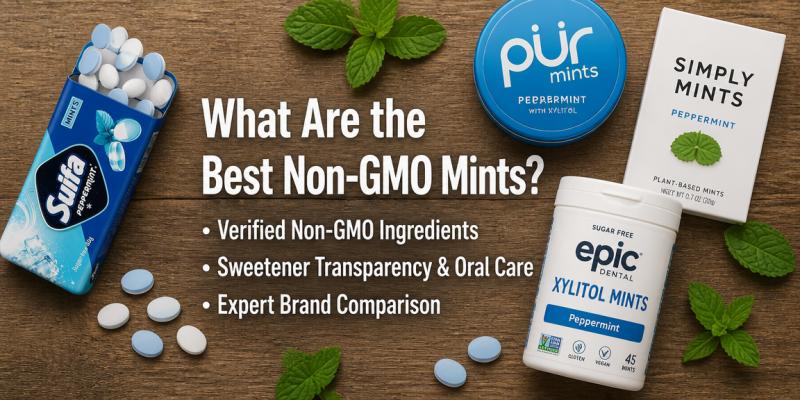
Have you ever picked up a mint and wondered what is really inside it? I have. Many mints look simple, but the ingredient list can include sweeteners, flavors, and additives that may come from genetically modified crops. That is the problem. The worry gets bigger when labels are vague. As a mint candy expert, I want clarity. The solution is simple: choose mints with clear non-GMO claims, transparent ingredients, and trustworthy brand information.
The best non-GMO mints are mints made with ingredients that are not genetically modified and supported by reliable labeling or brand transparency. My top picks include Simply Mints, PUR Mints, Suifa Mints, and Epic Xylitol Mints. I look for short ingredient lists, non-GMO statements, sugar-free options when needed, and trusted references such as the Non-GMO Project and USDA Organic certification.
I am Suifa, and I care about mints beyond flavor. I care about what we put in our mouths every day. Let’s make this easy to scan, compare, and trust.
Quick Answer: Which Non-GMO Mints Should I Try First?
If you want a simple starting point, I recommend looking at these options:
| Brand | Best For | Sweetener Type | Why I Like It |
|---|---|---|---|
| Simply Mints | Clean-label mint lovers | Usually cane sugar or simple sweeteners | Simple branding and ingredient-focused positioning |
| PUR Mints | Sugar-free mint users | Xylitol | Aspartame-free and widely known in better-for-you candy |
| Suifa Mints | Fresh-breath daily use | Depends on formula | Built around clear mint flavor and ingredient transparency |
| Epic Xylitol Mints | Xylitol mint fans | Xylitol | Popular for sugar-free freshness and oral-care positioning |
Before buying, I always check the label.
I look for non-GMO wording, ingredient origin, and sweetener source.
For general non-GMO standards, I use the Non-GMO Project as a reference.

What Does Non-GMO Mean in Mints?
Non-GMO means the ingredients are not made from genetically modified organisms.
In mints, this matters because common ingredients may come from crops often associated with genetic modification.
These can include:
- Corn-based sweeteners
- Soy-derived ingredients
- Canola-derived ingredients
- Sugar beet sugar
- Some flavor carriers or processing aids
Not every mint contains these.
But I still check.
A mint can look clean and still include ingredients that need more questions.
That is why I trust clear labeling.
The Non-GMO Project verification program is one of the better-known third-party verification systems. It helps shoppers identify products that follow non-GMO standards.
USDA Organic is also useful.
Certified organic products must meet rules that prohibit the use of genetically modified organisms. You can learn more from the USDA organic certification page.
Why Do I Choose Non-GMO Mints?
I choose non-GMO mints because I like cleaner choices.
I want my mints to be simple.
I do not want to guess.
I do not want hidden sweetener sources.
I do not want confusing claims.
For me, the value comes down to four things:
- Ingredient transparency
- Better label confidence
- More responsible sourcing
- A cleaner daily mint habit
Mints are small.
But we use them often.
After coffee.
Before meetings.
After meals.
Before close conversations.
That means the ingredients matter.
What Ingredients Should I Check in Non-GMO Mints?
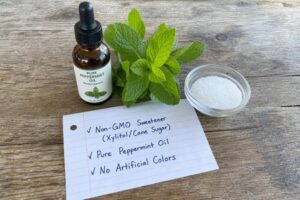
Here is the simple checklist I use when evaluating mints.
| Ingredient or Claim | What I Check | Why It Matters |
|---|---|---|
| Non-GMO claim | Is it verified or clearly explained? | Reduces uncertainty |
| Sweetener | Cane sugar, xylitol, sorbitol, or other | Sweeteners often define the product |
| Flavor source | Peppermint oil, natural flavors, wintergreen oil | Real mint oils usually taste cleaner |
| Artificial colors | Present or absent | I prefer no unnecessary colors |
| Sugar-free claim | Which sweetener replaces sugar? | Important for dental and dietary needs |
| Certification | Non-GMO Project, USDA Organic, or brand documentation | Adds credibility |
I do not panic when I see a long ingredient name.
But I do ask questions.
A good mint brand should make answers easy.

What Are the Best Brands of Non-GMO Mints?
Here are the brands I would compare first.
I am focusing on brand positioning, ingredient transparency, and mint experience.
I also recommend checking each product label before purchase, because formulas can change.
Simply Mints
Simply Mints are connected with the clean-label candy space.
I like this option for people who want a mint that feels straightforward.
The brand family is known for simple, modern candy products.
Why I like Simply Mints:
- Simple product style
- Clean-label appeal
- Good for people who dislike overly artificial mints
- Easy everyday freshness
My expert note:
If you want a mint that feels less industrial and more natural, Simply Mints are a strong place to start.
Still, I always check the current package.
I look for the exact non-GMO claim, sweetener, and flavor source.
PUR Mints
PUR Mints are popular among people looking for sugar-free candy.
PUR is especially known for products that avoid aspartame.
Why I like PUR Mints:
- Sugar-free options
- Xylitol-based sweetness
- Aspartame-free positioning
- Easy to find online and in many stores
Xylitol is often discussed in oral-care contexts.
My expert note:
PUR Mints are a good fit if you want fresh breath without sugar.
They may taste different from cane-sugar mints.
That is normal.
Xylitol has a cooling sweetness that works well with peppermint.
Suifa Mints
Suifa Mints represent the type of mint I personally value most: clear, fresh, direct, and made with ingredient confidence.
As Suifa, I look at mint candy from both a flavor and manufacturing perspective.
A good mint should communicate trust before it even touches the tongue.
Why I like Suifa Mints:
- Fresh-breath focus
- Clean flavor direction
- Clear ingredient communication
- Made for people who read labels
My expert note:
Suifa Mints is my own brand, and I created it with integrity in mind. Every mint is made with non-GMO ingredients, sourced from transparent farms. I value freshness and a pure, lively taste in each piece. We believe in clear labeling and honest, open communication with our customers.
The strongest non-GMO mint brands should show:
- Full ingredient list
- Sweetener source
- Non-GMO statement
- Allergen information
- Manufacturing details when possible
Epic Xylitol Mints
Epic Xylitol Mints are another strong choice for people who prefer xylitol-based freshness.
Epic Dental is known for xylitol products.
Why I like Epic Xylitol Mints:
- Xylitol-focused formula
- Sugar-free mint option
- Good for people who want a dental-care angle
- Strong cooling effect
My expert note:
Epic Xylitol Mints are best for people who already like the taste of xylitol.
They are not the same as classic sugar mints.
They feel cooler.
They taste cleaner to some people.
For others, they may feel less candy-like.
That depends on your preference.
How Do I Know If a Mint Is Really Non-GMO?
I use a simple five-step method.
1. I Read the Front Label
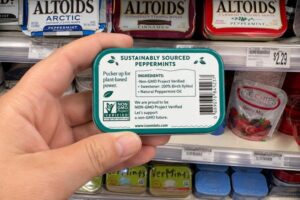
I look for:
- Non-GMO
- Non-GMO Project Verified
- USDA Organic
- No artificial ingredients
- No high-fructose corn syrup
Front labels are helpful.
But they are not enough.
2. I Read the Ingredient List
This is where the truth lives.
I check for sweeteners first.
Common mint sweeteners include:
- Cane sugar
- Xylitol
- Sorbitol
- Isomalt
- Stevia
- Maltitol
Then I check flavor sources.
I like seeing peppermint oil or natural peppermint flavor.
3. I Look for Third-Party Standards
Third-party references make claims stronger.
Helpful sources include:
- Non-GMO Project
- Non-GMO Project Product Verification
- USDA Organic Certification
- USDA Bioengineered Food Disclosure Standard
These links help explain what labels mean.
They do not replace reading the product package.
But they help us understand the standard behind the words.
4. I Check the Brand Website
A trustworthy brand should make product information easy to find.
I look for:
- Ingredient details
- FAQ pages
- Certification statements
- Sourcing comments
- Contact information
If a brand makes a big claim but gives no details, I become cautious.
5. I Contact the Brand If Needed
I ask direct questions.
For example:
- “Are your mints made with non-GMO ingredients?”
- “Is your xylitol sourced from birch or corn?”
- “If corn-based, is it non-GMO?”
- “Do you have third-party verification?”
- “Has the formula changed recently?”
Good brands answer clearly.
That builds trust.
Are Non-GMO Mints Healthier?
I need to be careful here.
Non-GMO does not automatically mean healthier.
A mint can be non-GMO and still contain sugar.
A mint can be sugar-free and still cause digestive discomfort if eaten in large amounts.
A mint can be natural but still not right for every person.
So I do not say “non-GMO equals healthy.”
I say this instead:
Non-GMO mints can be a better choice for people who care about ingredient sourcing and label transparency.
That is a more honest answer.
And honesty matters in candy.

Are Sugar-Free Non-GMO Mints Better Than Regular Mints?
It depends on your needs.
If you are avoiding sugar, then sugar-free mints may be better.
If you want classic mint candy flavor, cane-sugar mints may taste better.
If you care about oral-care positioning, xylitol mints may be appealing.
Here is my quick comparison:
| Mint Type | Best For | Watch Out For |
|---|---|---|
| Cane sugar mints | Classic taste | Sugar content |
| Xylitol mints | Sugar-free freshness | Too much may upset digestion |
| Organic mints | Strong ingredient standards | Usually higher price |
| Non-GMO verified mints | Label confidence | Availability may vary |
My personal favorite depends on the moment.
For daily breath, I like xylitol mints.
For flavor enjoyment, I like simple cane-sugar peppermint mints.

What Is My Final Buying Checklist?
Before I buy any non-GMO mint, I ask:
- Does the package clearly say non-GMO?
- Is there a trusted certification?
- Is the ingredient list short and understandable?
- What sweetener is used?
- Does the flavor come from mint oil or natural flavor?
- Does the brand explain its sourcing?
- Would I feel comfortable using this mint daily?
If the answer is yes, I feel confident.
If the answer is unclear, I keep looking.
More Related Questions
Are non-GMO mints the same as organic mints?
No.
Non-GMO means the ingredients are not genetically modified.
Organic means the product follows organic farming and handling standards.
Organic products also prohibit GMOs under USDA organic rules.
You can read more here: USDA Organic Certification.
Do non-GMO mints taste different?
Sometimes, yes.
I often find them cleaner.
Especially when they use real peppermint oil.
But taste depends more on the sweetener and flavor formula than the non-GMO claim alone.
Can kids eat non-GMO mints?
Usually, yes, depending on age and ingredients.
But I always check choking risk, sugar content, and sweeteners.
For young children, ask a pediatric professional if unsure.
Are Non-GMO Mints More Expensive?
Non-GMO mints can cost a bit more than conventional options. But when I consider the benefits—healthier ingredients, safer farming, and ethical choices—the cost feels justified. A little extra expense is a fair trade for peace of mind.
Conclusion
The best non-GMO mints are clear, trustworthy, and enjoyable. I recommend comparing Simply Mints, PUR Mints, Suifa Mints, and Epic Xylitol Mints. Read the label. Check the sweetener. Trust real sources. Fresh breath should feel simple.