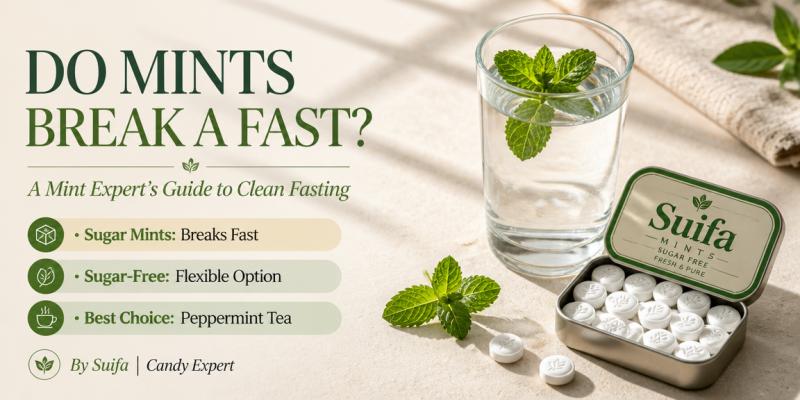
Fasting sounds simple until one tiny mint gets involved. I see this all the time. You skip breakfast, drink water, stay disciplined, and then bad breath appears. You reach for a mint. Then the worry hits: did that mint break my fast? That small candy suddenly feels like a mistake. As Suifa, a mint candy expert, I want to make this clear, practical, and easy to follow.
Yes, most mints can break a fast, especially if they contain sugar, calories, or sweeteners that may trigger digestion or appetite. If your fasting goal is strict—such as autophagy, medical fasting, or religious fasting—I would avoid mints completely. If your goal is basic weight control through intermittent fasting, one sugar-free mint may not ruin your progress, but it is still not technically “clean fasting.”
I know that answer may feel frustrating. Mints are small. They feel harmless. But ingredients matter. So does your fasting goal. Let’s break this down clearly.
Quick Answer: Do Mints Break a Fast?
In most cases, yes.
A mint can break a fast if it contains:
- Sugar
- Calories
- Carbohydrates
- Sugar alcohols
- Artificial sweeteners
- Fillers or syrups
From my expert view, the safest fasting rule is simple:
If the mint has calories, sugar, or sweet taste stimulation, it may interfere with fasting.
That does not mean one mint ruins your whole health journey. It means the mint may move you away from a strict fast.
What Does It Mean to Break a Fast?
To understand mints, we first need to define fasting.
A fast usually means not consuming calories for a set period of time. But different people fast for different reasons.
Some people fast for:
- Weight loss
- Blood sugar control
- Ketosis
- Autophagy
- Religious practice
- Medical tests
- Digestive rest
This matters because not every fasting goal has the same rules.
If I am fasting only to reduce total calories, a single sugar-free mint may not matter much.
But if I am fasting for cellular repair or a medical procedure, even a tiny mint is not worth the risk.
Research on intermittent fasting and metabolic health is still developing, but a major review in The New England Journal of Medicine explains many of the metabolic changes linked with fasting:https://www.nejm.org/doi/full/10.1056/NEJMra1905136
Table 1: Do Different Mints Break a Fast?
| Mint Type | Common Ingredients | Calories? | Likely to Break a Fast? | My Expert Opinion |
|---|---|---|---|---|
| Regular sugar mint | Sugar, glucose syrup, flavoring | Yes | Yes | Avoid during fasting |
| Breath mint candy | Sugar, corn syrup, peppermint oil | Yes | Yes | Treat as candy |
| Sugar-free mint | Sorbitol, xylitol, sucralose, flavoring | Usually yes, small amount | Possibly | Use only if fasting is flexible |
| Zero-sugar breath strip | Sweeteners, flavoring, film base | Often very low | Possibly | Better than candy, still not clean fasting |
| Plain peppermint tea | Peppermint leaves, water | Usually no | Usually no | Best minty option |
| Mint-flavored water with sweetener | Water, flavoring, sweetener | Maybe | Possibly | Check label carefully |
For ingredient and calorie comparisons, I recommend checking the USDA FoodData Central database: https://fdc.nal.usda.gov/
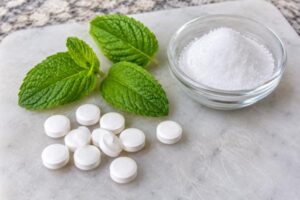
What Is Inside a Mint?
Most mints look simple.
But they are not always simple.
A typical mint may contain:
- Sugar
- Corn syrup
- Glucose syrup
- Maltodextrin
- Natural or artificial flavors
- Peppermint oil
- Artificial colors
- Sugar alcohols
- Artificial sweeteners
The most important thing to watch is sugar.
If a mint contains sugar, glucose syrup, corn syrup, or dextrose, I consider it a fast breaker.
Why?
Because sugar provides energy. It can raise blood glucose. It can trigger digestion. That is the opposite of fasting.
Do Sugar Mints Break a Fast?
Yes. Sugar mints break a fast.
I say this confidently.
A regular mint is candy. It may be small candy, but it is still candy.
Even if it only has a few calories, it still contains sugar. That sugar enters your body during your fasting window.
If your goal is clean fasting, regular mints are not fasting-friendly.
I would avoid:
- Peppermint hard candies
- Wintergreen sugar mints
- Classic breath mints with sugar
- Candy cane-style mints
- Any mint with glucose syrup or corn syrup
Small does not mean fasting-safe.
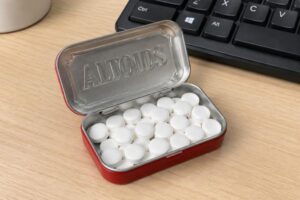
Do Sugar-Free Mints Break a Fast?
This is where the answer gets more nuanced.
Sugar-free mints may or may not break your fast, depending on your fasting goal.
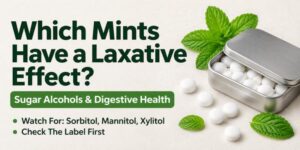
Many sugar-free mints contain sugar alcohols such as:
- Sorbitol
- Xylitol
- Maltitol
- Isomalt
- Erythritol
They may also contain artificial sweeteners such as:
- Sucralose
- Aspartame
- Acesulfame potassium
Sugar-free does not always mean calorie-free.
Many sugar-free mints still contain small amounts of calories from sugar alcohols or fillers.
The FDA provides information on high-intensity sweeteners used in food here: https://www.fda.gov/food/food-additives-petitions/high-intensity-sweeteners
From my mint expert perspective, sugar-free mints are better than sugar mints, but they are not perfect.
Table 2: Mint Ingredients and Fasting Impact
| Ingredient on Label | What It Means | Fasting Concern | My Recommendation |
|---|---|---|---|
| Sugar | Caloric sweetener | Breaks fast | Avoid |
| Glucose syrup | Fast-digesting sugar | Breaks fast | Avoid |
| Corn syrup | Caloric sweetener | Breaks fast | Avoid |
| Dextrose | Simple sugar | Breaks fast | Avoid |
| Sorbitol | Sugar alcohol | May contain calories | Use carefully |
| Xylitol | Sugar alcohol | May affect digestion | Use carefully |
| Maltitol | Sugar alcohol | Often more caloric | Avoid during strict fasts |
| Sucralose | Artificial sweetener | May affect appetite for some people | Avoid for clean fasting |
| Aspartame | Artificial sweetener | Low calorie, sweet taste | Avoid for clean fasting |
| Peppermint oil | Mint flavor | Usually not a major calorie source | Usually fine in tea or tiny amounts |
The key rule is this:
**If the ingredient tastes sweet and comes in candy form, I do not treat it as a clean fasting tool.**
Will One Mint Ruin My Fast?
For most people, one mint will not ruin long-term progress.
But it may technically break the fast.
There is a difference.
If you are fasting for weight loss, one sugar-free mint probably will not erase your calorie deficit. It probably will not destroy your week.
But if you are fasting for strict metabolic reasons, that one mint becomes more important.
I like to explain it this way:
- For weight loss: one sugar-free mint may be acceptable.
- For clean fasting: skip the mint.
- For autophagy: skip the mint.
- For religious fasting: follow the rules of your faith.
- For medical fasting: ask your doctor and avoid mints unless approved.
When the fast matters medically, do not guess.
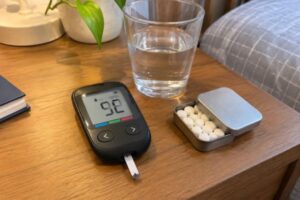
Do Mints Affect Insulin?
They can.
Sugar mints can raise blood sugar and insulin.
Sugar-free mints are less predictable. Some non-sugar sweeteners have little direct effect on blood glucose, but sweet taste may still affect hunger, cravings, or digestive signals in some people.
This is why I avoid giving a blanket “safe” answer.
As Suifa, I judge a mint by three things:
- Does it contain calories?
- Does it contain sweeteners?
- What is the fasting goal?
If the goal is strict fasting, I do not use mints.
Do Mints Affect Autophagy?
Autophagy is one of the strictest fasting goals.
It refers to the body’s cellular cleanup process. Many people fast because they want to support this process.
Here is my practical answer:
If you are fasting for autophagy, do not use mints.
Even a sugar-free mint may be too much of a question mark.
Autophagy-focused fasting usually works best with:
- Water
- Plain black coffee
- Plain unsweetened tea
- No candy
- No sweeteners
- No flavored snacks
A mint is not worth the uncertainty.
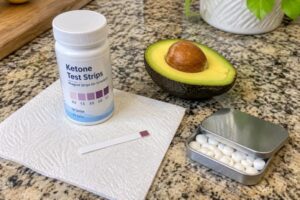
Do Mints Break Ketosis?
Regular sugar mints can interfere with ketosis because they contain carbohydrates.
One mint may not fully kick every person out of ketosis, but it still adds sugar.
Sugar-free mints are less likely to affect ketosis, but some sugar alcohols may still matter depending on the type and amount.
If I am trying to stay in ketosis, I choose:
- No sugar mints
- No maltitol-heavy mints
- Very limited sugar-free mints
- Peppermint tea instead
Ketosis rewards consistency.
A mint habit can become a hidden carb habit.
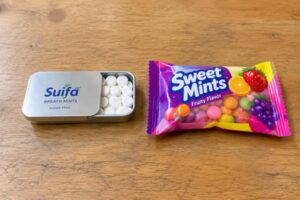
Are Breath Mints Different From Candy Mints?
Not really.
Many breath mints are just candy with a functional promise.
They freshen breath, yes.
But they may still contain:
- Sugar
- Syrups
- Starches
- Sweeteners
- Calories
I always tell people this:
**Do not judge a mint by the word “breath.” Judge it by the label.**
If the label shows sugar or calories, it is not fasting-safe.
What Can I Use Instead of Mints While Fasting?
Bad breath during fasting is common.
I understand why people reach for mints.
But there are better options.
Try these first:
- Drink cold water
- Brush your teeth
- Use a tongue scraper
- Rinse with plain water
- Drink unsweetened peppermint tea
- Use alcohol-free mouthwash if your fasting rules allow it
My favorite option is plain peppermint tea.
It gives a clean mint feeling without candy.
Just do not add sugar, honey, milk, or sweetener.
Best Minty Option During a Fast
If you want a mint flavor during fasting, my best recommendation is:
Unsweetened peppermint tea.
It is simple.
It is clean.
It does not feel like candy.
It helps with breath and cravings.
In my own fasting routine, I prefer peppermint tea over sugar-free mints because it keeps the fast psychologically clean. Once I start using candy-like products, I notice cravings become louder.
That matters.
Fasting is not only physical. It is behavioral too.
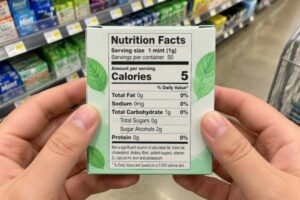
How to Read a Mint Label Before Fasting
Before using any mint during a fast, check the label.
Look for these sections:
1. Serving Size
Sometimes one serving is not one mint.
That matters.
2. Calories
If it has calories, it may break a strict fast.
3. Total Carbohydrates
Carbs matter, especially for fasting, ketosis, and blood sugar goals.
4. Total Sugars
If sugar appears, avoid it.
5. Sugar Alcohols
These are common in sugar-free mints. They are not always zero-calorie.
6. Ingredients List
This is where hidden sugars appear.
Avoid names like:
- Sugar
- Dextrose
- Maltodextrin
- Corn syrup
- Glucose syrup
- Fructose
- Maltose
Again, the FDA’s Nutrition Facts guide is useful here: https://www.fda.gov/food/nutrition-facts-label/how-understand-and-use-nutrition-facts-label

My Practical Rule as a Mint Candy Expert
Here is the rule I use with clients and readers:
**If I want a clean fast, I do not use mints. If I only want appetite control and weight loss support, I may allow one sugar-free mint occasionally.**
That is the most honest answer.
It protects strict fasters.
It also gives flexible fasters a realistic option.
I do not like fear-based fasting advice. One mint does not make someone a failure.
But I also do not pretend candy is the same as water.
Who Should Avoid Mints Completely While Fasting?
I recommend avoiding mints completely if you are fasting for:
- Medical blood work
- Surgery preparation
- Religious fasting
- Autophagy
- Gut rest
- Strict ketosis
- Blood sugar experiments
- Elimination diets
In those cases, the cleanest choice is best.
Use water.
Use plain tea.
Keep it simple.
Who Might Use Sugar-Free Mints Carefully?
A sugar-free mint may be acceptable if you are fasting for:
- General calorie control
- Basic intermittent fasting
- Appetite management
- Bad breath control
- Habit replacement
Even then, I suggest limits.
My personal limit would be:
One sugar-free mint during a fasting window, only when truly needed.
Not five.
Not ten.
Not a whole tin.
Because that becomes snacking.

More Related Questions
Do peppermint candies break a fast?
Yes. Peppermint candies usually contain sugar and calories, so they break a fast.
Do sugar-free Altoids break a fast?
They may not contain sugar, but they can still contain sweeteners or small calories. They are not ideal for clean fasting.
Does peppermint tea break a fast?
Plain unsweetened peppermint tea usually does not break a fast. Do not add sugar, honey, milk, or sweetener.
Do breath strips break a fast?
Possibly. Some are very low in calories, but they may contain sweeteners. Check the label.
Can I brush my teeth while fasting?
Usually, yes. Just avoid swallowing toothpaste. For breath, this is often better than eating mints.
Are zero-calorie mints safe for fasting?
Maybe, but I still do not consider them clean fasting. Zero-calorie does not always mean zero effect on cravings or digestion.
What is the safest mint for fasting?
The safest minty choice is plain peppermint tea, not candy.
Conclusion
Mints are small, but fasting rules are sensitive. For clean fasting, skip mints. For flexible intermittent fasting, use sugar-free mints rarely and carefully. I always check the label first. When in doubt, I choose water or peppermint tea.