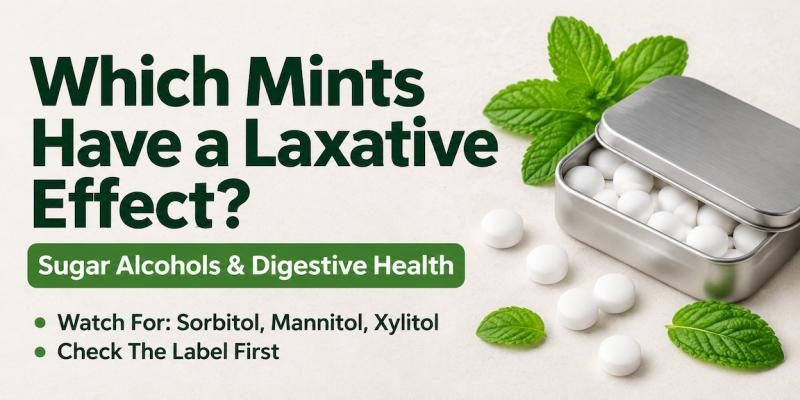
Have you ever eaten a few too many mints and then felt your stomach start to twist? I see this often in mint candy work. The candy tastes small, clean, and harmless, so we keep reaching for more. Then the bloating, gas, or urgent bathroom trip arrives. The real issue is usually not peppermint itself. The problem is often the sweetener system inside sugar-free mints, especially sugar alcohols.
The mints most likely to have a laxative effect are sugar-free mints made with sugar alcohols such as sorbitol, mannitol, xylitol, maltitol, or isomalt. Sorbitol and mannitol are especially important because U.S. food regulations recognize that excess intake may cause a laxative effect. I always tell readers to check the ingredient label first, not the front of the package.
If you love fresh breath but hate stomach surprises, keep reading. I’ll show you exactly what to look for, which mint types are higher risk, and how to choose more comfortable options.

Quick Answer: Which Mints Are Most Likely to Act Like a Laxative?
Sugar-free mints are the main category to watch.
Not every sugar-free mint will bother every person.
But in my experience, the risk rises when the label includes:
- Sorbitol
- Mannitol
- Xylitol
- Maltitol
- Isomalt
- Erythritol, though it is often better tolerated than some others
These ingredients are called sugar alcohols, or polyols.
They are used because they add sweetness with fewer calories than sugar.
They also help create that smooth, cool, long-lasting mint texture.
But they are not fully absorbed in the small intestine.
When they travel into the large intestine, they can pull water into the bowel and ferment.
That can lead to gas, bloating, cramps, loose stool, or diarrhea.
For a general medical explanation, I trust resources like the Cleveland Clinic guide to sugar alcohols and the Mayo Clinic overview of artificial sweeteners and sugar alcohols.

Key Facts About Laxative Mints
| Mint label clue | What it usually means | Laxative risk |
|---|---|---|
| “Sugar-free” | Often sweetened with sugar alcohols | Medium to high |
| “No sugar added” | May still contain polyols | Medium |
| “Diabetic-friendly” | Often uses low-sugar sweeteners | Medium |
| Sorbitol listed first | Sorbitol may be a major ingredient | High if eaten in quantity |
| Mannitol listed | Known laxative warning ingredient | High if eaten in quantity |
| Regular sugar mints | Usually sucrose/glucose-based | Lower laxative risk |
My rule is simple: if the mint is sugar-free, I treat it as a “read the label first” candy.
Why Do Sugar-Free Mints Cause a Laxative Effect?
Sugar-free mints often use polyols because they help with three things:
- Sweetness
- Texture
- Lower sugar content
From a candy-making view, they are useful.
From a digestive view, they can be tricky.
Your body absorbs sugar alcohols more slowly and less completely than regular sugar.
Some of them pass into the colon.
There, they can pull water into the intestine.
They may also be fermented by gut bacteria.
That is why people report:
- Bloating
- Gas
- Stomach gurgling
- Cramps
- Loose stool
- Urgency
- Diarrhea
The U.S. regulation for sorbitol is especially useful here.
The FDA rule for sorbitol states that foods whose consumption may result in daily intake above 50 grams must carry the statement: “Excess consumption may have a laxative effect.” You can see this in the official eCFR sorbitol regulation.
Mannitol has a similar regulatory concern.
The eCFR mannitol regulation notes that foods containing mannitol may need the statement: “Excess consumption may have a laxative effect.”
That is not marketing fear.
That is a real label issue.
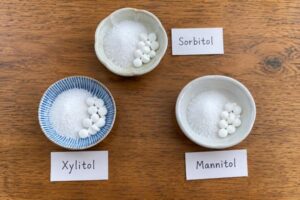
Which Ingredients Should I Watch For?
As Suifa, I always start with the ingredient panel.
Not the flavor name.
Not the “fresh breath” claim.
Not the shiny front label.
The ingredient list tells the truth.
| Ingredient | Common in mints? | Why it matters |
|---|---|---|
| Sorbitol | Yes | Strong laxative potential when overconsumed |
| Mannitol | Yes | Known for laxative warning requirements |
| Xylitol | Yes | Can cause gas or diarrhea in some people; also used for dental benefits |
| Maltitol | Sometimes | Often linked with digestive discomfort in sugar-free candy |
| Isomalt | Sometimes | Can ferment and cause bloating or loose stool |
| Erythritol | Sometimes | Often better tolerated, but still may bother sensitive people |
| Regular sugar | Yes | Less likely to cause laxative effects in normal mint portions |
Xylitol deserves a special mention.
It is common in breath mints and gum because it is associated with oral health benefits.
But dental benefits do not mean unlimited digestive tolerance.
A mint can be good for breath and still rough on the gut.
Are Peppermint Mints the Problem?
Usually, no.
Peppermint flavor itself is not the main laxative trigger in most mint candies.
The bigger issue is the sweetener.
That means a sugar-free peppermint mint with sorbitol may cause digestive upset.
But a regular peppermint candy made with sugar may not.
Of course, some people are sensitive to peppermint oil or strong flavors.
But when we talk about a true “laxative effect,” I look first for sorbitol, mannitol, and other polyols.

Which Mint Products Are More Likely to Have a Laxative Effect?
I avoid making permanent claims about a brand without checking the current package.
Formulas change.
Regions differ.
Limited editions come and go.
But I can give you a reliable shopping pattern.
Higher-risk mint categories
- Sugar-free breath mints
- Pocket mints marketed as low-calorie
- Dental mints with xylitol
- Large tins of sugar-free mints
- Bulk sugar-free mint candies
- Mints with “excess consumption may have a laxative effect” on the label
Some popular sugar-free mint products may use ingredients like sorbitol or xylitol.
I still recommend checking the package in your hand.
Online ingredient pages can lag behind packaging updates.
How Many Sugar-Free Mints Are Too Many?
There is no perfect number.
Your tolerance depends on:
- Body size
- Gut sensitivity
- IBS or digestive conditions
- How much you ate that day
- Which sugar alcohol is used
- Whether you ate them with food
Some people can eat several mints and feel fine.
Others feel bloated after two or three.
People with IBS may be more sensitive to polyols because polyols are part of the FODMAP group.
For a digestion-focused explanation, I often point readers to Monash University’s FODMAP overview.
My practical advice: start with one or two sugar-free mints.
Then wait.
Do not casually finish half a tin during a meeting, road trip, or movie.
That is how mint candy turns into a bathroom emergency.

Who Should Be More Careful With Laxative Mints?
Some people should be extra cautious.
Children
Children are smaller.
A few mints can represent a larger dose for them.
I do not treat sugar-free mints like harmless snacks for kids.
People with IBS
Polyols can trigger symptoms in sensitive guts.
If you follow a low-FODMAP approach, check labels carefully.
Older adults
Loose stool can become more serious if it leads to dehydration.
People trying a new mint brand
Even if your usual mint is fine, a new formula may not be.
Anyone eating mints frequently
One mint after coffee is different from twenty mints across a workday.
Frequency matters.

How Can I Choose Mints With Less Laxative Risk?
I use a simple label-reading system.
Step 1: Check for “sugar-free”
If it says sugar-free, slow down.
Turn the pack over.
Step 2: Scan for sugar alcohols
Look for:
- Sorbitol
- Mannitol
- Xylitol
- Maltitol
- Isomalt
- Erythritol
Step 3: Look for warning language
The phrase “excess consumption may have a laxative effect” is a clear signal.
Step 4: Choose based on your body
If you are sensitive, choose regular sugar mints or use sugar-free mints sparingly.
Step 5: Track your reaction
I like simple testing.
Try one mint.
Wait.
Try two another day.
Your body will give you better feedback than the front label.

Are Regular Sugar Mints Safer for Digestion?
Usually, yes.
Regular sugar mints are less likely to cause a laxative effect than sugar-free mints with polyols.
That does not make them perfect.
They still contain sugar.
They may not be ideal for dental health if eaten often.
But from a laxative-effect perspective, they are usually gentler for many people.
If you want a regular mint option, look for ingredient lists based on:
- Sugar
- Glucose syrup
- Corn syrup
- Peppermint oil
- Natural flavor
These ingredients are not the same as sugar alcohols.
Again, portions still matter.
Candy is candy.
But the laxative concern is usually lower.
What Should I Do If Mints Upset My Stomach?
If sugar-free mints bother you, I suggest a simple reset.
- Stop eating the mints
- Drink water
- Avoid more sugar alcohols that day
- Eat gentle foods
- Check the label so you know the trigger
If symptoms are severe, repeated, or unusual, speak with a healthcare professional.
I know mints well.
But digestive symptoms can have many causes.
Do not blame the mint forever without checking the full picture.
More Related Questions
Do all sugar-free mints cause diarrhea?
No.
Not all sugar-free mints cause diarrhea.
But they are more likely to contain sugar alcohols, which can cause laxative effects in some people.
Is xylitol always laxative?
No.
Xylitol is not always laxative.
But higher intake can cause digestive discomfort, especially in sensitive people.
Is sorbitol worse than xylitol?
For many people, sorbitol is one of the biggest mint-related digestive triggers.
It is also specifically tied to laxative-effect warning language in U.S. regulation.
Can one mint cause a laxative effect?
For most people, one mint will not.
But very sensitive people may react to small amounts.
Should I avoid all sugar-free mints?
Not necessarily.
I recommend moderation.
Choose carefully.
Test your tolerance.
Conclusion
The mints most likely to have a laxative effect are sugar-free mints with sorbitol, mannitol, xylitol, maltitol, or isomalt. I always check the ingredient label first. If your gut is sensitive, choose regular sugar mints or limit sugar-free mints to small amounts.