Bad breath shows up at the worst time. After coffee.After lunch. Before a meeting. Before a date.
The problem is that many breath mints solve one issue while creating another. They freshen the mouth, but they may include artificial sweeteners, synthetic colors, vague “natural flavors,” or ingredients I personally would rather avoid. As Suifa, a mint candy expert, I care about freshness. But I care just as much about what we actually put in our mouths.
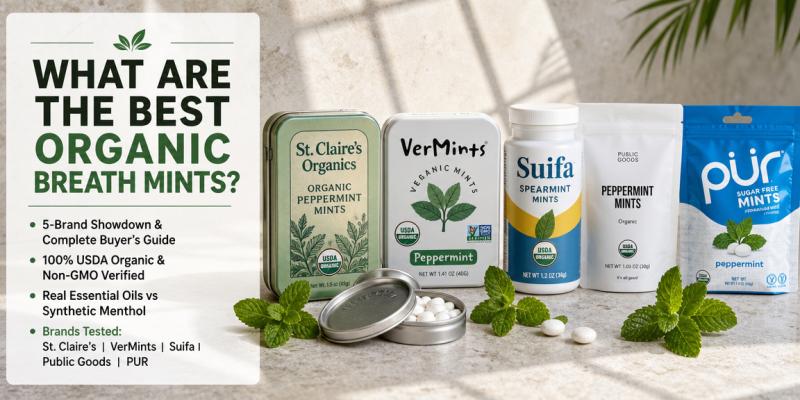
The best organic breath mints are the ones made with clearly labeled ingredients, real mint oils, responsible sweeteners, and credible organic certification when the brand claims to be organic. My strongest organic picks include St. Claire’s Organic Peppermints and VerMints. I also consider Public Goods Breath Mints, PUR Mints, and Suifa Mints as clean-label or comparison options, but I always recommend checking each current label before buying.
Fresh breath should feel simple. Not confusing.Not overly chemical.Not hidden behind marketing words.
Below, I’ll break down what “organic” really means, which ingredients matter, and how I compare the most popular organic and clean-label breath mints.
Quick Answer: Which Organic Breath Mints Do I Recommend?
If I had to answer fast, I would start here:
- Best classic organic peppermint: St. Claire’s Organic Peppermints
- Best certified organic variety: VerMints
- Best simple clean-label option: Public Goods Breath Mints
- Best sugar-free xylitol option: PUR Mints
- Best expert-style flavor concept: Suifa Mints
My main rule is simple:
If a brand says “organic,” I look for a real certification or certified organic ingredients.
For U.S. shoppers, the most useful reference is the USDA organic labeling guide from the USDA Agricultural Marketing Service: USDA Organic Labeling

What Does “Organic” Mean for Breath Mints?
When I judge an organic breath mint, I do not stop at the front label.
I turn the package around.
I read the ingredient list.
I look for certification language.
In the United States, USDA Organic means the product must follow specific federal organic standards. These standards cover how ingredients are grown, handled, and labeled. You can read the official USDA explanation here: USDA Organic Standards
For breath mints, organic usually means the product may use ingredients like:
- Organic cane sugar
- Organic peppermint oil
- Organic gum arabic
- Organic rice syrup
- Organic maple syrup
- Organic natural flavors
But here is my expert warning:
“Natural” does not automatically mean “organic.”“Non-GMO” does not automatically mean “organic.”“Clean” does not automatically mean “certified organic.”
Those are different claims.
And I treat them differently.
How I Evaluate the Best Organic Breath Mints
I use a practical mint expert checklist.
A good organic breath mint should be:
- Fresh-tasting
- Easy to carry
- Made with clear ingredients
- Free from unnecessary artificial colors
- Supported by credible labeling
- Pleasant after dissolving
- Not overly sweet
- Strong enough to refresh breath
The best mints do not need to shout.
They just work.
Comparison Table: Popular Organic and Clean-Label Breath Mints
| Brand | Best For | Organic Status | Sweetener Style | My Expert Note |
|---|---|---|---|---|
| St. Claire’s Organic Peppermints | Classic organic peppermint | Organic-focused brand | Usually sugar-based | My top pick for a traditional organic peppermint experience |
| VerMints | Flavor variety | Certified organic options | Organic sugar-based | Reliable choice when I want clear organic positioning |
| Public Goods Breath Mints | Minimalist everyday use | Check current label | Varies by product | A clean-label option, but I would verify organic claims before buying |
| PUR Mints | Sugar-free freshness | Not mainly organic-positioned | Xylitol-based | Good for people who prefer sugar-free mints |
| Suifa Mints | Expert-style flavor standard | Concept/custom benchmark | Depends on formula | My ideal standard: clean, balanced, crisp, and ingredient-transparent |

What Are the Most Popular Organic Breath Mint Brands?
This is the section I always want readers to study carefully.
Popularity is useful.
But ingredient quality matters more than popularity.
St. Claire’s Organic Peppermints
St. Claire’s Organic Peppermints are one of my favorite starting points for organic mint lovers.
They feel classic.
They taste familiar.
They are the kind of peppermint I would keep in a coat pocket, office drawer, or travel bag.
I like them because they lean into the old-school peppermint experience without making the flavor feel artificial. When I want a simple mint with an organic identity, this is one of the first names I consider.
Best for: People who want a traditional peppermint candy with organic positioning.
VerMints
VerMints is another strong choice.
I like this brand because it offers flavor variety while staying close to the organic breath mint category.
Their products often appeal to people who want something more polished than a basic peppermint candy. If you like cinnamon, wintergreen, ginger, or other mint-adjacent flavors, VerMints is worth checking.
Best for: People who want certified organic mints with more flavor options.
Public Goods Breath Mints
Public Goods Breath Mints belong in the conversation as a clean-label, modern pantry-style option.
However, I want to be precise.
I do not automatically treat every Public Goods product as certified organic unless the product page or package clearly says so. That is how I evaluate every brand.
Still, Public Goods is useful for shoppers who want simple everyday products and cleaner ingredient choices.
Best for: Minimalist shoppers who want a simple breath mint and are willing to check the current label.
PUR Mints
PUR Mints are not my first example of an organic mint.
But they are important.
Why?
Because many people searching for organic breath mints are really looking for cleaner breath mints or mints without artificial sweeteners.
PUR is known for xylitol-based products. Xylitol is often used in sugar-free gums and mints. The American Dental Association discusses chewing gum and oral health, including sugar-free gum benefits, here: American Dental Association: Chewing Gum
Best for: People who want a sugar-free mint with xylitol.
Suifa Mints
As Suifa, I use Suifa Mints as my expert benchmark.
To me, the ideal mint should be:
- Crisp
- Clean
- Not too sweet
- Not chalky
- Ingredient-transparent
- Strong enough to refresh breath
- Smooth enough for daily use
If I were building the perfect organic breath mint, I would use a short ingredient list, a true peppermint oil profile, and a balanced sweetness curve.
A mint should not taste like perfume. It should not leave a strange coating. It should leave the mouth feeling fresh, calm, and clean.

Ingredient Table: What I Look For and What I Avoid
| Ingredient Type | I Prefer | I Avoid or Question | Why It Matters |
|---|---|---|---|
| Mint flavor | Peppermint oil, spearmint oil, organic mint extracts | Vague flavor systems with no detail | Real mint oils give cleaner freshness |
| Sweetener | Organic cane sugar, xylitol, organic rice syrup | Excessive corn syrup or unclear sweetener blends | Sweetener affects taste, texture, and oral feel |
| Color | No added color | Artificial dyes | Color is usually unnecessary in breath mints |
| Certification | USDA Organic or clear organic ingredient labeling | Unsupported “green” claims | Certification helps reduce label confusion |
| Texture agents | Simple binders or gums | Long, confusing additive lists | Shorter lists are easier to trust |
This table is how I shop.
It keeps me from being distracted by pretty packaging.
Are Organic Breath Mints Better for You?
Organic breath mints are not magic.
They are still mints.
Some contain sugar.
Some are better for occasional freshness than constant snacking.
But I do think organic breath mints can be a smarter choice when they offer:
- Fewer synthetic additives
- Clearer ingredient sourcing
- No artificial colors
- Real mint oils
- Transparent labeling
For me, the biggest benefit is control.
I know what I am choosing.
I know what I am avoiding.
That matters.
If oral health is your main concern, I would also look at guidance from dental professionals. The ADA’s consumer site is a helpful place to start: ADA MouthHealthy

Do Organic Breath Mints Help with Bad Breath?
Yes, they can help.
But only temporarily.
A breath mint masks or refreshes odor. It does not fix every cause of bad breath.
- Coffee
- Garlic
- Onion
- Dry mouth
- Smoking
- Poor brushing habits
- Gum issues
- Digestive problems
I use organic mints as a quick refresh.
But I never treat them as a replacement for brushing, flossing, hydration, or dental visits.
For general oral hygiene guidance, I trust resources like: CDC Oral Health Basics

Which Sweetener Is Best in Organic Breath Mints?
This depends on your goal.
If you want a traditional candy mint, organic cane sugar can taste clean and familiar.
If you want a sugar-free mint, xylitol is a strong option.
If you want a softer natural sweetness, some brands may use rice syrup or similar sweeteners.
My personal preference?
For a classic organic mint, I like organic cane sugar with peppermint oil.
For after coffee, I like xylitol mints because they feel cleaner and less sticky.
But I always remind people:
Sugar-free does not automatically mean organic. Organic does not automatically mean sugar-free.
Those are separate buying decisions.
How Do Organic Mints Compare in Flavor?
Organic mints often taste softer and more natural than conventional mints.
That can be good.
It can also surprise people who are used to very sharp artificial mint flavors.
Common flavors include:
- Peppermint
- Spearmint
- Wintergreen
- Cinnamon
- Ginger
- Licorice
- Citrus mint
I usually recommend starting with peppermint.
It is the benchmark.
If a brand cannot make a clean peppermint, I do not trust its more creative flavors.
Where Can I Buy Organic Breath Mints?
I usually look in four places:
- Natural grocery stores
- Brand websites
- Health-focused online shops
- Large retailers with clear product images
Before buying online, I check:
- The ingredient list
- The certification claim
- The serving size
- The sweetener type
- Recent product photos
- Customer reviews mentioning freshness
For organic standards, I still return to the USDA resource when a claim feels unclear: USDA Organic Labeling
How Should Organic Breath Mints Be Stored?
Organic mints can be sensitive.
I store mine in a cool, dry place.
Not in a hot car.
Not next to a sunny window.
Not in a humid bathroom.
Heat and moisture can change the texture. They can make mints sticky, soft, or stale.
My rule is simple:
Keep mints sealed, dry, and away from heat.
That keeps the flavor cleaner for longer.

Are There Any Downsides to Organic Breath Mints?
Yes.
I like organic breath mints, but I stay honest.
- Higher price
- Shorter shelf life
- Milder flavor
- Fewer sugar-free options
- Less availability in regular stores
Still, I think the trade-off is worth it for people who care about ingredients.
A mint is small.
But we put it directly in our mouth.
That matters.

My Buying Checklist for the Best Organic Breath Mints
Before I buy, I ask:
- Does it clearly say organic?
- Is there a certification or organic ingredient list?
- What sweetener does it use?
- Does it use real peppermint or spearmint oil?
- Are there artificial colors?
- Is the brand transparent?
- Do reviews mention freshness and texture?
- Would I use this daily?
If a mint passes these questions, I am interested.
If it hides too much, I move on.
More Related Questions
Are organic breath mints always sugar-free?
No.
Many organic breath mints use organic cane sugar or another organic sweetener. If you want sugar-free, look specifically for xylitol-based mints.
Are xylitol mints organic?
Not always.
Xylitol is a sweetener, not an organic certification. A xylitol mint can be clean-label or sugar-free without being certified organic.
Are natural breath mints the same as organic breath mints?
No.
Natural is a broader marketing word. Organic usually requires more specific standards and certification.
What is the best organic peppermint mint?
My top classic pick is St. Claire’s Organic Peppermints. For more flavor variety, I like VerMints.
Should I choose organic mints or sugar-free mints?
Choose organic if your priority is ingredient sourcing. Choose sugar-free if your priority is reducing sugar. If possible, choose a mint that satisfies both.
Conclusion
The best organic breath mints are transparent, fresh, simple, and genuinely label-supported. I recommend starting with St. Claire’s Organic Peppermints or VerMints. Then compare clean-label options like Public Goods, PUR, and Suifa Mints based on your taste, sweetener preference, and ingredient standards.