Bad breath can show up at the worst time.
After coffee.
After lunch.
Before a meeting.
That tiny moment can make us feel less confident. And if our stomach feels heavy after eating, or travel makes us queasy, we often want something simple and fast. As Suifa, a mint candy expert, I see peppermint mints as one of the easiest everyday tools for small comfort problems. They are not medicine. But they can be surprisingly useful when we choose them wisely.
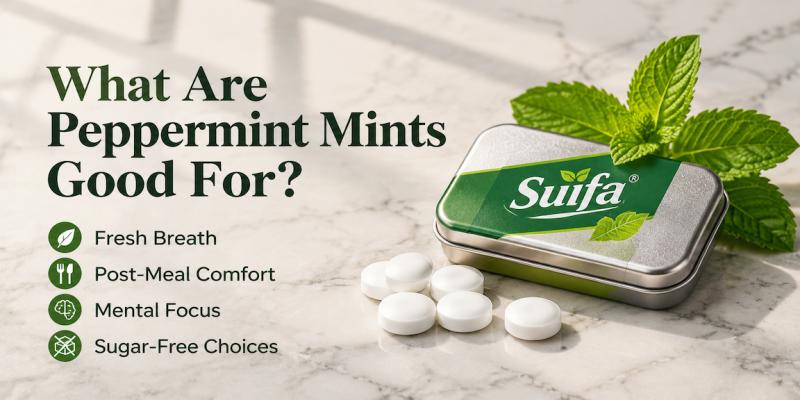
Peppermint mints are good for freshening breath, creating a cooling mouthfeel, supporting post-meal comfort, easing mild nausea for some people, helping us feel more alert, and offering a small low-calorie treat when we choose sugar-free options. The key is moderation. I always recommend using peppermint mints as a convenient daily helper, not as a replacement for brushing, dental care, or medical treatment.
I’ll break this down clearly.
No fluff.
Just what peppermint mints can do, what they cannot do, and how I use them smartly.

Quick Answer: What Are Peppermint Mints Good For?
Peppermint mints are mainly good for:
- Freshening breath quickly
- Masking food odors
- Stimulating saliva
- Providing a cooling sensation
- Helping with after-meal freshness
- Offering possible mild stomach comfort
- Reducing queasy feelings for some people
- Giving a quick sensory boost
- Serving as a small sugar-free treat
Here is the simple overview.
| Use of Peppermint Mints | Why It May Help | Best Choice | Helpful Source |
|---|---|---|---|
| Fresh breath | Peppermint flavor masks odor and leaves a clean feeling | Sugar-free peppermint mints | American Dental Association: Bad Breath |
| Post-meal comfort | Peppermint has a long history of digestive use | Small mint after eating | NCCIH: Peppermint Oil |
| Mild nausea support | Peppermint aroma and flavor may feel soothing | Strong peppermint mint | Memorial Sloan Kettering: Peppermint |
| Mental refresh | The cooling taste feels stimulating and clean | One mint during work or study | NCCIH: Peppermint Oil |
| Low-calorie treat | Sugar-free mints can satisfy the mouth without much sugar | Xylitol or sugar-free mints | ADA: Chewing Gum and Oral Health |
How Do Peppermint Mints Freshen Breath?
This is the most common reason people use them.
And I agree with it.
Peppermint mints are excellent for quick breath freshness.
They work in a simple way.
Peppermint has a strong, clean aroma. When we suck on a mint, that flavor spreads through the mouth. It helps cover odors from coffee, onions, garlic, smoking, or a long dry-mouth afternoon.
The American Dental Association explains that bad breath can come from food, dry mouth, gum disease, tobacco, and bacteria in the mouth. You can read more from the ADA’s guide to bad breath.
I always tell people this:
A peppermint mint is a quick fix, not a full oral-care routine.
It can help before a conversation.
It can help after lunch.
It can help when brushing is not possible.
But it does not replace brushing, flossing, tongue cleaning, or dental checkups.

Do Peppermint Mints Help With Dry Mouth?
They can help a little.
When we suck on a mint, our mouth often produces more saliva. That is useful because saliva helps wash away food particles and acids.
Dry mouth can make breath worse.
It can also make the mouth feel sticky and uncomfortable.
This is where peppermint mints can be practical.
I prefer sugar-free peppermint mints for this purpose. Sugary mints may taste good, but if we keep them in the mouth often, they expose teeth to sugar for longer.
That matters.
For daily use, I choose sugar-free.
Especially if I use mints more than once a day.
Are Peppermint Mints Good After Meals?
Yes.
This is one of my favorite uses.
After a heavy meal, a peppermint mint gives a clean finish. It reduces lingering food taste. It also makes the mouth feel lighter.
Peppermint itself has a long tradition of use for digestion. The National Center for Complementary and Integrative Health notes that peppermint oil has been studied for digestive concerns, especially irritable bowel syndrome, although peppermint candy and peppermint oil capsules are not the same thing. See the NCCIH peppermint oil overview.
That difference is important.
A peppermint mint is not a medical digestive treatment.
But after meals, I find it useful for comfort and freshness.
It can help us feel settled.
It can make rich foods feel less heavy in the mouth.
And it can stop us from reaching for a second dessert.

Can Peppermint Mints Help With Nausea?
For some people, yes.
Many people like peppermint when they feel queasy.
I do too.
The cooling flavor can feel calming. The aroma can feel clean and steady. This is why I always keep peppermint mints with me when I travel.
Memorial Sloan Kettering notes that peppermint has been used for digestive symptoms, although it also lists cautions and possible interactions. You can review its peppermint information here: MSKCC Peppermint.
Again, I stay careful.
Peppermint mints may help mild nausea for some people, but they are not a cure.
If nausea is severe, repeated, or linked to pregnancy, medication, illness, or reflux, we should talk with a healthcare professional.
For everyday travel queasiness, though, a peppermint mint is simple.
It fits in a pocket.
It is easy to use.
And the taste feels reassuring.

Do Peppermint Mints Help With Headaches?
They may help some people feel refreshed.
But I do not oversell this.
Peppermint has a cooling quality because of menthol. That cooling feeling can make us feel more awake and comfortable.
When I feel mentally tired, I sometimes use a mint for a quick reset.
It gives my senses something clean and sharp.
But peppermint mints are not headache medicine.
If someone has frequent or severe headaches, mints are not the answer. They should seek proper care.
Still, as a sensory comfort tool, peppermint mints can be useful.
Especially during long workdays.
Can Peppermint Mints Improve Focus?
In a practical sense, yes.
Not like coffee.
Not like sleep.
But as a small sensory cue.
The cold, bright taste can make us feel more alert. I use peppermint mints when I need a clean break between tasks.
It is a simple ritual.
One mint.
A few slow breaths.
Back to work.
Peppermint’s aroma and menthol sensation can create a feeling of freshness and alertness.
That makes mints useful at a desk, in a car, or during study time.
I like them because they are neat.
No spill.
No preparation.
No strong snack smell.
Are Sugar-Free Peppermint Mints Better?
For most daily users, yes.
This is where I get very firm.
If you use peppermint mints often, sugar-free is usually the smarter choice.
Sugary mints are fine as an occasional candy. But if we suck on them several times per day, our teeth get repeated sugar exposure.
Sugar-free mints reduce that issue.
Some sugar-free mints use xylitol or other sweeteners. The ADA discusses sugar-free chewing gum and saliva stimulation here: ADA: Chewing Gum. While gum and mints are different products, the saliva idea is relevant.
Here is a simple comparison.
| Type of Peppermint Mint | Best For | Main Advantage | Main Caution |
|---|---|---|---|
| Regular sugary peppermint mints | Occasional candy enjoyment | Classic sweet taste | Frequent use may increase sugar exposure to teeth |
| Sugar-free peppermint mints | Daily breath freshening | Lower sugar impact | Some sweeteners may upset sensitive stomachs |
| Xylitol peppermint mints | Breath and oral-friendly routines | May support a healthier mouth environment | Too much xylitol can cause digestive discomfort |
| Strong menthol mints | Fast freshness and cooling sensation | Very refreshing | May feel too intense for some people |
| Soft peppermint candies | Dessert-like treat | Gentle texture and sweet flavor | Often higher in sugar |
My personal advice is simple.
Use sugar-free peppermint mints for daily freshness.
Save sugary peppermint candy for enjoyment.
Can Peppermint Mints Support Oral Health?
They can support oral freshness.
But we need to be precise.
Peppermint mints do not clean teeth the way brushing and flossing do.
They do not remove plaque properly.
They do not replace mouthwash.
They do not treat gum disease.
But they can help in small ways.
They can freshen breath.
They can increase saliva flow.
They can make the mouth feel cleaner between brushing sessions.
The American Dental Association reminds us that breath problems can be linked to oral hygiene, dry mouth, and dental conditions. That is why I see peppermint mints as a helper, not the whole solution.
For the best oral routine, I suggest:
- Brush twice daily
- Floss once daily
- Clean the tongue
- Drink water
- Use sugar-free mints when needed
- Visit a dentist regularly
That is the real foundation.
The mint is the finishing touch.
Are Peppermint Mints Good for Dieting or Cravings?
They can be.
I use them this way myself.
Sometimes we do not need a snack.
We need a flavor reset.
A peppermint mint can signal that eating is done. It can help reduce the desire for more sweets after a meal.
Sugar-free peppermint mints can be a useful low-calorie treat for people managing cravings.
They are small.
They last a while.
They give the mouth something satisfying.
But I would not call them a weight-loss product.
That would be too much.
They are simply a helpful habit.
Especially after dinner.

Who Should Be Careful With Peppermint Mints?
Peppermint mints are safe for many people.
But not everyone.
I recommend caution if you:
- Have acid reflux or GERD
- Get heartburn after peppermint
- Are sensitive to sugar alcohols
- Have dental concerns and use sugary mints often
- Are giving mints to young children
- Have allergies to mint ingredients
Peppermint may worsen reflux symptoms in some people. If peppermint bothers your stomach or chest, avoid it.
Also, hard mints can be a choking risk for small children.
So I do not recommend hard peppermint mints for very young kids.
How Many Peppermint Mints Should I Eat Per Day?
There is no perfect number.
It depends on the mint size, sugar content, sweeteners, and your body.
My expert rule is:
Use peppermint mints as needed, but keep it moderate.
For most adults, a few sugar-free mints per day is reasonable.
If you notice bloating, gas, heartburn, or stomach discomfort, reduce the amount.
Also read the label.
Some sugar-free mints contain sweeteners that can cause digestive issues when eaten in large amounts.
How I Choose a Good Peppermint Mint
As Suifa, I look for balance.
A good peppermint mint should feel clean, not harsh.
It should freshen breath without tasting medicinal.
It should dissolve smoothly.
And if it is for daily use, it should be sugar-free.
Here is my personal checklist:
- Strong peppermint flavor
- Sugar-free formula for frequent use
- Smooth texture
- No strange aftertaste
- Portable packaging
- Clear ingredient label
- Comfortable cooling level
The best peppermint mint is the one you will actually carry.
Because freshness only helps when it is within reach.
More Related Questions
Are peppermint mints the same as peppermint oil?
No.
Peppermint mints may contain peppermint flavor or peppermint oil, but they are not the same as concentrated peppermint oil capsules.
Research on peppermint oil does not always apply directly to candy mints.
Can peppermint mints replace brushing?
No.
Peppermint mints freshen breath temporarily, but they do not replace brushing, flossing, or dental care.
Use them between proper cleaning routines.
Are peppermint mints bad for teeth?
Sugary mints can be a problem if used often.
Sugar-free peppermint mints are usually better for frequent use.
Still, oral hygiene matters most.
Do peppermint mints help with coffee breath?
Yes.
This is one of their best everyday uses.
Peppermint mints can quickly mask coffee breath and leave a cleaner mouthfeel.
Drinking water helps too.
Can I eat peppermint mints every day?
Yes, many people can.
But choose sugar-free if using them daily.
And stop or reduce use if they cause heartburn or stomach upset.
Conclusion
Peppermint mints are good for quick breath freshness, post-meal comfort, mild nausea support, and a clean sensory boost. I use them as a simple daily helper. Choose sugar-free for frequent use, enjoy them in moderation, and remember: mints support freshness, but they do not replace real oral care.