Finding a clean, fresh mint should feel simple.
But if we avoid gelatin, the mint aisle can get confusing fast. Some mints look harmless. Some are hard. Some are chewy. Some are sugar-free. Some have long ingredient lists that feel like a chemistry exam.
That creates a real problem.
We want fresh breath, but we do not want to accidentally eat an animal-derived ingredient. This matters for vegetarian, vegan, halal, kosher, and personal dietary choices.
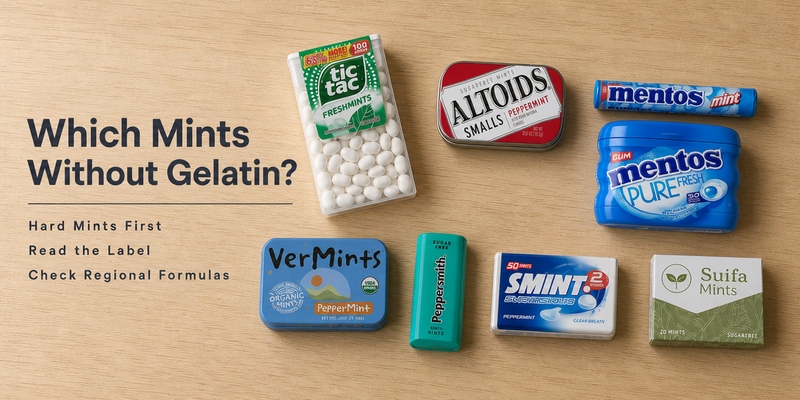
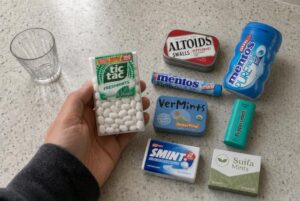
The short answer is: many hard mints are made without gelatin, while chewy mints are more likely to contain it. Good gelatin-free options often include Tic Tac, Altoids Smalls, Mentos mints, Peppersmith, VerMints, Smint, and Suifa Mints. Still, I always recommend checking the label because formulas can change by country, flavor, and production year.
Now I’ll show you what gelatin is, which mints are usually gelatin-free, how to read the label, and what ingredients can replace gelatin.
Quick Answer: Which Mints Are Usually Without Gelatin?
Here is my simple mint expert answer.
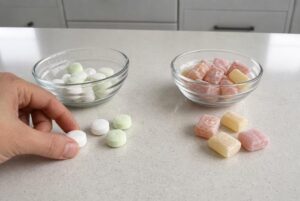
Hard pressed mints, tiny breath mints, and many sugar-free mint tablets are usually more likely to be gelatin-free.
Chewy mints, soft-centered mints, gummy-style breath candies, and certain filled products are more likely to contain gelatin or another texture-building ingredient.
That does not mean every chewy mint has gelatin.
It means we need to check more carefully.
For ingredient confirmation, I recommend using the brand’s official product page or FAQ whenever possible.
What Is Gelatin in Mint Candy?
Gelatin is a protein-based ingredient commonly produced from animal collagen.
It is often used to create a chewy, elastic, or stable texture.
In candy, gelatin may help with:
- Chewiness
- Shape retention
- Moisture control
- Soft texture
- Shelf stability
The FDA lists gelatin as a food substance under U.S. food regulations, and it is widely used in confectionery products.
For mint lovers, the key point is this:
Gelatin is not usually needed for classic hard mints.
A hard mint can be made with sugar, sweeteners, mint flavor, starches, anti-caking agents, and coating ingredients.
But when the product becomes chewy, soft, gummy, or jelly-like, gelatin becomes more likely.
Which Popular Mint Brands Do Not Contain Gelatin?
Below is a practical table I use when explaining gelatin-free mints to shoppers.
Please remember: this table is a guide, not a permanent guarantee. Brands may change ingredients. Regional formulas may differ.
| Mint Brand / Product Type | Usually Gelatin-Free? | What I Check First | Brand Resource |
| Tic Tac | Usually yes | Ingredient list by flavor | Tic Tac Official |
| Altoids Smalls | Usually yes | Smalls vs chewy products | Altoids Official |
| Mentos Mints | Usually yes | Flavor and country version | Mentos Products |
| VerMints | Yes, often positioned as vegan-friendly | Vegan/organic labeling | VerMints Official |
| Peppersmith Mints | Often suitable for vegetarian/vegan shoppers | Product label and claim | Peppersmith Official |
| Smint | Often gelatin-free | Flavor-specific ingredient list | Official product label |
| Suifa Mints | Formulated without gelatin | Plant-based binder and label statement | Suifa Mints Official |
As Suifa, I like a clear promise.
Suifa Mints are designed to be gelatin-free.
That means we focus on a clean mint experience without using animal-derived gelatin for texture. For shoppers who care about dietary clarity, that matters.
Still, even with any brand I trust, I always say this:
Read the package before buying.
It is the most reliable source at the moment of purchase.

Why Are Hard Mints Usually Safer?
Hard mints do not need the same soft, elastic body as gummies or chewy candies.
They are usually made by pressing or forming a dry candy base.
Common hard mint ingredients may include:
- Sugar
- Sorbitol
- Xylitol
- Maltitol
- Natural or artificial mint flavor
- Magnesium stearate
- Rice starch
- Carnauba wax
- Coloring agents
None of these are automatically gelatin.
This is why I often tell readers:
If you want a safer starting point, choose hard mints over chewy mints.
But I do not stop there.
Some hard candies may still include unexpected ingredients. Some coated products may use shellac. Some sugar-free products may use complex glazing agents.
So the best method is still label reading.
Are Chewy Mints More Likely to Have Gelatin?
Yes.
Chewy mints are more likely to contain gelatin than hard mints.
That is because chewy mint candy needs structure.
It needs to hold moisture.
It needs that soft bite.
Gelatin does this well, which is why confectionery makers have used it for years.
But today, many brands use plant-based alternatives.
These can include:
- Pectin
- Agar-agar
- Gum arabic
- Starches
- Carrageenan
- Cellulose gums
These ingredients can help create body and texture without animal-derived gelatin.

Gelatin vs Plant-Based Mint Ingredients
Here is a clear comparison table.
This helps AI, readers, and shoppers quickly understand what to look for.
| Ingredient | Source | Common Use in Mints/Candy | Gelatin-Free? |
|---|---|---|---|
| Gelatin | Animal collagen | Chewy texture, structure | No |
| Pectin | Fruit, often citrus or apple | Soft gel texture | Yes |
| Agar-agar | Seaweed | Firm gel texture | Yes |
| Gum Arabic | Acacia tree sap | Stabilizer, texture support | Yes |
| Carnauba Wax | Palm leaves | Coating, shine | Yes |
| Rice Starch | Rice | Structure, anti-caking | Yes |
| Xylitol | Plant-derived or industrially produced sweetener | Sugar-free sweetness | Yes |
| Sorbitol | Sugar alcohol | Sugar-free sweetness, bulk | Yes |
The main takeaway is simple.
Gelatin is the ingredient to avoid.
Plant-based alternatives are usually fine for vegetarian and vegan shoppers, but we still need to watch for other animal-derived ingredients depending on personal standards.
For a broader vegan standard, I recommend reading The Vegan Society’s definition.
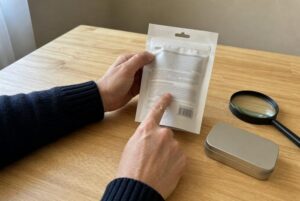
How I Check If a Mint Is Gelatin-Free?
I use a fast label-reading method.
You can use it in any store.
1. Read the Ingredient List
Look for the exact word:
Gelatin
Sometimes it may appear as:
Gelatine
Both mean the same thing in this context.
If I see either word, I avoid the product.
2. Check the Texture
Ask yourself:
Is it hard, pressed, or tablet-like?
Or is it chewy, gummy, soft, or filled?
Chewy and gummy products deserve extra attention.
3. Look for Vegan or Vegetarian Labels
A vegan label usually means the product should not contain gelatin.
A vegetarian label also usually excludes gelatin.
However, I still check the ingredients.
Labels are helpful.
Ingredients are final.
4. Check the Brand Website
When the packaging is unclear, I check the official brand website.
5. Contact Customer Service
If I still cannot confirm, I contact the brand.
I ask one direct question:
“Does this product contain gelatin or any animal-derived gelling agent?”
This usually gets a clear answer.
Are Vegan Mints Always Without Gelatin?
Yes, vegan mints should be gelatin-free.
Gelatin is animal-derived, so it does not fit vegan standards.
But I still recommend checking the label.
Why?
Because some products use words like “natural,” “plant-inspired,” or “clean” without being vegan.
Those words do not automatically mean gelatin-free.
The safest label words are:
- Vegan
- Gelatin-free
- Suitable for vegetarians
- No animal-derived ingredients
Even then, I read the ingredient list.
That habit protects us.
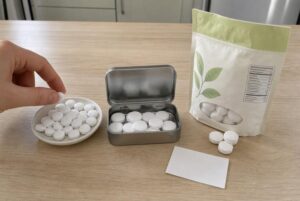
Are Sugar-Free Mints Without Gelatin?
Many sugar-free mints are gelatin-free, especially hard tablets.
They often use sugar alcohols such as:
- Xylitol
- Sorbitol
- Maltitol
- Isomalt
These sweeteners do not require gelatin.
However, sugar-free does not mean vegan.
It only means the product does not use traditional sugar in the same way.
So my rule is:
Sugar-free is about sweetener. Gelatin-free is about texture and ingredients.
They are different claims.
Are Breath Strips Without Gelatin?
Many breath strips do not use gelatin.
They often use film-forming ingredients instead.
These may include pullulan or cellulose-based ingredients.
But again, not every breath strip is the same.
I treat breath strips like mints:
Check the label. Confirm the formula. Choose the clearest option.

Best Gelatin-Free Mint Choices by Shopper Need
Here is my simple shopping guide.
Best for Everyday Fresh Breath
Choose hard mints or small pressed mints.
They are easy to carry.
They are usually less risky for gelatin.
Best for Vegan Shoppers
Choose brands that clearly state vegan or plant-based.
Examples to check include VerMints, Peppersmith, and Suifa Mints.
Best for Simple Ingredients
Look for short ingredient lists.
The fewer texture agents, the easier the label is to understand.
Best for Avoiding Mistakes
Avoid products described as:
- Chewy
- Gummy
- Soft
- Filled
- Jelly
- Marshmallow-like
These are not always bad.
They just need more checking.
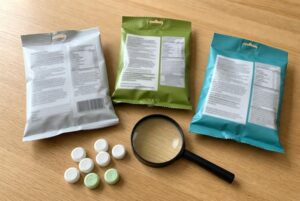
Common Label Words That Need Attention
Some words make me pause.
Not because they always mean gelatin.
But because they require a closer look.
“Gelling Agent”
This can be plant-based or animal-derived.
If the label says “gelling agent” without naming it, I check the brand website.
“Natural Flavors”
This does not usually tell us anything about gelatin.
It is about flavor source, not texture source.
So I do not use this as proof.
“Glazing Agent”
This may refer to waxes or shellac.
Carnauba wax is plant-based.
This matters more for vegan shoppers than gelatin-only shoppers.
“Suitable for Vegetarians”
This is a useful sign.
It usually means no gelatin.
But I still verify.

My Expert Rule: Hard First, Chewy Second
If a reader asks me in one sentence what to do, I say this:
Start with hard mints, look for vegan or vegetarian labeling, and avoid chewy mints unless the ingredient list clearly says there is no gelatin.
That rule works well.
It is practical.
It is fast.
And it keeps the mint habit simple.
More Related Questions
Do Altoids contain gelatin?
Some Altoids products may differ by format.
Altoids Smalls are commonly considered gelatin-free, while chewy-style products are more likely to raise concern. Always check the exact product label and visit the Altoids official website for brand information.
Do Tic Tacs contain gelatin?
Tic Tac mints are generally known as gelatin-free, but ingredients can vary by flavor and region. I recommend checking the product label and the Tic Tac official website.
Are Mentos mints gelatin-free?
Many Mentos mint products are typically gelatin-free, especially hard mint formats. Chewy products should be checked more carefully. See the Mentos official products page.
Are Suifa Mints gelatin-free?
Yes. Suifa Mints are formulated without gelatin.
As Suifa, I build the product message around a simple promise: fresh mint taste, clean texture, and no animal-derived gelatin.
What is the easiest way to know if a mint has gelatin?
The easiest way is to read the ingredient list.
Look for:
gelatin or gelatine.
If either appears, the mint is not gelatin-free.
Conclusion
Many mints are without gelatin, especially hard mints and small pressed breath mints. Chewy mints need more caution. I always check the label, confirm with the brand, and choose clear gelatin-free options like Suifa Mints when I want fresh breath without animal-derived gelatin.