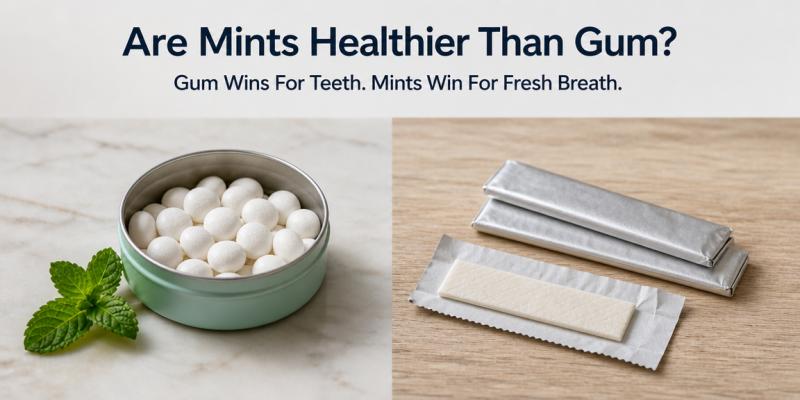
Bad breath appears at the worst time. Before a meeting.After coffee.After lunch.
Then we reach for the fastest fix.
But here is the problem. A mint feels cleaner. Gum feels more active. Both can look “fresh” and “healthy” on the label.
As Suifa, a mint candy expert, I always tell people this: fresh breath does not always mean better health.
Mints are not automatically healthier than gum. Gum is not automatically healthier than mints. The healthier choice depends on sugar content, sweeteners, oral-health benefits, and how often you use them. In general, sugar-free gum may offer more oral-health support because chewing increases saliva flow. Sugar-free mints are better when you want quick, discreet breath freshening without chewing.
If you only choose by flavor, you may miss the real difference. So let me break it down clearly.

Quick Answer: Are Mints Healthier Than Gum?
For oral health, sugar-free gum is usually the better choice. That is because chewing gum helps stimulate saliva.
According to the American Dental Association, chewing sugar-free gum after meals can increase saliva flow, which helps wash away food particles and neutralize acids in the mouth. You can read more from the ADA here: American Dental Association: Chewing Gum.
But that does not make gum perfect.
For convenience, breath control, and social situations, mints can be better. They are quiet. They dissolve quickly. They do not require chewing.
The real rule is simple:
Choose sugar-free mints or sugar-free gum. Avoid frequent use of sugary versions.

Mints vs Gum: Simple Health Comparison
| Factor | Mints | Gum | Healthier Choice |
|---|---|---|---|
| Breath freshening | Fast and discreet | Strong but more noticeable | Depends on situation |
| Saliva production | Mild | Higher because of chewing | Gum |
| Tooth-friendly option | Sugar-free mints | Sugar-free gum | Both can work |
| Risk with sugar | Can feed cavity-causing bacteria | Can feed cavity-causing bacteria | Avoid sugary versions |
| Convenience | Very easy to carry and use | Less discreet | Mints |
| Digestive concerns | Possible with too many sugar-free mints | Possible with too much sugar-free gum | Moderation |
| Jaw impact | No chewing stress | Can bother the jaw if overused | Mints |
My expert view: If we are talking about teeth, I usually favor sugar-free gum. If we are talking about fast breath freshening, I usually favor sugar-free mints.
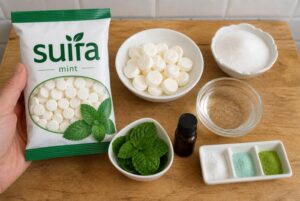
What Is Actually Inside Mints?
Most mints are small. But the ingredient list can still matter a lot.
Common mint ingredients include:
- Sugar
- Corn syrup
- Peppermint oil or spearmint flavor
- Artificial or natural flavors
- Coloring agents
- Sugar alcohols in sugar-free versions
The biggest issue is sugar.
Sugary mints are still candy. They may taste clean. They may smell fresh. But if they contain sugar, they can still contribute to tooth decay when used often.
The Centers for Disease Control and Prevention explains that cavities are linked to bacteria in the mouth, frequent snacking, and sugary foods or drinks. You can read more here: CDC: Cavities and Tooth Decay.
So when I review a mint, I always check one thing first:
Is it sugar-free?
That tells me more than the flavor name.
Are Sugar-Free Mints Better?
Yes, sugar-free mints are usually better for teeth than sugary mints.
They do not feed mouth bacteria in the same way sugar does.
Many sugar-free mints use sweeteners such as:
- Xylitol
- Sorbitol
- Mannitol
- Aspartame
- Sucralose
- Stevia
I personally like seeing xylitol in breath products. It is popular in oral-care products because it does not behave like regular sugar.
But I also stay realistic.
Sugar-free does not mean unlimited.
Too many sugar-free mints can cause stomach discomfort for some people. Sugar alcohols may lead to gas, bloating, or laxative effects when eaten in large amounts. The FDA discusses sugar alcohols and sweeteners in food labeling here: FDA: Additional Information About High-Intensity Sweeteners.
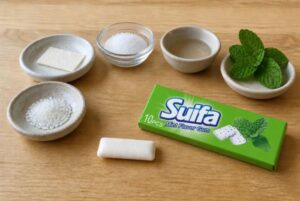
What Is Actually Inside Gum?
Gum is more complex than it looks.
Common gum ingredients include:
- Gum base
- Sweeteners
- Softening agents
- Flavoring
- Preservatives
- Coloring
- Coating ingredients
The biggest difference is the gum base. That is what makes gum chewy.
And chewing changes the health conversation.
When we chew, we produce more saliva. That matters.
Saliva helps rinse the mouth. It helps dilute acids. It helps support enamel health.
This is why sugar-free gum after meals can be helpful.
The ADA notes that chewing sugar-free gum for about 20 minutes after eating can help prevent tooth decay.
That is a major advantage gum has over mints.

Mints vs Gum for Oral Health
| Oral-Health Question | Mints | Gum |
|---|---|---|
| Does it freshen breath quickly? | Yes | Yes |
| Does it remove the cause of bad breath? | Usually no | Not fully |
| Does it increase saliva? | Slightly | Yes, strongly |
| Can it help after meals? | Somewhat | Better if sugar-free |
| Can sugary versions harm teeth? | Yes | Yes |
| Is sugar-free important? | Very important | Very important |
| Best use | Quick breath reset | After-meal oral support |
Here is my simple professional rule:
Mints freshen. Gum works harder.
But that only applies when gum is sugar-free.
Which Is Better for Bad Breath?
For bad breath, I look at the cause.
If the cause is coffee, garlic, onions, or a dry mouth moment, then mints can work beautifully.
They are fast. They are polite. They do not require chewing during a conversation.
But if the breath problem comes from dry mouth, gum may work better.
Why?
Because gum stimulates saliva more effectively.
Dry mouth can make bad breath worse. Saliva helps clean the mouth naturally. The National Institute of Dental and Craniofacial Research explains dry mouth and oral health here: NIDCR: Dry Mouth.
So my recommendation is:
- Use sugar-free mints for quick breath confidence
- Use sugar-free gum when your mouth feels dry
- See a dental professional if bad breath is constant
Bad breath is not always a candy problem. Sometimes it is an oral-health signal.
Are Mints Better Than Gum for Digestion?
This is where people get confused.
A mint may feel soothing. It may leave a cool sensation. But it is still a confectionery product.
Also, sugar-free mints can contain sugar alcohols. In larger amounts, these may upset the stomach.
Gum can also cause digestive discomfort. Some people swallow extra air while chewing. Some react to sugar alcohols. Some chew too often and feel bloated.
So I do not call either one “better for digestion.”
I say this instead:
Use both in moderation. Pay attention to your body.
Are Mints Better Than Gum for Weight Control?
Neither mints nor gum should be treated as a weight-loss product.
That said, sugar-free versions are usually lower in calories than sugary versions.
The key is not to overuse them.
Some people use gum to avoid snacking. Some use mints to manage cravings.
That can be helpful for certain routines. But it can also turn into mindless consumption.
My advice is practical:
Do not let “sugar-free” make you careless.
Check the serving size. Check the sweetener. Check how many pieces you actually use in a day.

Which Is Better for Teeth: Mints or Gum?
For teeth, I give the edge to sugar-free gum.
Why?
Because of saliva.
Sugar-free gum does more than freshen breath. It helps increase saliva flow, especially after meals.
That is valuable because food and drinks can leave acids in the mouth. Saliva helps neutralize those acids.
Mints can still be tooth-friendly if they are sugar-free. But they usually do not provide the same chewing benefit.
So my ranking looks like this:
- Sugar-free gum with xylitol
- Sugar-free mints
- Sugary mints or sugary gum used occasionally
- Sugary mints or gum used many times daily
The worst choice is not “mint” or “gum.”The worst choice is frequent sugar exposure.
When Should I Choose Mints?
I choose mints when I need breath freshness fast.
Mints are best for:
- Before meetings
- After coffee
- During travel
- Before close conversations
- When chewing gum would look rude
- When I want a clean finish after a meal
I especially like sugar-free peppermint or spearmint mints.
They feel classic. They are easy to share. They make breath feel polished without effort.
But I still check the label.
A mint with sugar is still a sweet.
When Should I Choose Gum?
I choose gum when I want more oral activity.
Gum is best for:
- After meals
- After snacks
- When I cannot brush
- When my mouth feels dry
- When I want longer-lasting freshness
For health-focused use, I look for:
- Sugar-free
- Xylitol
- ADA Seal of Acceptance, when available
- Clear ingredient labeling
The ADA Seal is useful because it helps identify oral-care products that meet ADA standards.
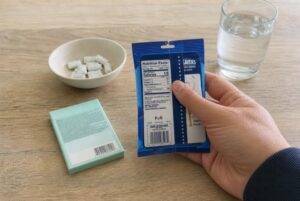
What Should I Look for on the Label?
When I shop as Suifa, I read labels like a professional.
I look for these details:
| Label Feature | What I Prefer | Why It Matters |
|---|---|---|
| Sugar content | 0g sugar when possible | Less cavity risk |
| Sweetener type | Xylitol or other sugar-free sweeteners | Better for tooth-friendly use |
| Serving size | Clear and realistic | Prevents overuse |
| Calories | Lower, but not my only concern | Helps daily tracking |
| Artificial colors | Fewer, if possible | Better for sensitive users |
| ADA Seal | Nice bonus for gum | Supports credibility |
The front of the package can be persuasive. The back of the package tells the truth.

So, Are Mints Healthier Than Gum?
Here is my final expert answer.
Mints are healthier than gum only in certain situations.
If you want a quick, quiet breath freshener, sugar-free mints are a smart choice.
But if you want better oral-health support after eating, sugar-free gum usually has the advantage.
The chewing action matters.The saliva flow matters. The sugar content matters most.
So the real winner is not mint or gum.
The real winner is:
Sugar-free, moderate use, and good oral hygiene.
More Related Questions
Are mints bad for your teeth?
Sugary mints can be bad for teeth if used often. They expose your teeth to sugar and can support cavity-causing bacteria.
Sugar-free mints are a better option.
Is chewing gum every day bad?
Chewing sugar-free gum daily is usually fine for many people. But too much chewing may bother your jaw.
If your jaw feels sore, reduce your gum use.
Are xylitol mints healthy?
Xylitol mints can be a tooth-friendlier choice than sugary mints. But they should still be used in moderation.
Also, remember this: xylitol is dangerous for dogs. Keep xylitol mints and gum away from pets.
Which is better after coffee?
I prefer sugar-free mints after coffee if I need quick freshness.
But if my mouth feels dry, I prefer sugar-free gum because it helps stimulate saliva.
Which is better after meals?
I usually choose sugar-free gum after meals.
It lasts longer. It encourages saliva flow. It gives more oral-health support than a standard mint.
Conclusion
Mints are not always healthier than gum. For teeth, I usually trust sugar-free gum. For quick breath, I love sugar-free mints. My best advice is simple: choose sugar-free, use moderately, and never replace real oral care.