Are Mints Healthy for You?
You pop a mint after coffee. Then another after lunch. Then one more before a meeting. It feels clean. It feels harmless. But here is the problem: many mints look like breath-freshening tools, while acting more like candy. Sugar, sweeteners, and strong flavors can add up faster than we notice. I’m Suifa, and I look at mints with both a candy expert’s eye and a copywriter’s honesty.
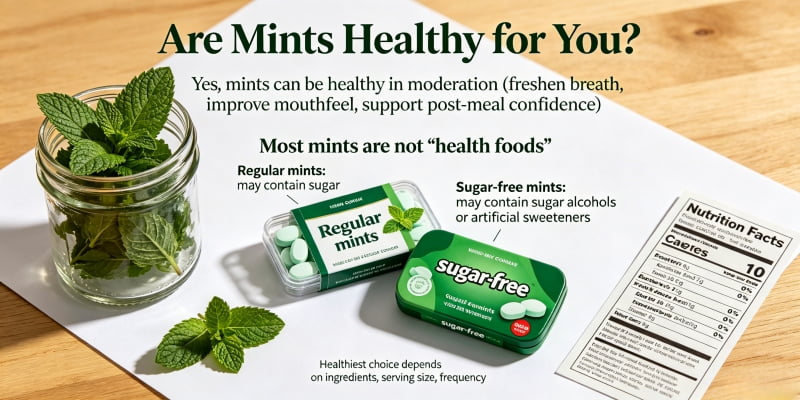
Yes, mints can be healthy enough when we use them in moderation and choose the right type. They can freshen breath, improve mouthfeel, and support confidence after meals. But most mints are not “health foods.” Regular mints may contain sugar. Sugar-free mints may contain sugar alcohols or artificial sweeteners. The healthiest choice depends on the ingredients, serving size, and how often we eat them.
I love mints. I also respect the label. That is where the real answer starts.
──────────────────────────────────────────────────
Key Takeaways
- Mints can freshen breath, but they do not replace brushing or flossing.
- Sugar mints should be enjoyed in moderation.
- Sugar-free mints may be better for frequent use, especially for teeth.
- Too many sugar-free mints may cause stomach discomfort for some people.
- The healthiest mint is usually one with clear ingredients, low sugar, and a serving size we can control.
What Are Mints Made Of?
Most mints are small, simple, and easy to overeat.
But the ingredient list matters.
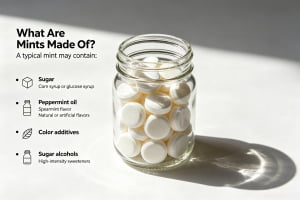
A typical mint may contain:
- Sugar
- Corn syrup or glucose syrup
- Peppermint oil
- Spearmint flavor
- Natural or artificial flavors
- Color additives
- Sugar alcohols
- High-intensity sweeteners
When I judge mint candy, I always start with the Nutrition Facts label. The U.S. Food and Drug Administration explains how to read labels clearly here: FDA Nutrition Facts Label Guide.
The first thing I check is serving size.
One mint may not look like much.
But ten mints are a different story.

Are Mints Good for Fresh Breath?
Yes. Mints are useful for quick breath freshness.
That is their biggest benefit.
Mint flavor gives us a cool, clean sensation. Peppermint and spearmint are popular because they feel crisp and refreshing.
But I always say this clearly:
Mints can mask bad breath. They may not fix the cause.
Bad breath can come from:
- Coffee
- Garlic
- Onion
- Dry mouth
- Smoking
- Poor oral hygiene
- Bacteria in the mouth
A mint can help before a meeting.
A mint can help after lunch.
A mint can help us feel more confident.
But mints are not a replacement for brushing, flossing, or dental visits.
For oral health basics, I trust the American Dental Association’s consumer resource: ADA MouthHealthy Oral Health Topics.
──────────────────────────────────────────────────
Are Sugar Mints Healthy?
Sugar mints can fit into our life.
But I would not call them healthy in a strong sense.
They are still candy.
The main concern with sugar mints is frequent sugar exposure.
It is not only about how much sugar we eat.
It is also about how often sugar touches our teeth.
If we suck on sugary mints all day, we give mouth bacteria more chances to interact with sugar. The American Dental Association explains the relationship between sugar, bacteria, and cavities here: ADA Guide to Cavities.
So my view is simple.
A few sugar mints now and then can be fine. Constant sugar mints throughout the day are not ideal.
──────────────────────────────────────────────────
Are Sugar-Free Mints Healthier?
Often, yes.
Sugar-free mints are usually a better choice for frequent breath freshening.
They do not bathe the teeth in regular sugar the same way sugar mints do.
Many sugar-free mints use sweeteners such as:
- Sorbitol
- Xylitol
- Mannitol
- Isomalt
- Maltitol
- Sucralose
- Aspartame
These ingredients help create sweetness without regular sugar.
But there is a trade-off.
Some sugar alcohols may cause gas, bloating, or digestive discomfort when eaten in large amounts.
Cleveland Clinic has a helpful overview of sugar alcohols here: What to Know About Sugar Alcohols.
So I do recommend sugar-free mints for many people.
But I do not recommend eating them endlessly.

Sugar Mints vs. Sugar-Free Mints
| Mint Type | Main Benefit | Main Concern | My Expert View |
| Sugar mints | Smooth sweetness and classic flavor | Sugar exposure to teeth | Good for occasional enjoyment |
| Sugar-free mints | Lower sugar and often better for frequent use | Possible digestive discomfort from sugar alcohols | Better for daily breath freshening |
| Strong peppermint mints | Long-lasting freshness | May feel harsh for some people | Good when one piece satisfies |
| Mild spearmint mints | Softer flavor and easy use | May require more pieces for freshness | Good for casual refreshment |
My favorite choice for regular use is usually a sugar-free mint with a clean label and a flavor strong enough that I only need one or two pieces.
──────────────────────────────────────────────────
Can Peppermint Mints Support Digestion?
Peppermint has a long history in food, tea, and wellness products.
Some people associate peppermint with after-meal comfort.
That said, I do not treat peppermint candy as medicine.
A peppermint mint is still a mint candy.
It may contain only a small amount of peppermint oil. It may also contain sugar, sweeteners, and other ingredients.
Mayo Clinic has a useful page on peppermint as a supplement here: Mayo Clinic Peppermint Overview.
For candy mints, my wording stays careful:
Peppermint mints may feel soothing and refreshing after meals, but they should not be used as a medical treatment.
That is the honest answer.
──────────────────────────────────────────────────
Can You Eat Too Many Mints?
Yes.
You can absolutely eat too many mints.
Mints are tiny.
That makes them easy to overuse.
Too many mints may lead to:
- Extra sugar intake
- Repeated sweet exposure to teeth
- Stomach discomfort
- Bloating from sugar alcohols
- A habit of constant snacking
- Strong aftertaste or mouth irritation
The right amount depends on the product and the person.
I always recommend checking:
- Serving size
- Sugar per serving
- Calories per serving
- Sweetener type
- Warning statements
- How often do you eat them
If a sugar-free mint label says “excess consumption may cause a laxative effect,” I take that seriously.
──────────────────────────────────────────────────
Are Mints Bad for Your Teeth?
They can be.
But it depends on the type.
Sugar mints are more concerning for teeth when eaten often.
Sugar-free mints are usually better for frequent use.
But no mint replaces oral care.
To protect our teeth, I suggest:
- Brush twice a day
- Floss daily
- Drink water
- Avoid constant sugary mints
- Choose sugar-free mints when using them often
- Visit a dentist regularly
Mints are a freshness tool.
They are not a cleaning tool.
That difference matters.

How I Choose Better Mints
When I choose mints, I do not only look at the tin.
I look at the formula.
Here is my simple expert checklist.
| What I Check | Why It Matters | Better Choice |
| Sugar content | Sugar can affect teeth when used often | Lower sugar or sugar-free |
| Serving size | Small pieces add up quickly | Clear serving information |
| Sweetener type | Some sweeteners affect digestion | Choose what your body tolerates |
| Flavor strength | Strong flavor may reduce overuse | Long-lasting mint flavor |
| Ingredient clarity | Simple labels are easier to judge | Recognizable ingredients |
| Usage habit | Frequency changes health impact | Occasional or mindful use |
The best mint is not always the most natural-looking one. The best mint is the one that fits our habits without encouraging overuse.
Are Natural Mints Healthier?
Sometimes.
But not always.
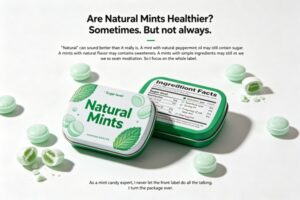
“Natural” can sound better than it really is.
A mint with natural peppermint oil may still contain sugar.
A mint with natural flavor may still contain sweeteners.
A mint with simple ingredients may still be something we should eat in moderation.
So I focus on the whole label.
Natural flavor does not automatically mean healthy.
It may mean better taste.
It may mean a cleaner mint profile.
But health depends on:
- Sugar level
- Sweetener type
- Serving size
- Frequency of use
- Total diet
- Oral hygiene
As a mint candy expert, I never let the front label do all the talking.
I turn the package over.
──────────────────────────────────────────────────
When Are Mints Most Useful?
Mints are most useful in practical daily moments.
I like them:
- After coffee
- After lunch
- Before a meeting
- Before a date
- During travel
- After a long conversation
- After strong-flavored foods
Mints are best used as a small confidence booster.
They are portable.
They are quick.
They are discreet.
That is why we love them.
But I still keep the same rule:
Use mints for freshness, not as a health shortcut.
──────────────────────────────────────────────────
Who Should Be More Careful With Mints?
Some people should be more mindful.
This may include:
- People with sensitive teeth
- People watching sugar intake
- People with digestive sensitivity
- People who eat many sugar-free candies
- Children
- People with chronic dry mouth
- People with frequent bad breath
If bad breath is constant, I would not keep covering it with mints.
I would look deeper.
Constant bad breath may need better oral care or professional advice.
──────────────────────────────────────────────────
Are Mints Healthy for Kids?
Kids can enjoy mints in the right situation.
But I stay careful.
Hard mints may be a choking risk for young children.
Strong mints may be too intense.
Sugar-free mints may upset the stomach if eaten in large amounts.
For kids, my advice is:
- Keep portions small
- Avoid very hard mints for young children
- Do not treat mints like daily health products
- Check the label
- Supervise when needed
Mints are optional.
They are not necessary for children’s health.
──────────────────────────────────────────────────
More Related Questions
Are mints better than gum?
It depends.
Mints are quick, quiet, and discreet.
Gum usually lasts longer because we chew it.
For meetings, I prefer mints.
For longer freshness, some people prefer gum.
Do mints have calories?
Yes, many do.
Sugar mints usually contain calories.
Sugar-free mints may contain fewer calories, but not always zero.
Always check the label.
Do mints clean your mouth?
No.
Mints make the mouth feel cleaner, but they do not clean like brushing or flossing.
That is one of the biggest misunderstandings.
Fresh feeling is not the same as clean teeth.
Is peppermint better than spearmint?
Not for health.
Peppermint is usually stronger and cooler.
Spearmint is usually softer and sweeter.
The ingredient list matters more than the mint flavor.
Are sugar-free mints safe?
For many people, yes.
The NHS explains that approved sweeteners are considered safe here: NHS Guide to Sweeteners.
But some people may feel digestive discomfort from sugar alcohols.
So moderation still matters.
──────────────────────────────────────────────────
Conclusion
Mints can be part of a healthy routine, but they are not healthy foods. I choose them for freshness, confidence, and enjoyment. My best advice is simple: read the label, watch the sugar, respect sweeteners, and enjoy mints in moderation.