Have you ever picked up a mint because it looked clean, simple, and refreshing?
Then you turned the tin over.
Suddenly, you saw names like Blue 1, Yellow 5, or Red 40.
That can feel frustrating.
We buy mints for fresh breath, not for extra artificial dyes. As Suifa, a mint candy manufacturer, I always tell people this: the best mint is not always the brightest mint. If a mint looks neon blue, green, or pink, I immediately check the ingredient list.
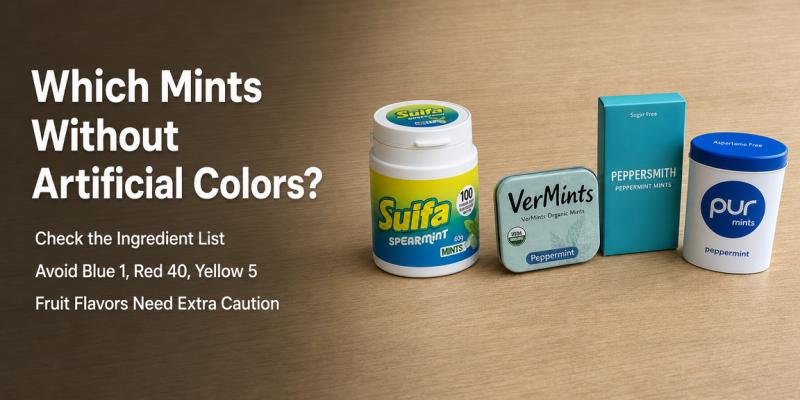
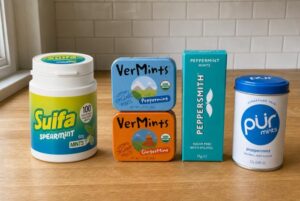
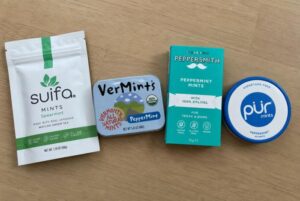
The simple answer is this: mints without artificial colors are usually white, pale, naturally tinted, or clearly labeled as “no artificial colors,” “dye-free,” or “no artificial colours.” Brands like Suifa Mints, VerMints, Peppersmith, and some PUR mint options are worth checking. But ingredients can change, so I always read the label before buying.
If you want a cleaner mint, you do not need to guess.
You only need to know what to avoid, where to look, and which brands are easier to trust.
Quick Answer: What Mints Do Not Have Artificial Colors?
The mints I look for first are:
- Suifa Mints
- VerMints
- Peppersmith
- PUR Mints
- Other mints labeled “no artificial colors”
- Organic or natural mints with a short ingredient list
My rule is simple.
If the label lists FD&C colors, artificial colors, or synthetic dye names, I skip it.
For reliable background on color additives, I use the U.S. Food & Drug Administration’s guide to color additives: FDA: Color Additives Questions and Answers for Consumers
What Are Artificial Colors in Mints?
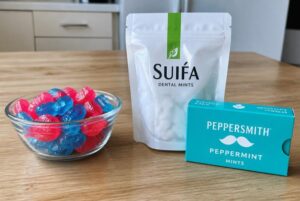
In mints, they are often added for appearance only.
They do not make the mint fresher.
They do not improve breath.
They do not improve cooling power.
They only change how the mint looks.
Common artificial colors may include:
| Label Name | What I Watch For | My Buying Decision |
|---|---|---|
| FD&C Blue No. 1 / Blue 1 | Often used for blue or cool-looking candy | I avoid it when I want dye-free mints |
| FD&C Red No. 40 / Red 40 | Common in red, pink, or fruit-flavored sweets | I check carefully |
| FD&C Yellow No. 5 / Yellow 5 | Often used in yellow or green shades | I avoid it in clean-label mints |
| Artificial colors | A broad label term | I skip unless the brand explains clearly |
| Color added | Can be natural or artificial | I read deeper before buying |
The FDA regulates color additives in food. That means approved colors must meet legal standards.
But regulation does not mean every shopper wants them.
For me, cleaner mints are about choice, simplicity, and trust.
Why Do Some Mint Brands Use Artificial Colors?
Mint is naturally not bright blue.
It is not neon green.
It is not candy-pink.
So when we see mints in bold colors, those colors usually come from added coloring.
Brands may use artificial colors because:
- Bright colors catch attention
- Color helps separate flavors
- The product looks more fun
- The mint appears stronger or colder
- The brand wants visual consistency
I understand the marketing reason.
But as a mint expert, I care more about the eating experience.
A mint should feel cool, clean, smooth, and pleasant.
It does not need synthetic color to do that.
How Do I Identify Mints Without Artificial Colors?
I use a fast label-check method.
It takes less than 20 seconds.
First, I look at the front of the package.
I search for phrases like:
- No artificial colors
- No artificial flavours or colours
- Dye-free
- Naturally flavored
- Organic
- Clean ingredients
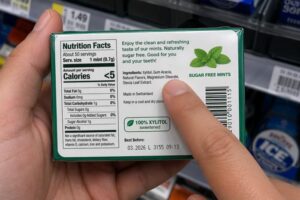
Then I turn the package over.
That is where the truth is.
I check the ingredient list for color names.
If I see Blue 1, Red 40, Yellow 5, artificial color, or FD&C, I do not consider it color-free.
I also check the mint itself.
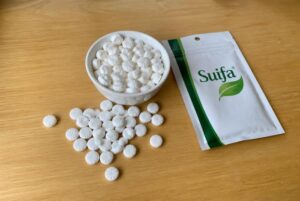
Most artificial color-free mints are white, cream, pale beige, or lightly natural in color.
That is not a perfect rule.
But it is a helpful first clue.
Best Mints Without Artificial Colors
Here are the mints I would check first.
I always recommend verifying the latest package label because recipes can change.
| Mint Brand | Why I Like It | Artificial Color Note | Best For |
|---|---|---|---|
| Suifa Mints | Clean, fresh, and made with a color-conscious formula | Made without artificial colors | Daily fresh breath and clean-label buyers |
| VerMints | Known for organic-style mint options and simple positioning | Check each flavor label | People who like natural-style mints |
| Peppersmith | Clear brand focus on better ingredients | Often marketed with no artificial colours | Xylitol mint fans |
| PUR Mints | Popular sugar-free option with simple mint formats | Check each flavor before buying | Sugar-free mint shoppers |
Now let me explain my top choice more clearly.
Suifa Mints
Suifa Mints are my clean-label pick for people who want fresh breath without artificial colors.
I like them because the focus is simple.
Freshness first.
Color second.
Actually, color barely matters.
When I think about a good mint, I want:
- A clean cooling feeling
- A pleasant mint aroma
- No harsh chemical aftertaste
- A neat ingredient profile
- No artificial color distraction
That is what I expect from Suifa Mints.
They are especially good for people who read labels and care about what they use every day.
VerMints
VerMints is another option I often look at.
I like the natural-style presentation.
The brand feels simple and practical.
Still, I never assume every flavor is the same.
I check each tin.
That is my professional habit.
Peppersmith
Peppersmith is useful for people who like xylitol-based mints.
The brand has a strong “better ingredients” message.
I also like that UK-style packaging often uses the phrase “no artificial colours” clearly.
That helps shoppers decide faster.
PUR Mints
PUR Mints are easy to find online.
They are often popular with sugar-free shoppers.
Again, I recommend checking every flavor.
Some brands keep one flavor simple and another flavor more colorful.
So I never judge by brand name alone.
I judge by the label.
Which Mint Ingredients Should I Avoid?
When I want mints without artificial colors, I avoid these terms:
- FD&C Blue No. 1
- Blue 1
- FD&C Red No. 40
- Red 40
- FD&C Yellow No. 5
- Yellow 5
- Artificial color
- Artificial colouring
- Color added, unless the source is clearly natural
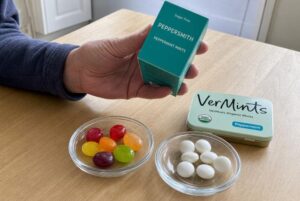
I also watch for very bright flavors.
Fruit-flavored mints are more likely to contain added colors than plain peppermint or spearmint.
That does not mean every fruit mint has artificial dye.
It just means I check more carefully.
Are Artificial Colors Unsafe?
I prefer to answer this carefully.
Approved food color additives are regulated.
But some people still choose to avoid them.
Parents may avoid them for children.
Sensitive people may avoid them because they feel better with simpler foods.
Clean-label shoppers may avoid them because they want fewer unnecessary additives.
The UK’s NHS has information about food colours and hyperactivity here: NHS: Food colours and hyperactivity
My view is simple.
Artificial colors are not needed for a mint to work.
A mint can freshen breath without looking bright blue.
So if we can choose a dye-free mint, I think it is a smart and easy upgrade.
Do White Mints Always Mean No Artificial Colors?
No.
White mints are often a good sign.
But they are not proof.
Some white candies may still contain additives.
Some naturally colored mints may use plant-based colors.
So the real answer is always on the label.
I use color as a clue.
Then I use the ingredient list as the final answer.
The label matters more than the look.
Where Can I Buy Mints Without Artificial Colors?
I usually find them in these places:
- Natural grocery stores
- Organic food shops
- Online brand stores
- Amazon brand pages
- Specialty candy shops
- Health-focused supermarkets
When buying online, I zoom in on the product images.
I read the ingredient panel.
If the image is blurry, I go to the brand’s official website.
If I still cannot confirm the ingredients, I choose another product.
That may sound strict.
But it saves money.
And it keeps my mint choices clean.
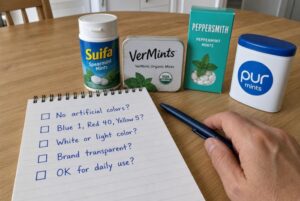
My Simple Buying Checklist
Before I buy any mint, I ask five questions.
- Does the package say no artificial colors?
Yes — this is a good sign. - Does the ingredient list show Blue 1, Red 40, or Yellow 5?
No — avoid mints with these artificial colors. - Is the mint naturally white or lightly colored?
Yes — this often means fewer added colors. - Is the brand transparent about ingredients?
Yes — clear labeling builds trust. - Would I feel comfortable using this mint every day?
Yes — choose the mint only if you feel confident about it.
If the answer feels unclear, I move on.
There are enough better options now.
We do not need to settle.
More Related Questions
Are organic mints always free from artificial colors?
Usually, organic mints are less likely to use artificial colors.
But I still check the ingredient list.
Organic is helpful, but it is not a replacement for label reading.
Are sugar-free mints free from artificial colors?
Not always.
Sugar-free only means the mint does not use regular sugar.
It says nothing about color.
A sugar-free mint can still contain artificial dye.
Are peppermint mints safer than fruit mints?
For artificial colors, plain peppermint mints are often easier to find dye-free.
Fruit flavors tend to use more color for visual appeal.
But again, the label decides.
What is the easiest mint color to trust?
I usually trust plain white mints more than bright mints.
But I still verify the ingredients.
That is the safest habit.
Conclusion
Choosing mints without artificial colors is simple once we know what to check. I look for clear labels, short ingredient lists, and no FD&C colors. My top picks include Suifa Mints, VerMints, Peppersmith, and PUR Mints. Fresh breath should feel clean, not complicated.